





South Asian art is at a global inflection point.
Record-breaking prices at auction, major institutional acquisitions, landmark retrospectives, and a collector base that is both more geographically dispersed and generationally diverse than at any prior moment—the breadth of this momentum is what distinguishes this current moment.
It ranges from Indian Modernist artists commanding unprecedented sums at auction to new recognition of overlooked figures from across the wider subcontinent. Auction houses operating across Mumbai, New York, and London are registering not isolated records but durable, compounding demand for works by South Asian artists.
That confidence is echoed institutionally—globally—from Venice to London. The former saw India return with a national pavilion for the first time in seven years, while the latter will see the Kiran Nadar Museum of Art and Christie’s collaborate on “The Meeting Ground,” a non-selling exhibition drawn entirely from the KNMA collection. It marks the first time Christie’s has dedicated its summer series exclusively to a South Asian institution, further underscoring the growing force of art from the subcontinent.
The 10 South Asian artists gathered here are evidence of this momentum. Spanning generations, geographies, and mediums, they represent the figures whose auction trajectories, institutional recognition, and critical reassessment are actively shaping what the South Asian art market is becoming: more expansive in its canon, more global in its reach, and more serious in its ambition.
Raja Ravi Varma
B. 1848, Kilimanoor, India. D. 1906, Attingal, India.
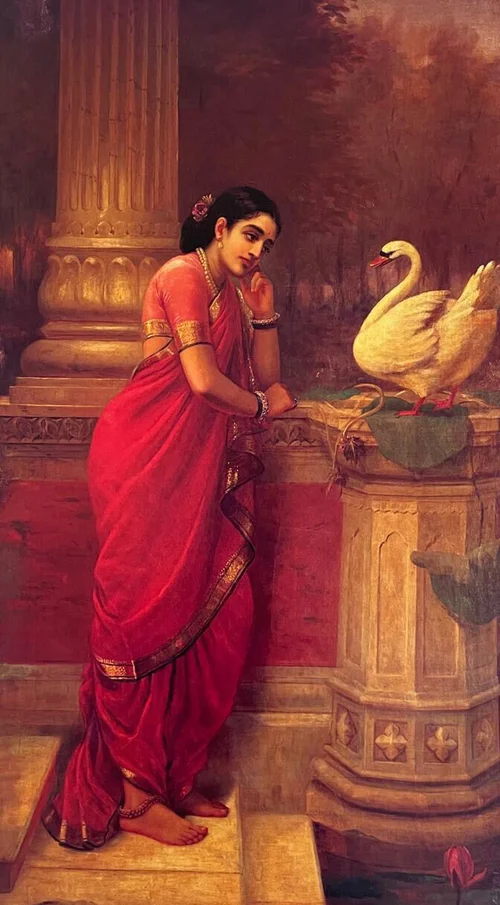
Hamsa Damayanti Edition of 100, 1899
Raja Ravi Varma
Rizq Art Gallery
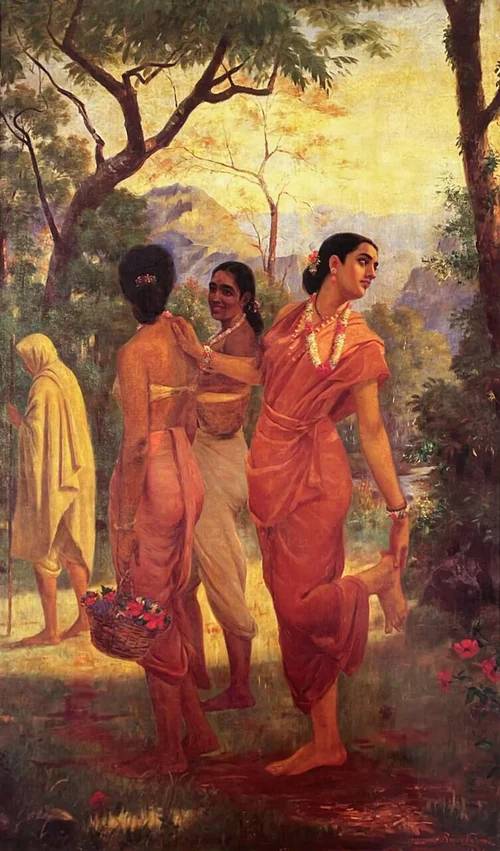

Shakunthala Edition of 100, 1898
Raja Ravi Varma
Rizq Art Gallery
In April of this year, Raja Ravi Varma’s Yashoda and Krishna (ca. 1890) set a new auction record for Indian art. Sold for ₹167.20 crores ($17.97 million) at Saffronart Mumbai, the work was acquired by billionaire businessman Cyrus Poonawalla.
A major milestone for the artist’s posthumous trajectory, the painting was made during the height of his career and is said to be inspired by a stained-glass panel by Arthur J. Dix (1861–1917) at the Lukshmi Vilas Palace in Baroda, India.
Varma worked in the latter half of the 19th century, negotiating the competing pressures of colonial modernity and mythological tradition with a chromatic naturalism that drew on European academic painting and the iconographic conventions of the subcontinent. A previous auction record of $5 million was set in 2023 at Pundole’s Mumbai for another painting of devoted foster mother, Yashoda and her son, Lord Krishna.
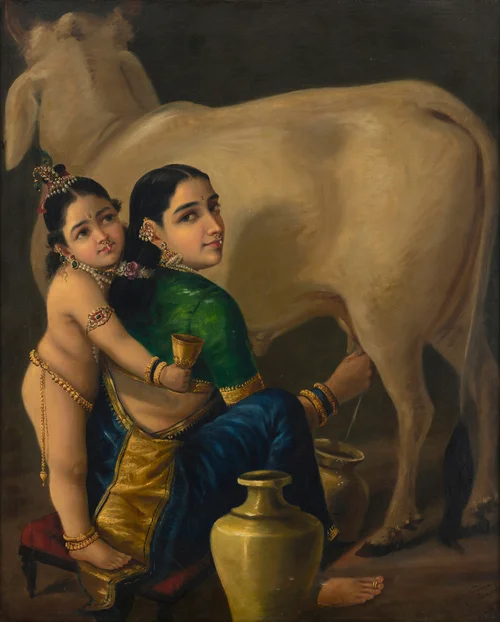

“It is particularly fitting that the record for the highest-value work of Indian art sold at auction is now held by the father of modern Indian art,” shared Saffronart co-founder Dinesh Vazirani.
The result surpasses a previous auction record for Indian art made by M.F. Husain’s Untitled (Gram Yatra) (1954) at ₹119 crores ($13.8 million). Often referred to as the “Volodarsky Husain” after its former owner, Dr. Leon Elias Volodarsky, the 14-foot-long painting was sold at a Christie’s auction in New York in March 2025. The record was previously held by Amrita Sher-Gil, whose work, The Story Teller (1937), sold for ₹61.8 crores ($7.46 million) at Saffronart in 2023.
“Great art has a way of reaffirming its timeless value,” said Saffronart co-founder Minal Vazirani. “It is not just a milestone for the market, but a powerful reminder of the enduring cultural and emotional resonance of Indian art,” she added.
Shanti Dave
B. 1931, Badpura, India.
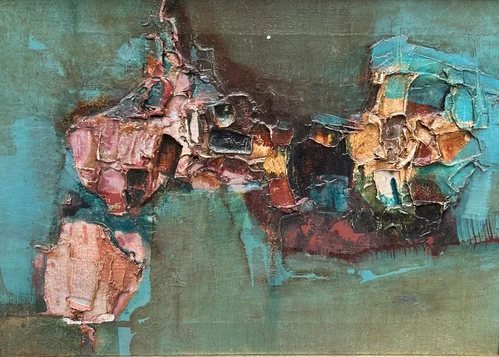

Untitled, 1964
Shanti Dave
Great Banyan Art
Shanti Dave is perhaps best known for his association with the Baroda Group, an experimental artist group formed in Gujarat, India, in 1956. Dave began by painting film billboards in Ahmedabad, India, an apprenticeship in scale, surface, and public address that would leave a lasting imprint on his later practice.
That early exposure to the visual intensity of street-facing imagery would inform his transition into large-format painting and mural work. Across painting and muralism, Dave developed a language defined by layered pigment, material density, and gestural abstraction, positioning his work between modernist idioms and the spatial logic of mural tradition. One of India’s most revered living artists, he has undertaken major commissions for Air India offices in London, New York, and Frankfurt, Germany.


Recent auction results have shown sustained collector demand. At a Saffronart sale in Summer 2026 in April 2026, The Group (1962) achieved $109,677, setting a new auction high for the artist.
Latika Katt
B. 1948, Varanasi, India. D. 2025, Jaipur, India.
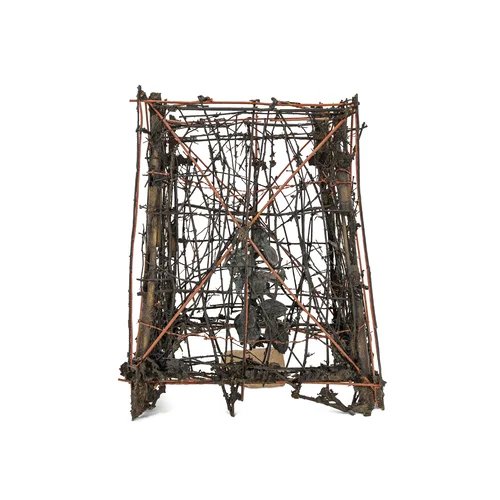

Latika Katt’s sculptural language emerged from an early and sustained attentiveness to the natural world.
Growing up in Dehradun, northern India, she accompanied her botanist father through the Himalayan foothills, developing a sensitivity to organic form and texture that later informed her materially experimental practice.
Taking inspiration from Auguste Rodin’s treatment of the body and from the expressive potential of unconventional materials including cow dung, paper pulp, stone, and marble, Katt produced works that resisted easy classification. Her practice was distinct from the dominant trajectories of post-Independence Indian sculpture at the time, which was dominated by male artists.
Katt passed away in 2025. At a Saffronart auction in April 2026, her sculpture Fence (n.d.) realized $49,032, establishing a new auction record for the artist and signaling a broader reassessment of her contribution to contemporary Indian sculpture.
Mrinalini Mukherjee
B. 1949, Mumbai, India. D. 2015, New Delhi, India.
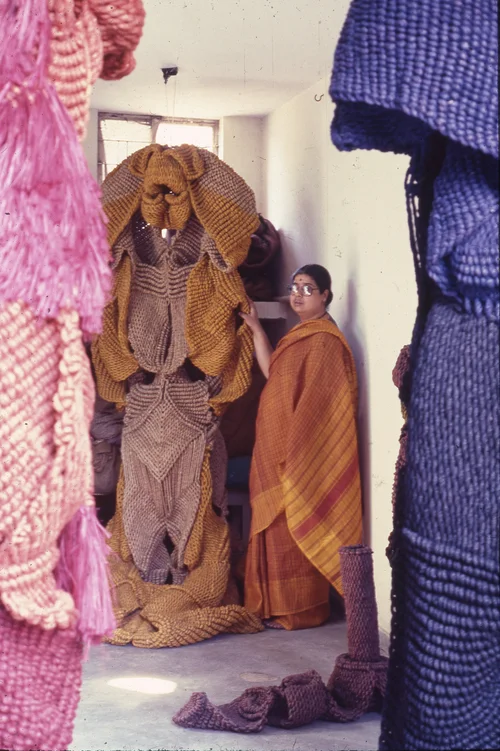

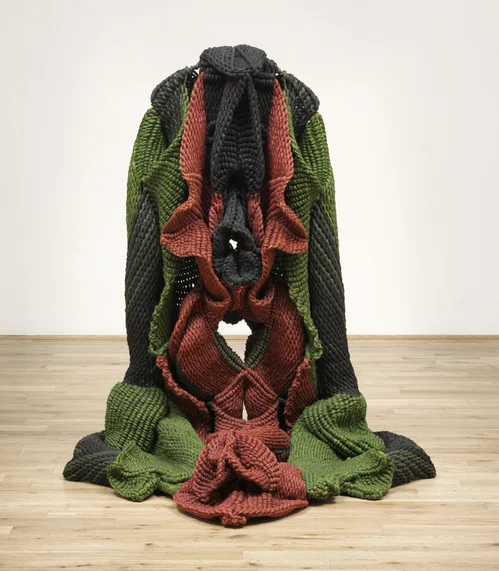

In the early 1970s, Mrinalini Mukherjee began the painstaking process of knotting natural hemp fiber into large-scale anthropomorphic forms. They operated outside conventional iconography—fecund, layered, and formally monumental.
“Mukherjee’s most distinctive works in dyed and natural hemp fiber were, for a long time, structurally undervalued,” said curator Tarini Malik. “Fiber sat uneasily within the hierarchies of the international art market: too close to craft, too gendered, too ‘monumental’ in the traditional sculptural sense, and to some considered much harder to conserve, display, and trade. These are material conditions, but they produce market effects.”
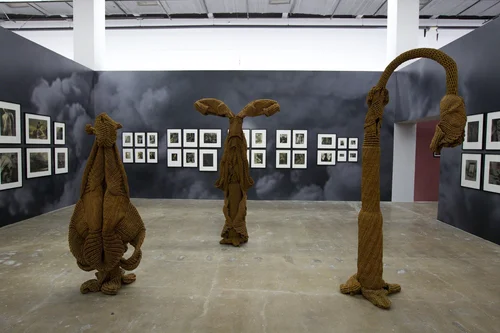

Arboreal Enactment, Night Bloom 2, and Forest Flame IV, 1991?, 1992, 1996, 2009
Mrinalini Mukherjee
Gwangju Biennale
Around the 2000s, Mukherjee began working in bronze, bringing the same organic sensibility to a more traditionally legible sculptural medium. “Mukherjee’s later bronzes and ceramics entered a market that already knew how to price those materials,” added Malik.
While Mukherjee’s works have been shown across notable institutions and biennales, it was her first international retrospective, “Phenomenal Nature,” at the Met Breuer in 2019, which brought her significant global acclaim. Most recently, London’s Royal Academy of Arts presented her works in a retrospective, “A Story of South Asian Art: Mrinalini Mukherjee and Her Circle,” now on view at The Hepworth Wakefield until November 1, 2026.
Meera Mukherjee
B. 1923, Kolkata, India. D. 1998, Narendrapur, India.
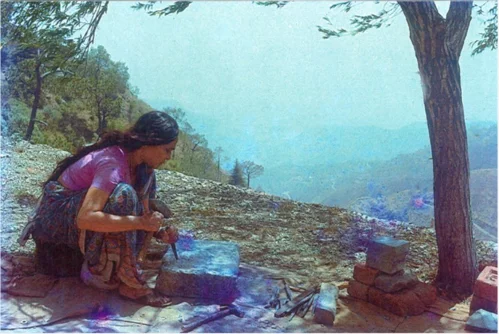

In a modernist period of Indian art dominated by abstraction, Meera Mukherjee kept her gaze firmly on the human figure.
Casting her bronzes using the dhokra metal-casting method—a wax technique practiced by communities across central and eastern India—she produced works that proved highly influential to modern Indian sculpture. “Renowned for the intricacy and delicacy that she brought to bronze, Mukherjee pushed the limits of Indian metalworking to depict everyday life and the persevering spirit of working-class people,” said Laura Smith, director of collections and exhibitions at the Hepworth Wakefield.
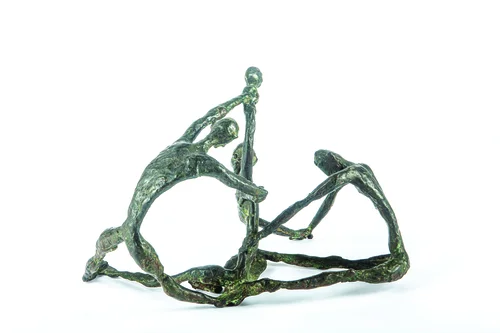
It is precisely the ability to transform the weight of bronze into something lyrical, almost tender, that has come to define both Mukherjee’s legacy and her market, which is seeing consistently strong demand. “The strength of Meera Mukherjee’s market lies in how recognizable and materially distinctive her practice is,” said Damian Vesey, international specialist, South Asian and modern contemporary art auctions, at Christie’s. “Her sculptures seem paradoxically malleable despite being cast in bronze.”
Her present auction record stands at $362,193 for Pilgrims to Haridwar (1983) at Pundole’s in 2023. Her work Untitled (Wheel Builders) (ca. 1980s), will feature in Christie’s London in “Sublime Shadows: South Asian Art from a Distinguished Collection” this month—the house’s first dedicated South Asian Modern sale in the city in seven years—with a high estimate of $107,600.
Nalini Malani
B. 1946, Karachi (undivided India)
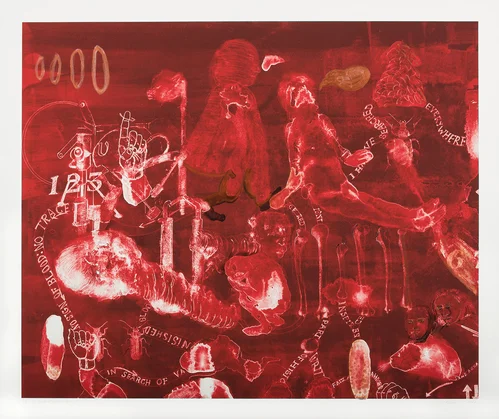

In Search of Vanished Blood (2), 2012
Nalini Malani
Galerie Lelong
Nalini Malani was born in Karachi in 1946, a year before Partition. She has been making politically urgent art ever since.
Malani “became a pioneering feminist artist at a time when there was no established vocabulary or framework for thinking specifically about the conditions of women—the missing agency, the marginalized voices, women reduced to mere footnotes in the larger narrative. The critics weren’t ready. The men weren’t ready. Yet here she was, painting abortion, painting prostitution, painting the realities that polite society preferred to ignore,” said curator Roobina Karode.
Decades on, Malani sees little cause for reassurance. “With all the progress of science, the world is suffering a massive regression,” the artist told Artsy. “In this apocalypse where the alpha-male leaders are the ringmasters of the circus, it is always the women, the oppressed, and the voiceless who suffer first and most acutely.” The urgency that defined her earliest work has not grown dated. It has deepened.
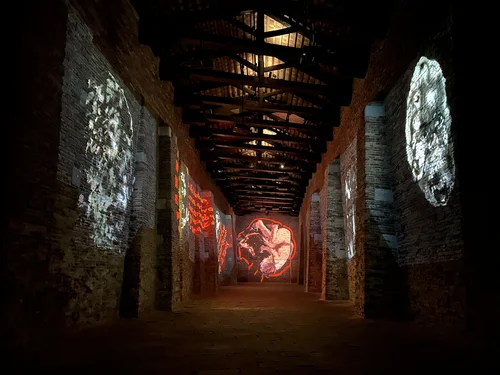

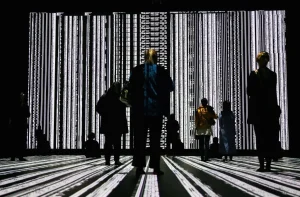
“Of Woman Born,” an immersive “animation chamber” installation commissioned by the Kiran Nadar Museum of Art for the 61st Venice Biennale, is the latest in a string of major institutional showcases. A survey of her six-decade career will be at Tate Modern in July 2027.
This momentum is translating to the artist’s market. At auction, Nursery Tales (2008), a reverse painting unearthing the violence buried in sanitized fairytales, sold for $406,780 at Saffronart’s 25th Anniversary evening sale in 2025—a new record—while Love (1990–91) achieved $302,400 against an estimate of $60,000 at Christie’s in 2024.
Vivan Sundaram
B. 1943, Shimla, India. D. 2023, New Delhi, India.

Untitled,
Vivan Sundaram
Swaraj Art Archive
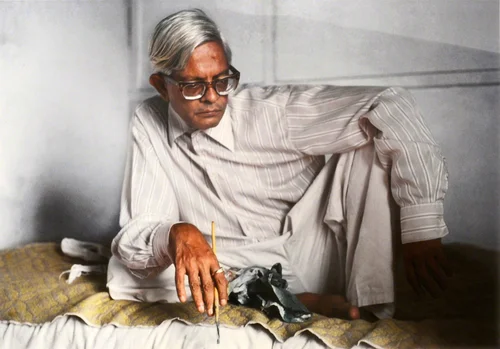
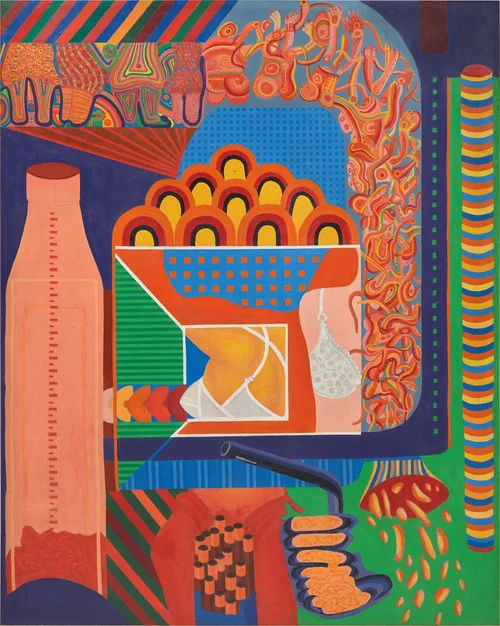
In Vivan Sundaram’s work, every material choice carried the weight of a position. Trained at the Baroda Faculty of Fine Arts and later at the Slade School in London, he returned to India in the late 1960s. The nephew of modernist pioneer Amrita Sher-Gil, he went on to become one of the subcontinent’s most consequential installation artists—and one of its most committed cultural activists.

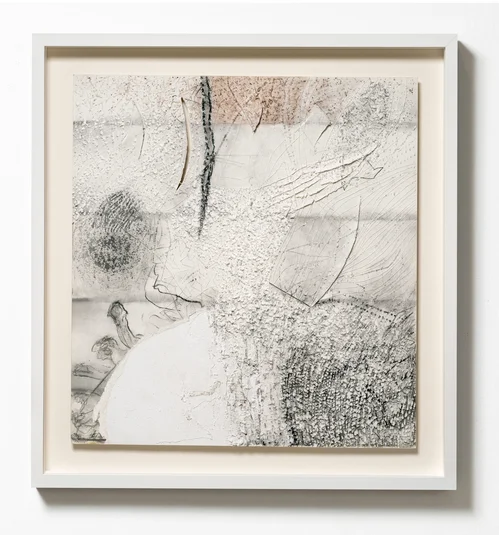

Untitled, 2019
Vivan Sundaram
Vadehra Art Gallery
“A pivotal figure in South Asian art, Sundaram is not only a leading installation artist but also an activist, organizer, and intellectual force whose influence extends well beyond the market,” said Manjari Sihare-Sutin, worldwide head of modern and contemporary South Asian art at Sotheby’s. “His early works—precursors to his later institutional practice shown at venues such as the Tate—are now being more fully recognized by collectors.”
Sundaram’s auction record traces the pace of that reappraisal: $89,000 in 2024 to $300,000 in 2025, and $896,000, achieved for Inbetweenness (1967) at Sotheby’s 2026 “Modern & Contemporary South Asian Art” sale. For an artist of Sundaram’s stature, the reappraisal feels long overdue. By any measure, it is well underway.
Rashid Choudhury
B. 1932, Faridpur District, Bangladesh. D. 1986, Dhaka, Bangladesh.
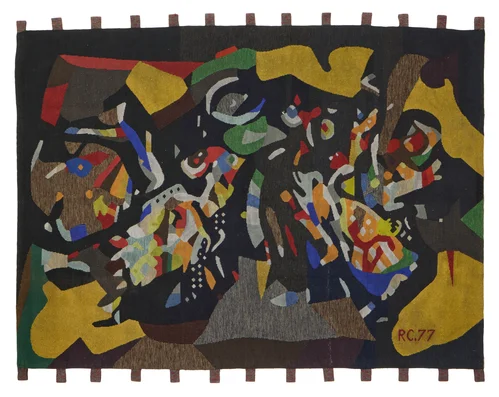

Rashid Choudhury was a foundational figure in the development of modern art in Bangladesh. After training at Dacca Art College, he continued his studies in Spain in 1956, and then in France in 1960, studying under Jean Lurçat—one of the 20th-century’s foremost practitioners of tapestry as a contemporary medium.
“Choudhury pioneered the revival of tapestry as a contemporary medium, drawing on his training in Dhaka, Madrid, and Paris,” said Manjari Sihare-Sutin, worldwide head of modern and contemporary South Asian art at Sotheby’s. “His works transform folk traditions into a sophisticated abstract visual language and are held in major institutional collections, including the Metropolitan Museum of Art.”
At Sotheby’s New York spring sale in March 2026, where several auction records for South Asian artists were set in a single evening, a large 1977 untitled Choudhury tapestry achieved a new auction record of $153,600. “Given their scale and rarity on the market, the strong collector response reflects a maturing, globally engaged audience collecting across geographies and mediums,” Sihare-Sutin added.
Jehangir Sabavala
B. 1922, Bombay Presidency, province of British India. D. 2011, Mumbai, India.

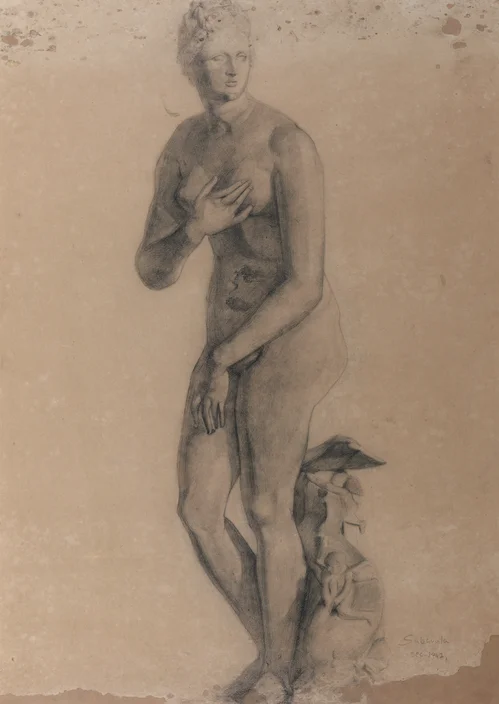

Untitled , 1942
Jehangir Sabavala
Arushi Arts
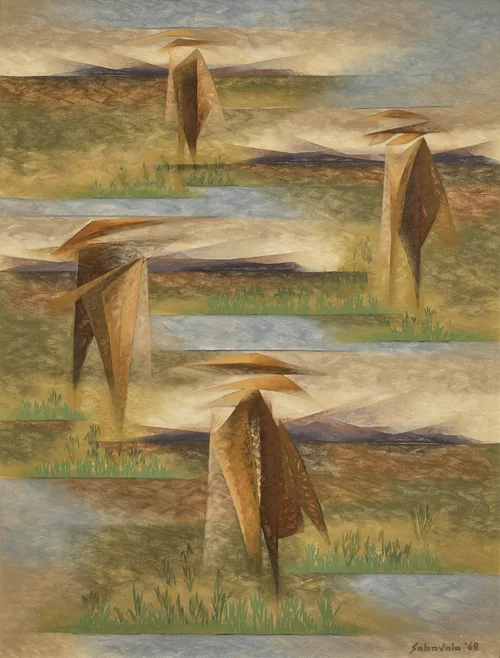
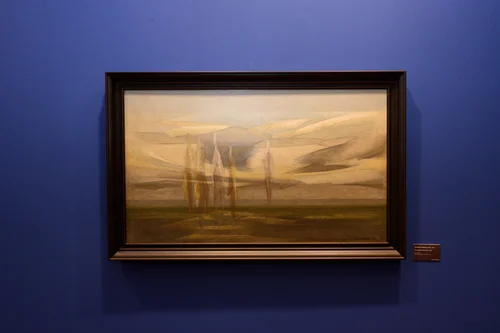
Jehangir Sabavala spent years in Europe before becoming one of the most celebrated Indian painters of the 20th century. After graduating from the Sir J. J. School of Art in Bombay, he studied at the Heatherley School in London, followed by the Académie André Lhote, the Académie Julian, and the Académie de la Grande Chaumière in Paris.
Often described as a painter-gentleman, Sabavala is known for canvases that carry the formal refinement of tradition into something distinctly his own, where landscapes become an exercise in balance, restraint, and suspended light.
The Wraiths of the Shore, 1970
Jehangir Sabavala
Volte Gallery
In March 2025, Sabavala’s The Journey of the Magi (1963) achieved a world auction record of $2.73 million at Sotheby’s New York, surpassing the previous record of $1.59 million for The Embarkation (1965), set at Christie’s New York in 2021.
Just this month at Bonhams, his painting The Breakthrough (1966) sold for $650,000, illustrating consistent demand. “Synthesizing European modernist influences with a deeply personal restraint, the work unites his signature geometry, muted palette, and contemplative stillness,” said Priya Singh, head of South Asian modern and contemporary art at the auction house.
Ganesh Pyne
B. 1937, Kolkata, India. D. 2013, Kolkata, India.

Untitled, Unknown
Ganesh Pyne
The Eye Within
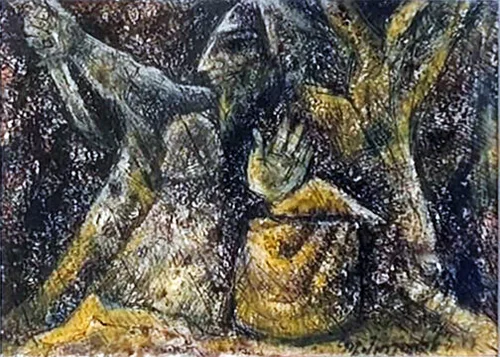
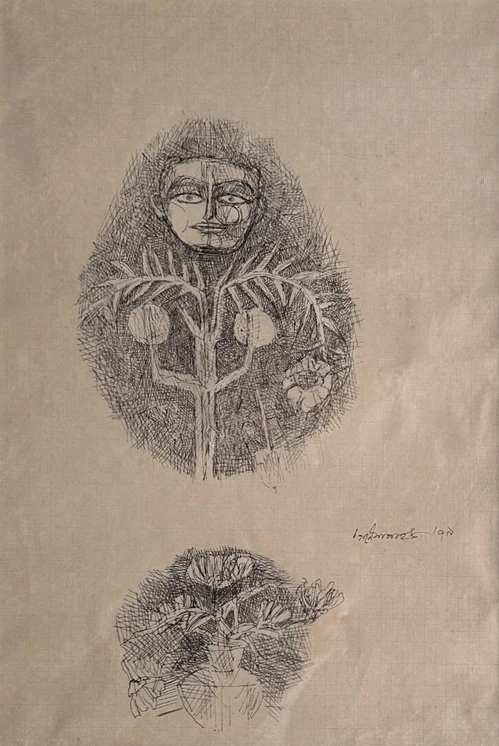
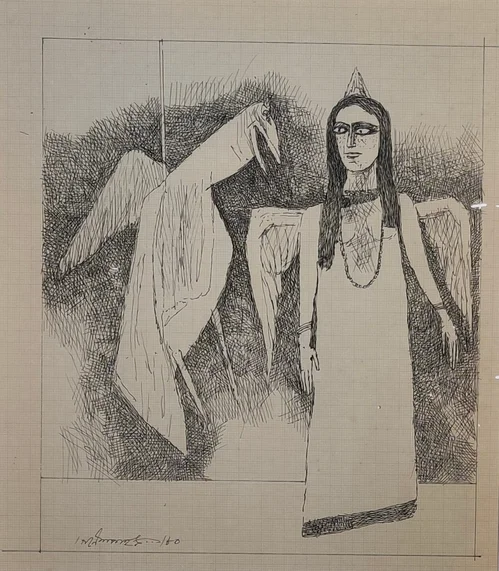
Ganesh Pyne grew up in Kolkata in the aftermath of Partition. Born in 1937, he came of age amid a lingering atmosphere of violence and displacement, absorbing folktales narrated by his grandmother. Both would surface in his work, not as direct illustrations but as recurring symbolic motifs refracted through a private, hallucinatory logic.
In March 2026, Encounter in the Twilight Zone (1974) achieved $2.51 million at Christie’s New York, establishing a new auction record for the artist.

Untitled, Unknown
Ganesh Pyne
Art Magnum
Untitled, Unknown
Ganesh Pyne
Art Magnum
“Pyne holds a singular position among Indian modernists working outside the prevalent trajectories of the period,” said Christie’s specialist Damian Vesey. “His works are dreamlike, playing on ambiguous allusions, which is why they are so captivating and resonate with so many today; they transport us to another world, one of myth and magic.”
In November 2025, Mumbai auction house Pundole’s staged “Liminal Space—The Twilight World of Ganesh Pyne,” a seminal presentation spanning his career, including 188 drawings from The Mahabharata, from the Dabriwala Family Collection.


