





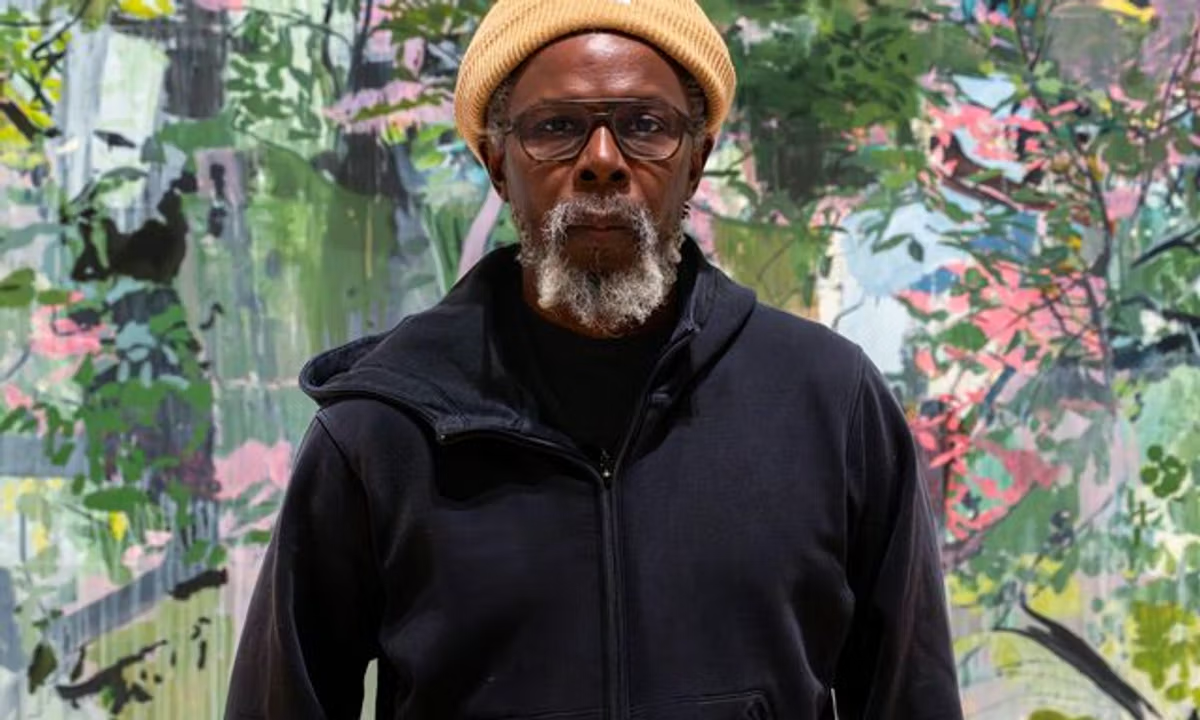
Hurvin Anderson talks to Ben Luke about his influences—from writers to musicians, and, of course, other artists—and the cultural experiences that have shaped his life and work. Anderson was born in Birmingham, UK, in 1965, the youngest of eight siblings, the rest of whom were born in Jamaica. His paintings are a poetic response to place, teeming with personal and cultural resonance.
Hurvin Anderson, Maracus III, 2004.
© Hurvin Anderson. Courtesy the artist and Thomas Dane Gallery. Photo: Richard Ivey.
He transforms photographs from his own archive as well as found images into atmospheric worlds of paint, in which details of motifs, including figures, objects, interiors and landscapes pull in and out of focus, suggesting the texture of memory.

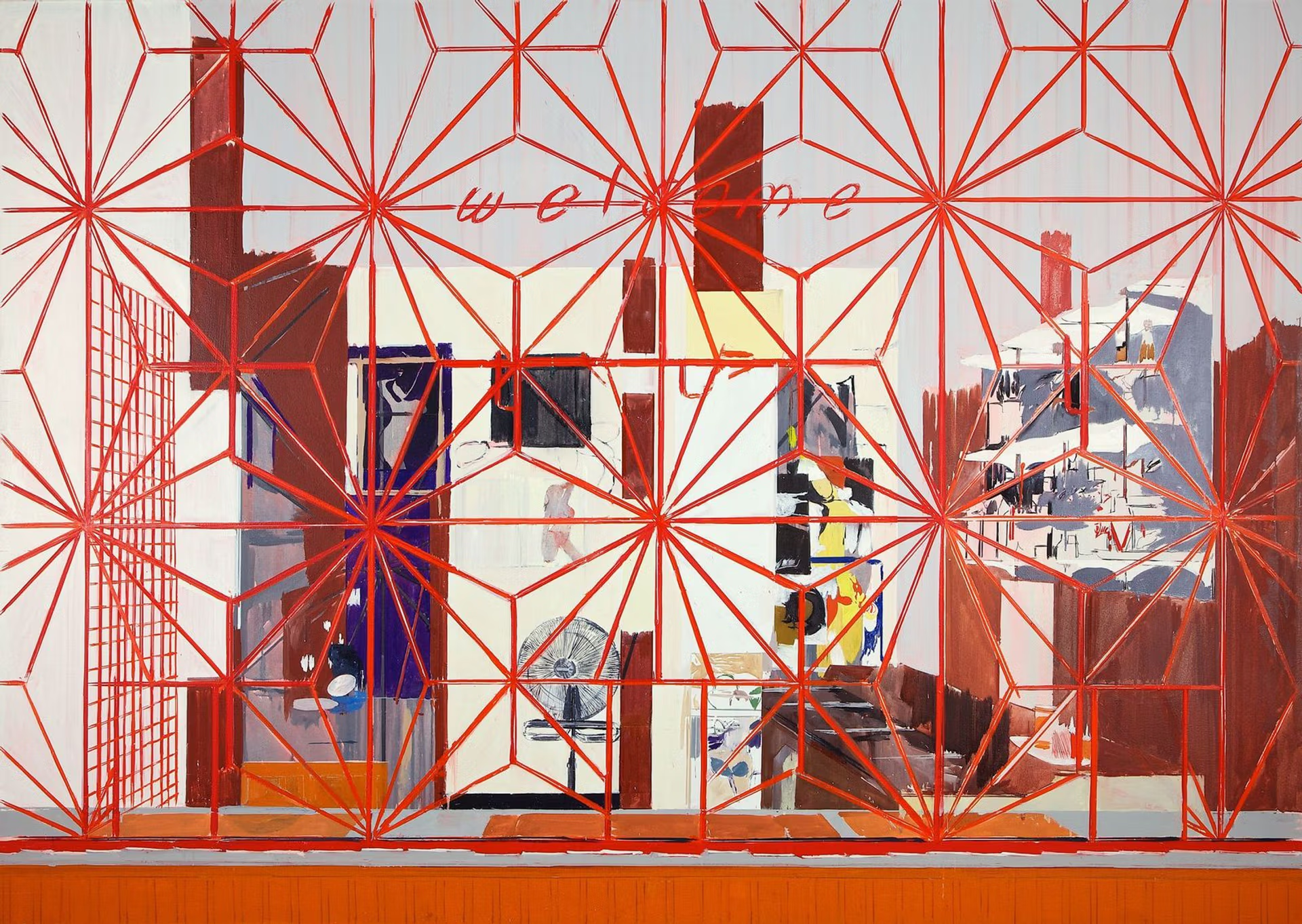
Hurvin Anderson, Welcome: Carib, 2005. Private Collection.
© Hurvin Anderson. Courtesy the artist and Thomas Dane Gallery. Photo: Richard Ivey.
Much of his work evokes scenes and spaces in Britain, where he was born, but also imagery of Jamaica, from where his parents emigrated to the UK, and the Caribbean more widely. He has stated that his paintings often relate to a feeling of “being in one place while thinking of another”. They are a profoundly subjective response to diasporic lived experience and a sustained and lyrical engagement with paint as simultaneously a tool of representation and of veiling or disturbance.

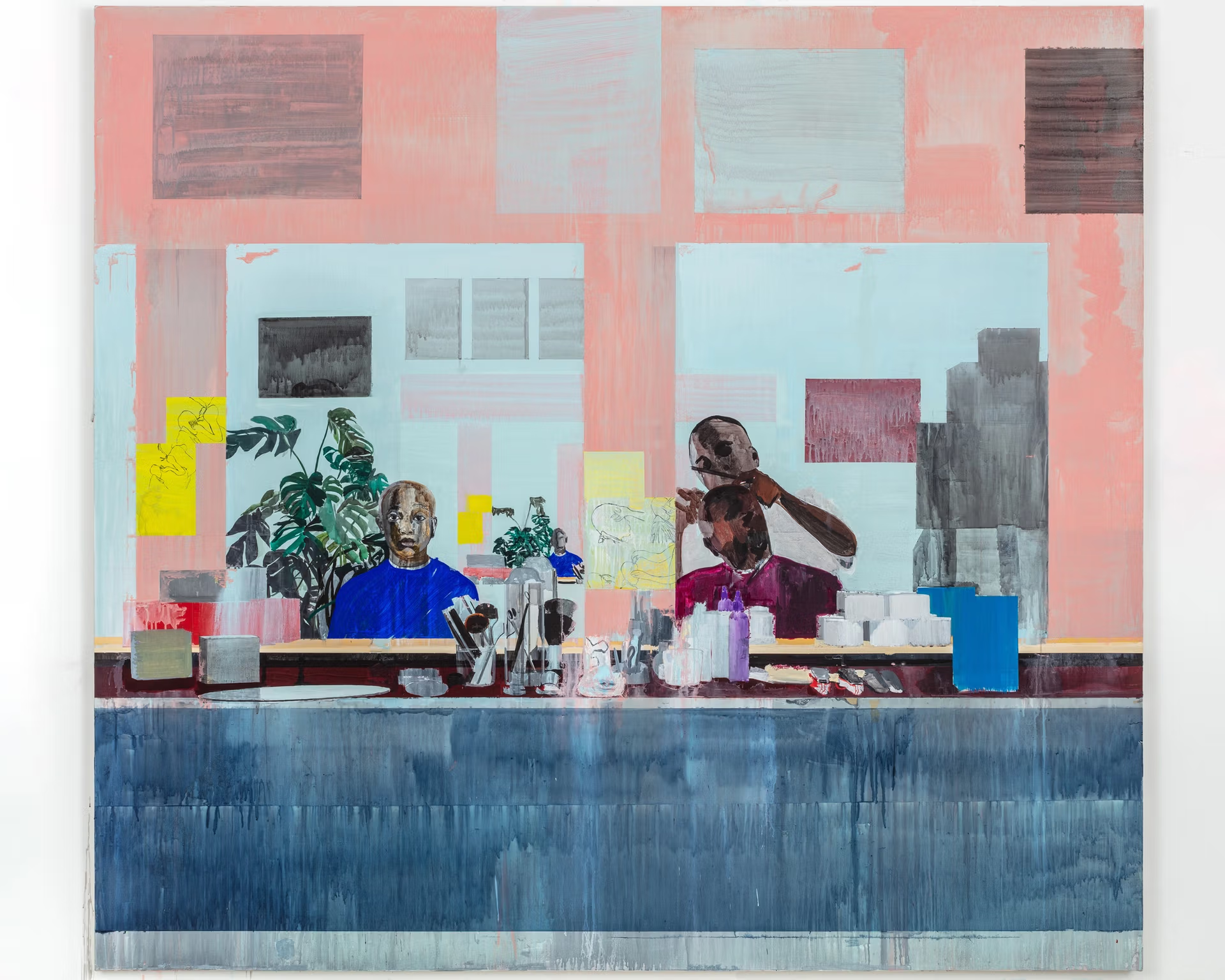
Hurvin Anderson, Shear Cut, 2023.
© Hurvin Anderson. Courtesy the artist and Thomas Dane Gallery. Photo: Richard Ivey.
He discusses for the first time his latest paintings for the survey of his work at Tate Britain, he reflects on how he uses photography in his work and his shift to working with what he calls a “second unit” in recent works. He recalls the early influence of Michael Andrews and Richard Diebenkorn, his enduring fascination with the art of Édouard Manet and Diego Velázquez, and how he responded to the Jamaican artist Carl Abrahams in his painting Passenger Opportunity (2024-25). Plus, he gives insight into his life in the studio and answers our usual questions, including the ultimate: what is art for?
Hurvin Anderson, Tate Britain, until 23 August 2026.
This podcast is sponsored by Bloomberg Connects, the arts and culture platform. Bloomberg Connects offers access to a vast range of international cultural organisations through a single click, with new guides being added regularly. They include several museums in which Hurvin Anderson has had solo exhibitions. They include, in the US, the Contemporary Art Museum in Saint Louis, Missouri, and The Studio Museum in Harlem, New York; and in the UK, Tate, including Tate Britain, where he has a major survey in 2026, the Ikon Gallery in Birmingham, The Hepworth Wakefield and the Dulwich Picture Gallery in London.
Explore the guide to Dulwich Picture Gallery on Bloomberg Connects, and you can hear audio content about the remarkable building by John Soane, which opened in 1817. You can also hear features on the history of the collection and take a deep dive into its many masterpieces by artists including Rubens, Rembrandt, Poussin, and Gainsborough, as well as taking a Queer Tour of the Collection with Sacha Coward. The gallery’s exhibitions are also explored in-depth, including the 2026 show, Konrad Mägi, the first major UK survey of the Estonian Modernist painter, with audio analysis of more than 20 works in the exhibition.


