







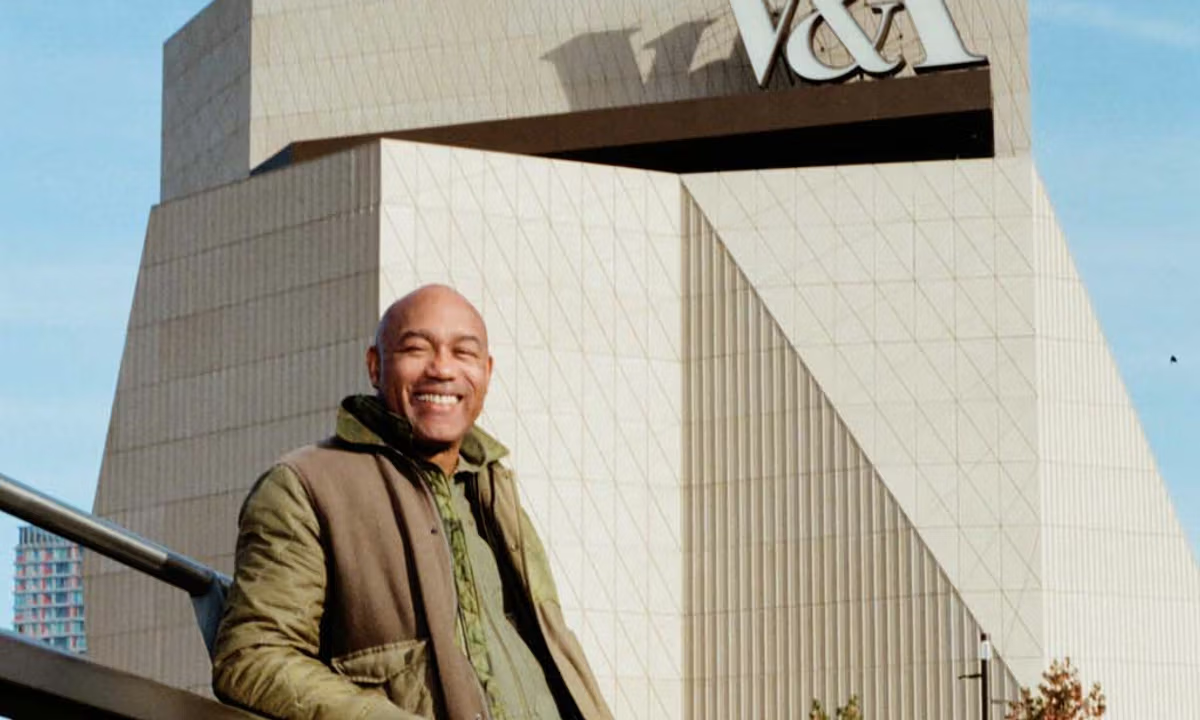
The V&A brand is expanding with the launch of the long-awaited V&A East Museum in Queen Elizabeth Olympic Park in Stratford, east London, this month. Its director, Gus Casely-Hayford, is promising “a fresh look at contemporary culture through the V&A’s global collections”.
The new five-storey building, due to open on 18 April, joins the V&A East Storehouse, which opened in 2025, and will sit alongside venues for the BBC, Sadler’s Wells East and London College of Fashion, which together make up the East Bank cultural quarter. The V&A East Storehouse, which opened last May, has already drawn more than 500,000 visitors. The original Victoria and Albert Museum was founded on Pall Mall in 1852 and moved to South Kensington in 1857.
Casely-Hayford declines to give a visitor figure target for the first year of V&A East but points out that research conducted in the first six months of opening showed that more than 31% of visitors to V&A East Storehouse were between the ages of 16 and 35, more than 45% of UK audiences were from minority ethnic groups, and 55% of visitors were Londoners.
British artist Thomas J. Price’s 18ft bronze sculpture A Place Beyond (2026) greets visitors on the forecourt of the museum David Parry/PA Media Assignments
The new museum, Casely-Hayford says, is for “everyone”; he describes how his team has focused on creating open and public spaces and programming that meets the needs of younger audiences, those living, working and studying in the four Olympic boroughs (Hackney, Newham, Tower Hamlets and Waltham Forest), as well as people who “may not have felt comfortable in museums previously”.
“At V&A East, and across our two sites, we’re deeply embedded in our local communities,” Casely-Hayford says. “We’re locally rooted with a global outlook. We’ve created our sites with and for our audiences and have spoken to and consulted with over 30,000 local people and creatives through education and career initiatives, preopening events and activities, working in partnership with organisations and collectives across east London.”
Every aspect of the new institution has been developed in collaboration with the V&A East Youth Collective, a paid consultation programme for young people living, working and studying across east London. “Our V&A East Youth Collective community has helped shape everything from the design and content of V&A East Museum’s Why We Make galleries and our shops, to ticket prices, the V&A East brand, creative commissions, staff uniforms, co-productions with local artists and creatives, and much more,” Casely-Hayford says.

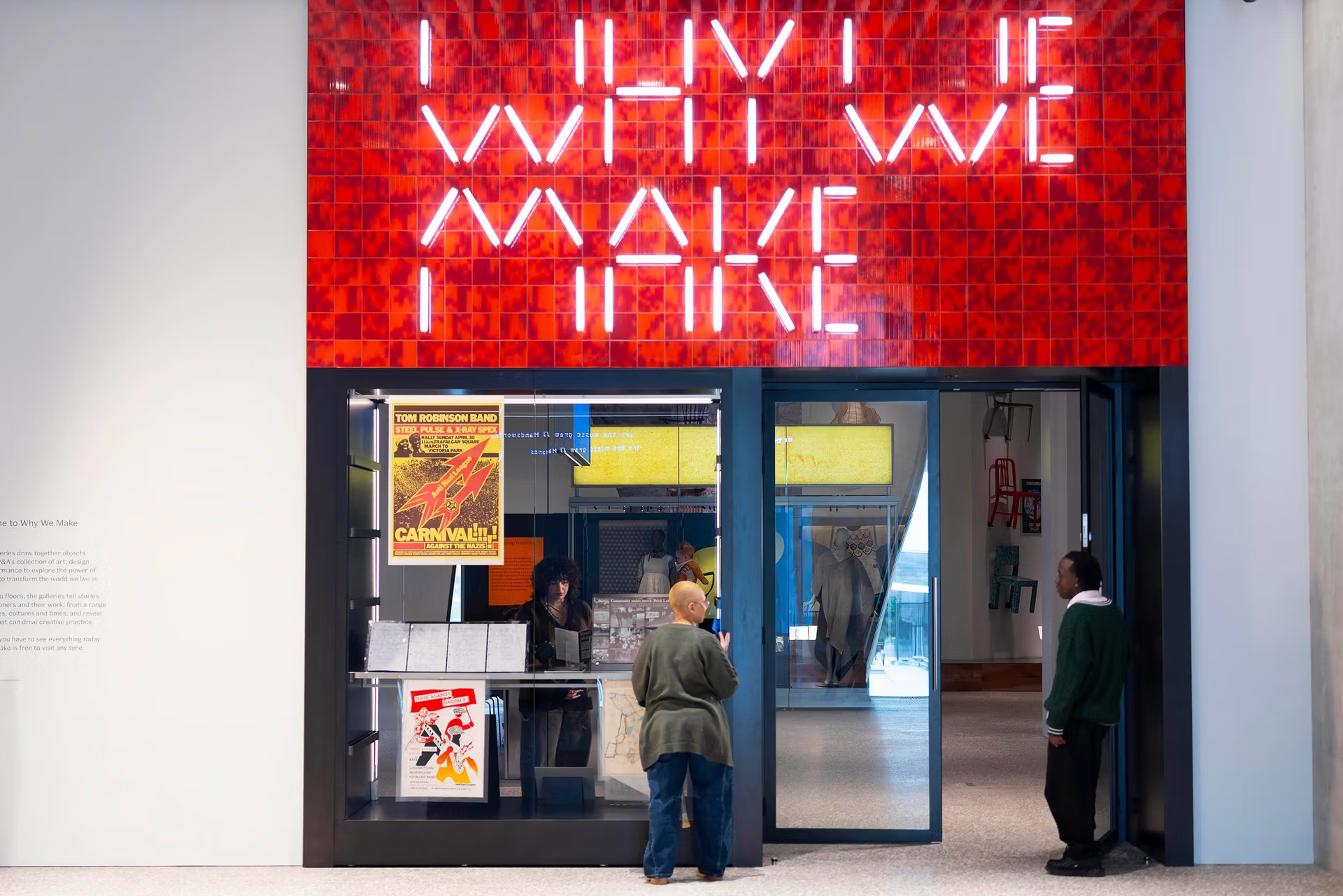
Entrance to V&A East Museum’s Why We Make galleries © David Parry for the V&A
Topical themes
The Why We Make galleries feature more than 500 objects from across the V&A’s collection, highlighting themes from representation to wellbeing, justice and environmental action. “The gallery themes are topical and based on what our audiences told us that mattered to them: identity, representation, health and wellbeing, and how we all have a responsibility to create a more sustainable future for everyone,” Casely-Hayford says.
The section “Breaking Boundaries”, for instance, examines how creatives have tried to push disciplines in new directions, helping break down barriers of gender, race and class; it features radical ballet costumes by the performance artist Leigh Bowery and his creative collaborator, corset maker Mr Pearl.
V&A East will also launch a rolling six-month commissions programme called New Work, debuting pieces by artists including Tania Bruguera of Cuba, who has made a stained-glass installation, Carrie Mae Weems and the Turner Prize-nominated artist Rene Matić. A major sculptural installation by Thomas J. Price depicting a Black woman will greet visitors at the entrance (the next series of creative commissions will be revealed later this year).

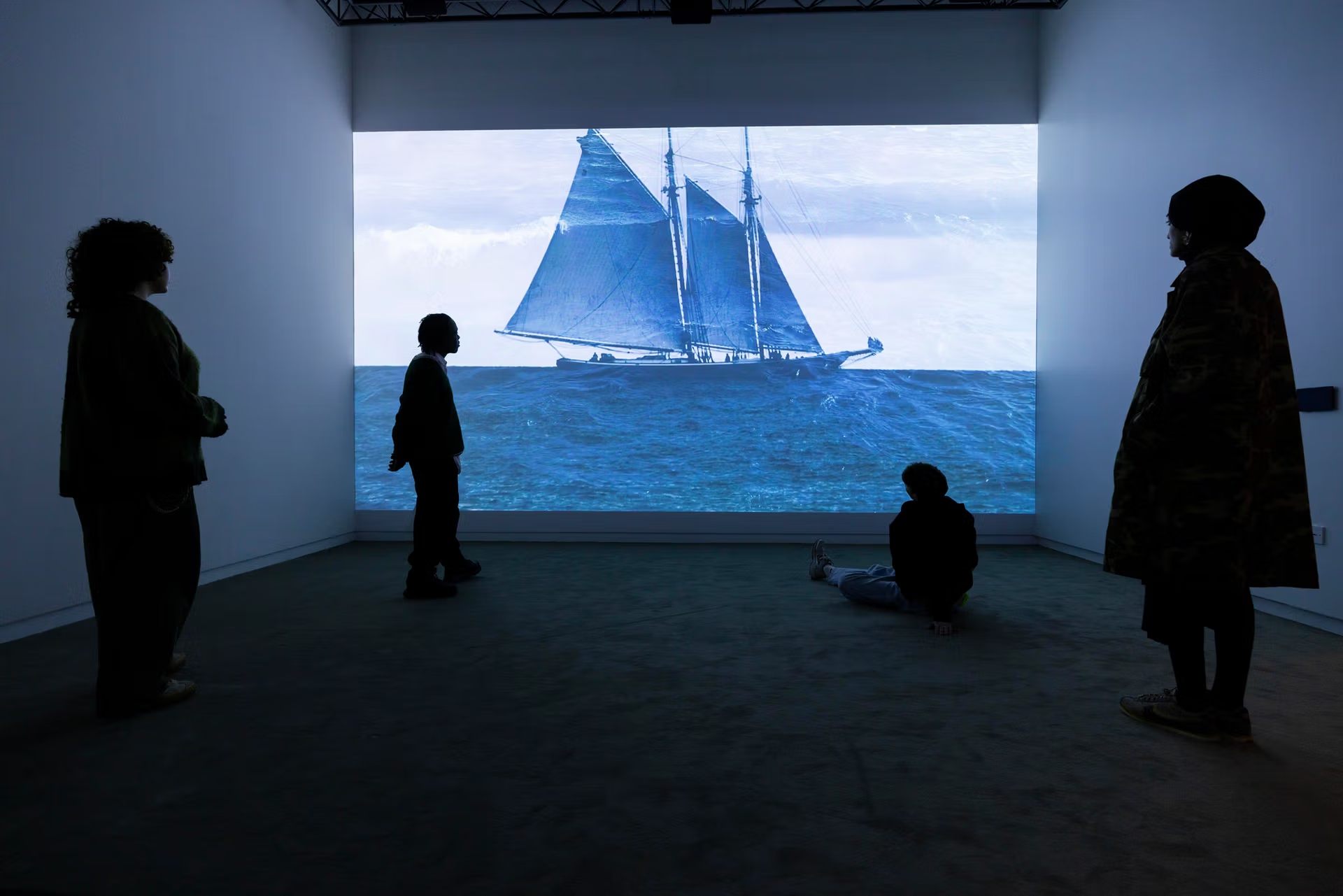
Still from Carrie Mae Weems’ V&A East New Work commission, The Long Goodbye. On view in the Film Room inside V&A East Museum’s Why We Make galleries © David Parry for the V&A
The museum opens with the exhibition The Music Is Black: A British Story (18 April-3 January 2027), charting the influence of Black British music from 1900 to the present day through music trailblazers such as Winifred Atwell, Janet Kay, Stormzy and Little Simz. The show also highlights the impact of the Windrush generation and explores Caribbean influences on the UK music scene.
In addition, the exhibition includes works from important Black British artists such as Sonia Boyce, Tam Joseph, Vicky Lindo, and Bill Brookes and Frank Bowling. Sokari Douglas Camp’s recent sculpture Red Coats and Flags (2023) traces connections between African musical masquerades, Caribbean carnival traditions and carnival celebrations around Britain.
“This is our soundtrack, the music that over the course of the last century helped to shape our nation,” Casely-Hayford says. “You could say this is a story of diversity but that would be to not give it its due … this is our shared story, eloquently, exquisitely crafted into poetry. I hope it is an example of how culture has and can draw us together, build links across time and geography that are meaningful and lasting.”

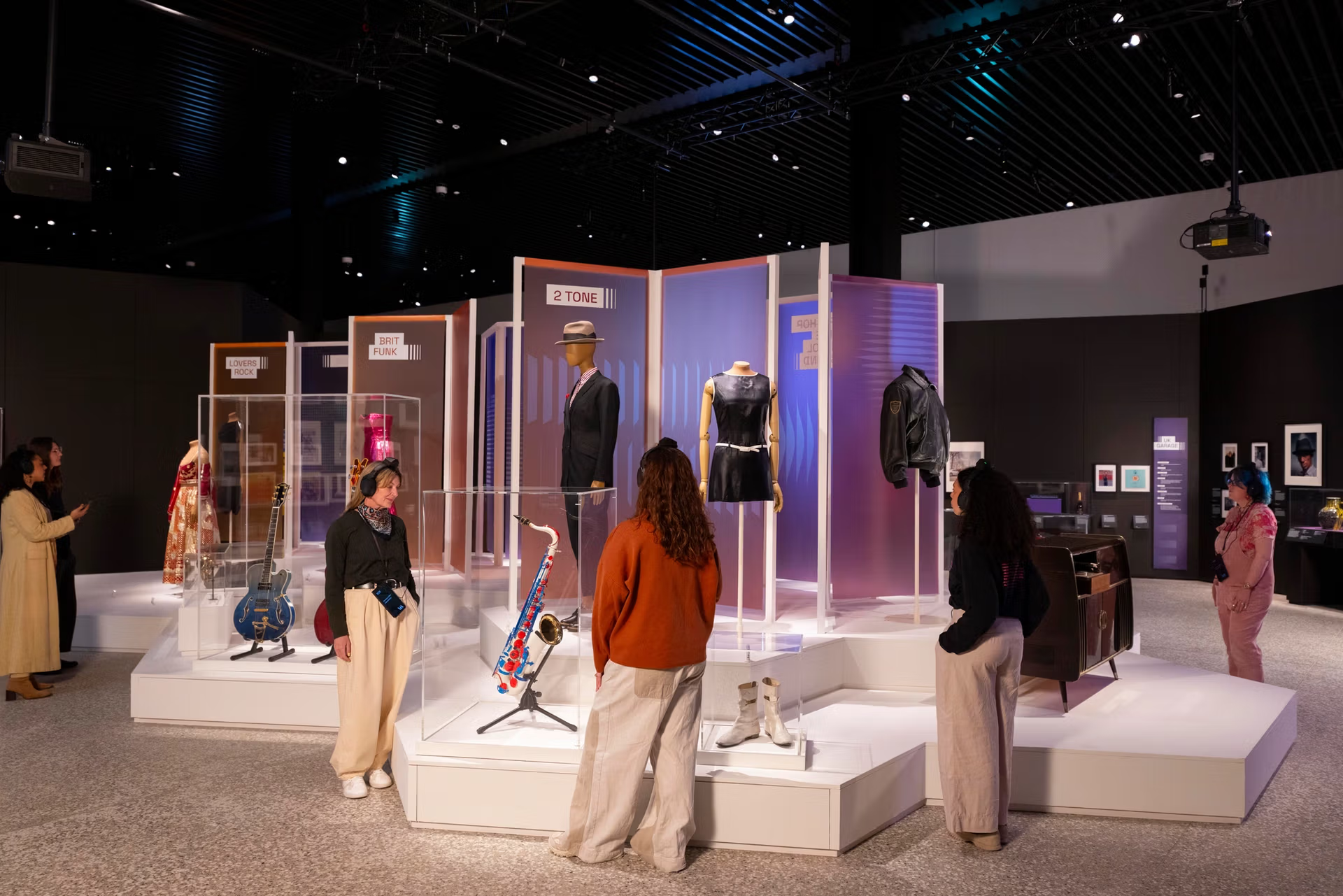
Inside V&A East Museum’s inaugural exhibition, The Music is Black: A British Story © David Parry for the V&A
In 2020, Casely-Hayford wrote an influential opinion piece in The Art Newspaper about tackling inequality in the arts following the police killing of George Floyd in Minneapolis, saying: “I still find it hard to fathom that we have never formally and robustly confronted our colonial past.” His aim, he added, was to “build a sector that embraces and benefits from the glorious diversity of our nation”.
We’re proud to celebrate cultural and demographic complexity
Gus Casely-Hayford, director of V&A East
He reinforced this message last year, telling The Guardian that V&A East will be “unapologetically diverse”. Whether museums today can satisfy all audiences is debatable, but Casely-Hayford stresses that “we are proud to celebrate the cultural and demographic complexity of the people we serve. It is what we were created to do.”
Free entry is sacrosanct
When asked about the most challenging ethical issue museums face today, Casely-Hayford says: “Being funded through public subsidy in a time when resource is tighter than in recent memory, we must demonstrate how we offer distinct and important value to our audiences.” V&A East is free to access with charges for temporary exhibitions.
The museum is launching as debate intensifies around whether national UK museums, which offer free entry to all, should start charging visitors, especially foreign tourists. “We believe it’s fundamental that access to the UK’s national collections and institutions remains free; we don’t want to put up barriers or make accessing museums prohibitive,” he says.

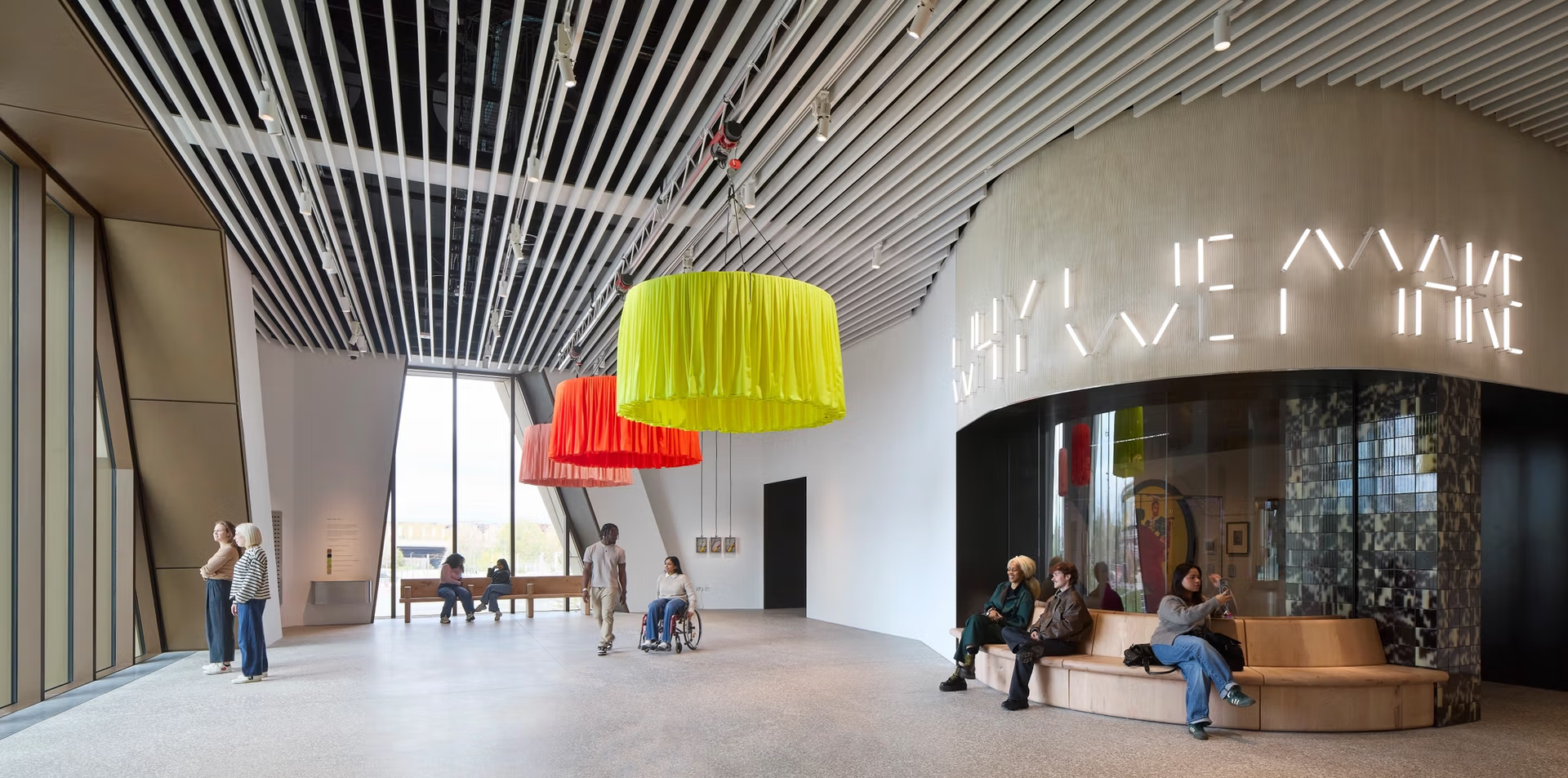
Outside V&A East Museum’s Why We Make galleries © Hufton+Crow
Asked about funding in general, Casely-Hayford points out that the V&A overall is partially funded by the UK government alongside income generated from across its venues. “To supplement income that will be generated by the V&A and other sources of funding, an uplift to our ongoing grant in aid was agreed in 2020-21 as part of the business case approved by the UK Department for Culture, Media and Sport,” he says. This extra sum of £9m sustains the programme of exhibitions, events and education work across all the V&A museums, as well as maintaining collections and permanent galleries and displays.
According to figures provided by the Greater London Authority (GLA), London’s governing body, the total cost of V&A East is £115m. The GLA has meanwhile committed to cover operational funding gaps of up to £12m over 15 years for both the V&A Storehouse East and the new museum, if required.
V&A East Museum does not have a separate collection—displays are drawn from the V&A’s overarching collection—nor its own acquisition budget, adds Casely-Hayford. “Acquiring items for display at our two V&A East sites, and that speak to V&A East’s vision and mission, is a strategic collecting priority for the V&A.” New acquisitions include Yinka Ilori’s Captain Hook armchair from the series If Chairs Could Talk (2015).
• The Music is Black: A British Story, V&A East, 18 April-3 January 2027


