







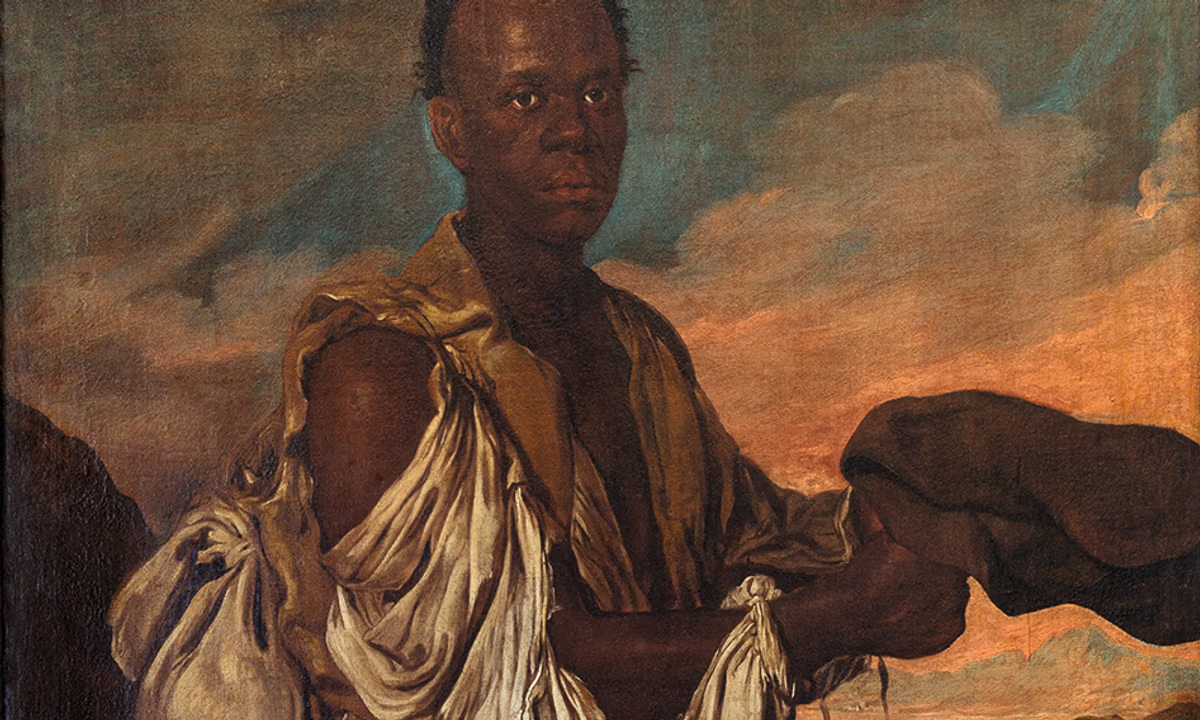
Il mendicante moro (The Moorish beggar) (1725–30) by Giacomo Ceruti
Uffizi Galleries, Florence
The Uffizi Galleries have acquired this unusual portrait of a Moor by the Italian painter Giacomo Ceruti (1698-1767). The painting, depicting a beggar, is one of the earliest known portraits—as opposed to generic depictions—of a Black man in Italian painting. Ceruti was known as Il Pitocchetto (“the Little Beggar”), due to his interest in painting the poor and working class of Lombardy. But it would have been unusual to see a Black man wandering rural northern Italy; most Africans brought to Italy were household servants. This work was included in the Ceruti exhibition that travelled from Santa Giulia Museum in Brescia to the J. Paul Getty Museum in Los Angeles in 2023.
Cup of Joy from Eastern Khorasan (11th-12th century) Courtesy of Sotheby’s
Cup of Joy from Eastern Khorasan (11th-12th century)
Toledo Museum of Art, Ohio
When the 11th- or 12th-century Kiddush Cup of Joy sold for $4m (with fees) at Sotheby’s in October, it set an auction record for a ceremonial object of Judaica. Kiddush cups, often made of silver (like this one), are used to sanctify the Shabbat and Jewish holidays. This example is thought to have been made in a workshop in the Central Asian region of Khorasan. Its vine-leaf motif and Arabic wording are typical of Central Asian silversmithing of the time, and it is inscribed “Simcha son of Salman”—the name of the cup’s first owner.

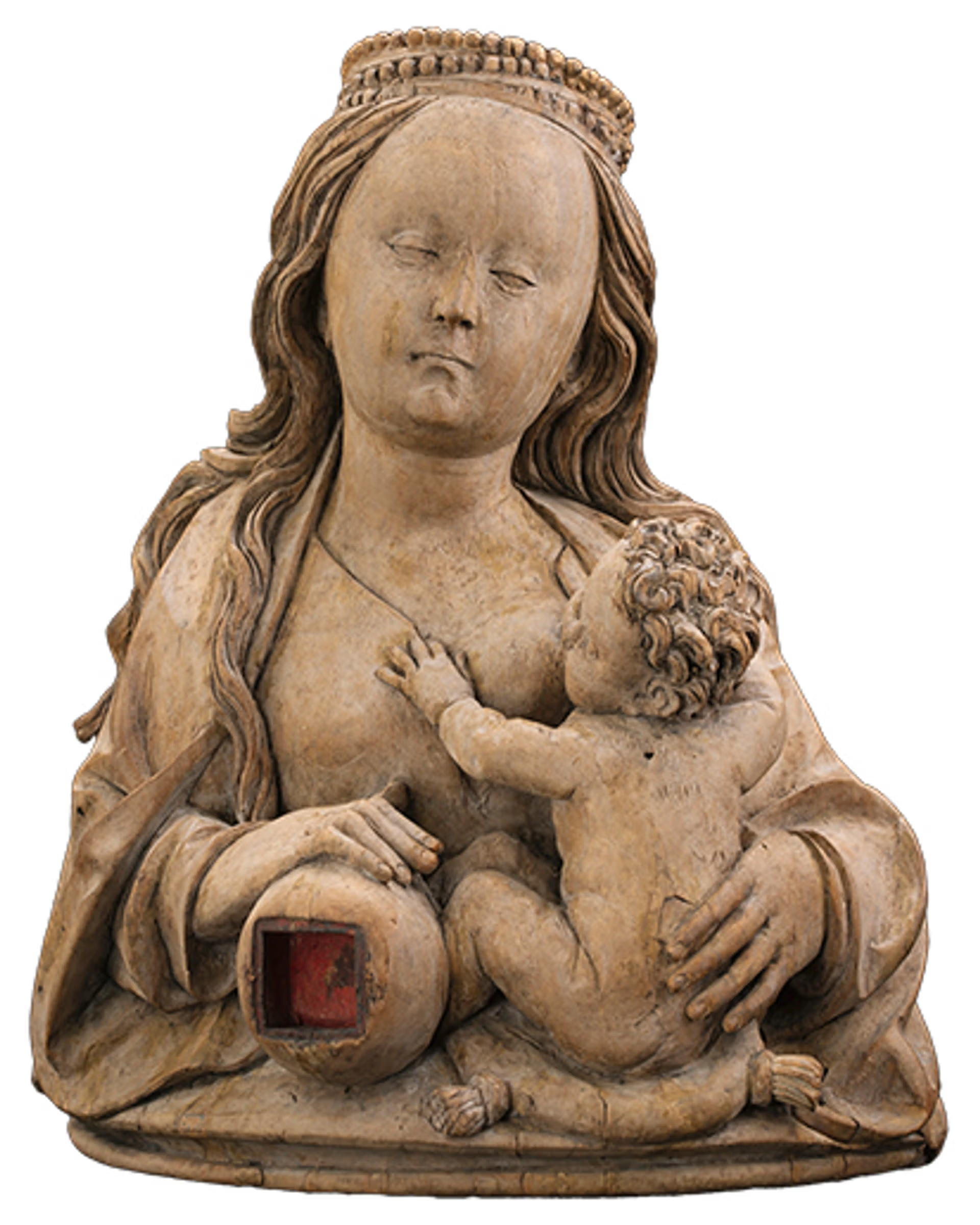
Virgin and Child (Virgo Lactans) by Circle of the Biberach Master (early 16th century) Photo: Charlen Christoph/SBM; courtesy of Bode-Museum, Berlin
Virgin and Child (Virgo Lactans) by Circle of the Biberach Master (early 16th century)
Bode-Museum, Berlin
The centrepiece of the Bode-Museum’s current exhibition Back in Berlin: A bust of the Virgin Mary and the Benoit Oppenheim Collection (until 31 May) is a recently acquired early 16th-century limewood sculpture of a nursing Madonna. The Upper Swabian reliquary once belonged to Oppenheim, a Berlin banker who collected Medieval sculpture. It passed to the Jewish banker Jakob Goldschmidt in 1928, but his collection was forcibly sold by the Nazis in 1936 and the bust ended up in the Staatliche Museen zu Berlin. It was restituted to Goldschmidt’s heirs in 2023, sold at Christie’s in 2024 for £26,460 (with fees) and has been bought for the Bode-Museum’s permanent collection.


