






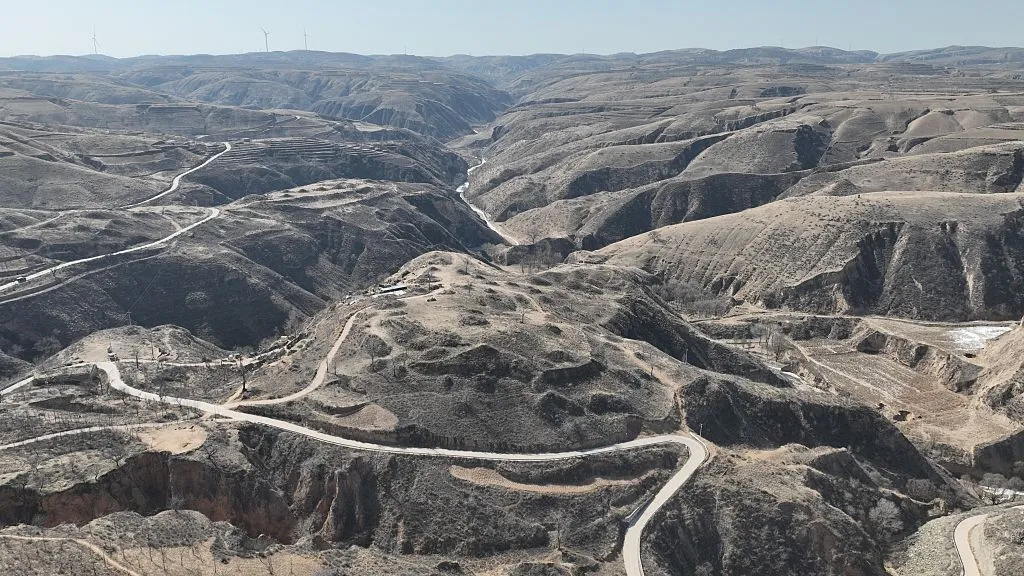
A team of archaeologists and cultural heritage researchers in northern China have uncovered a network of 573 stone forts, the earliest of which date to approx. 2800 BC. The discovery took place in the mountains near Yulin, in China’s Shaanxi province, after six years of research.
Ma Mingzhi, the head of the research team, noted that “the fortified sites likely served as focal points for defense and social organization, protecting the smaller villages around them.” The researchers began by using aerial scanning technology to trace ancient river systems in the areas, thinking—correctly—that evidence of ancient fortresses and settlements were likely to appear adjacent to water sources.
Because the structures were built over the course of several thousand years, they show the evolution of how fortified communities were constructed in ancient China. The oldest date from the Yangshao period, a time when the first agricultural villages were forming in present-day China.
By the Shang and Zhao dynasties (ca. 1600-220 BC), during which the more recent structures were built, fortified communities were more hierarchical, with specific roles for leaders, laborers, and artisans. The fortresses from this era were also more sophisticated. “Each wall, ditch, and passage suggests that these people were learning how to live together, to protect themselves, and perhaps to govern,” ZME Science reported.
The settlement year Yulin is from about the same time period as the 4,000-year-old fort city discovered under a Saudi Arabian oasis last year. Both reveal that human were building organized, fortified communities much earlier than previously thought.