







While Art Basel is new to Qatar—and to the Middle East—it enters an art field that has seen serious investment over the past 20 years. Qatar Museums was founded in 2005 by Sheikha Al-Mayassa bint Hamad bin Khalifa Al Thani, the daughter of the former emir of the country. As Qataris like to point out, Doha’s engagement with international contemporary art began before that of the UAE and well before that of Saudi Arabia; its I.M. Pei-designed Museum of Islamic Art opened in 2008 and Mathaf: Arab Museum of Modern Art in 2010, while museums elsewhere were still in the planning stages.
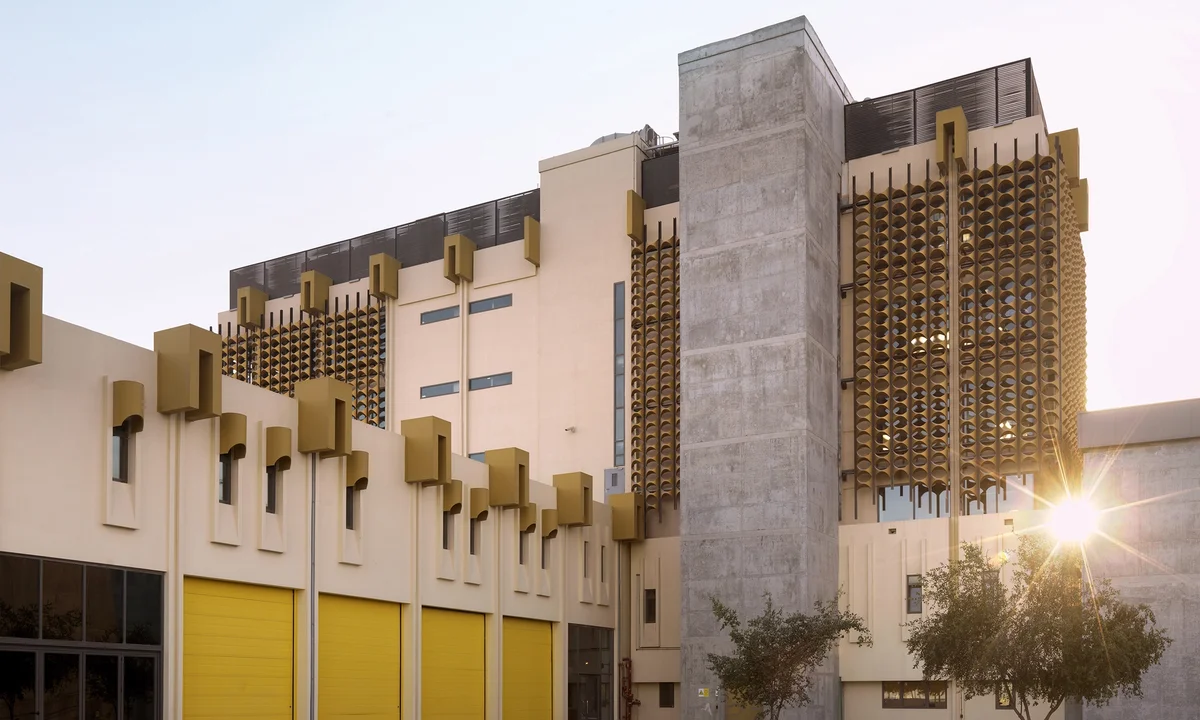
Indeed, while there are major new projects on the horizon—such as the Rubaiya, the quadrennial exhibition that Doha is modelling on Documenta—much of the latest news from Qatar is updates to the longstanding projects, such as the architect Lina Ghotmeh’s refurbishment of Mathaf and the artistic director Wael Shawky’s changes to the Fire Station contemporary art space.
In the early stages of Qatar Museums, a fluidity between royal family patronage and the country’s institutions meant that many of the major collections were begun privately by the Al Thanis and then latterly took the shape of public museums. Sheikh Hassan Al Thani’s superlative Arab Modernism collection became the core of Mathaf, while the late Sheikh Saud Al Thani’s collection of Orientalist painting will anchor the forthcoming Lusail Art Museum.
The Museum of Islamic Art, designed by I.M. Pei, opened in 2008 © Danish Rehman, Qatar Tourism
Sheikha Al-Mayassa herself, who regularly hovers at the top of art-world power lists, is known internationally as a prodigious collector—and, at home, a strategic builder. The sizeable role that Qatar Museums plays in Doha has had varied consequences: there is less of a grassroots commercial scene than in Dubai, for example, but the centralised control has also allowed Qatar Museums to act in an organised and long-term manner—expanding beyond museums into a landscape now covering art, architecture, archaeology, performance and film.
“We use the word ‘ecosystem’ a lot in everything that we do,” says Sheikha Reem Al Thani, the deputy chief executive of Qatar Museums. “We are not building a museum and then expecting people to come. That isn’t the role that we play. Yes, it’s part of our remit to build these museums around our collections, but it’s also our remit to build an ecosystem that helps the next generation, whether that is the next generation of artists, the next generation of doctors, even the next generation of astronauts.”
Doha’s key art institutions are Mathaf; Fire Station, a residency and exhibition site; the Islamic Museum of Art; Alriwaq, a Kunsthalle-like space; and the broader cultural initiative of Qatar Creates. It is also opening a number of major new art projects: the Art Mill Museum, a Modern and contemporary art institution slated for 2030, featuring work from the Southwest Asia and North Africa (Swana) region and internationally.
Quadrennial calling
More imminently, Doha will launch Rubaiya, a quadrennial exhibition opening in November and running until April 2027. Directed by Sheikha Alanood Al Thani of Qatar Museums, the ambitious project will comprise exhibitions and public installations across the country, with a central show at Alriwaq. (It had a small launch last autumn with a project by Rirkrit Tiravanija.) For the 2026–27 edition, the main exhibition, Unruly Waters, is curated by Tom Eccles, the executive director at the Center for Curatorial Studies at Bard; Ruba Katrib, the chief curator at MoMA PS1; Mark Rappolt, the editor-in-chief at ArtReview; and Shabbir Hussain Mustafa, the chief curator at the Singapore Art Museum.

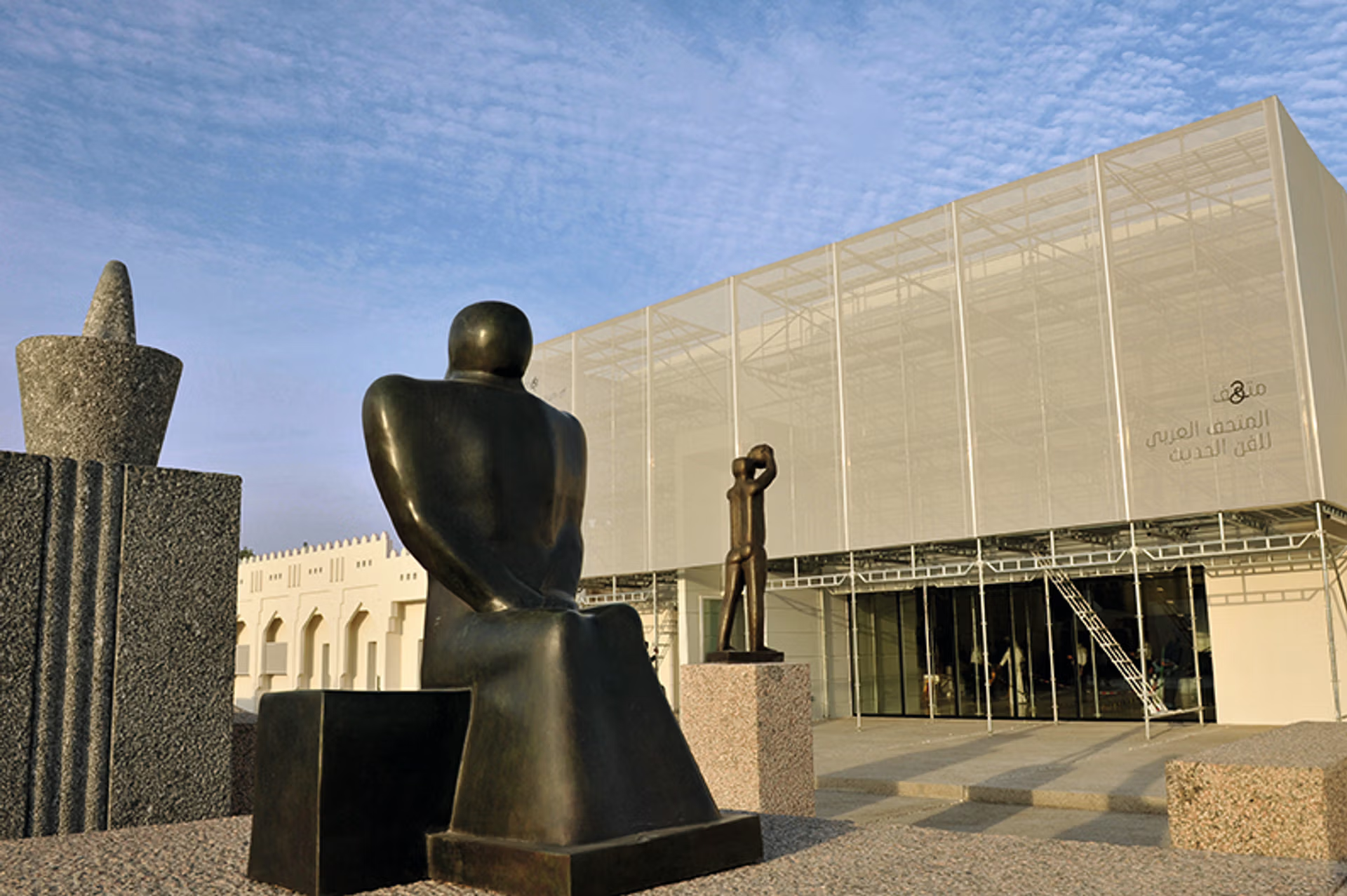
Mathaf’s expansion is being headed by the architect Lina Ghotmeh Sema Öndemir Panther
“Rubaiya has a lot of interesting partnerships, with the different biennials that we’ve been supporting, and a school programme,” Sheikha Reem explains. “So, it has a much bigger [role] than just a quadrennial that is about contemporary art.”
There is also the new pavilion that is being built at the Venice Biennale—by Ghotmeh, the ascendant star of museum architecture. (Her other projects include the contemporary art museum in AlUla, Saudi Arabia, and the Jadids’ Legacy Museum in Bukhara, not to mention the British Museum’s expansion and Doha’s own Mathaf refurbishment.) And the M.F. Husain Museum that was opened by Qatar Foundation (run by Sheikha Al-Mayassa’s mother, Sheikha Moza bint Nasser Al-Missned) late last year to showcase the work of the renowned Indian-born Modernist artist.
The flurry of activity comes after a relative lull in Qatar’s cultural announcements, particularly seen through the inevitable comparison to the UAE and Saudi Arabia. In part, the delays have been circumstantial. Sheikha Reem says that the Covid-19 pandemic pushed development of the Art Mill and the Lusail back by around one-and-a-half to two years. And, after Covid, the country went straight into development for football’s Fifa World Cup, for which Qatar Museums was an active partner. It commissioned more than 100 works that were placed around the country from artists including Jeff Koons, Olafur Eliasson, Simone Fattal and Monira Al Qadiri.
And Qatar Museums has also been adapting many of its existing institutions to an art landscape that has changed drastically in the past 15 years. Two years ago, Alriwaq was refurbished by Rem Koolhaas and is becoming a more important exhibition venue. Under Shawky, who is also the artistic director of Art Basel Qatar, Fire Station is shifting, too. When it opened 11 years ago, half the residency spaces went to Qataris, and the other half to other nationalities who live in Qatar. This was a facet of its time: capacity building has been a major priority for cultural sectors across the Gulf. Now, Shawky has loosened these restrictions, inviting in artists from the SWANA region and further afield. The artist, who ran the independent art school Mass Alexandria in Egypt for years, is also giving the studio networks a more pedagogical focus, which will help distinguish its programme from the contemporary-oriented Art Mill.

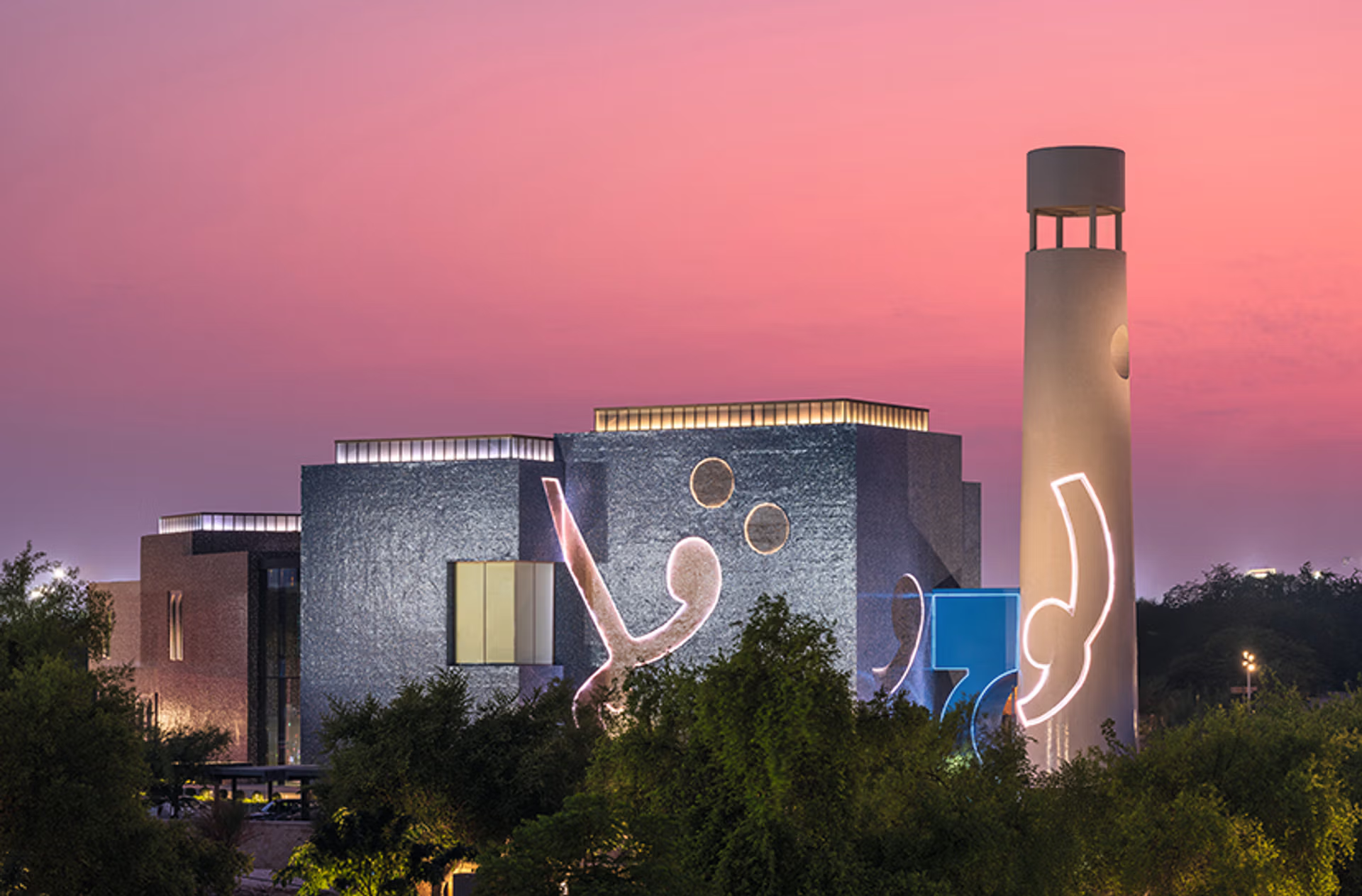
Lawh Wa Qalam: M. F. Husain Museum,honouring the Indian Modernist artist, opened late last year Courtesy of Qatar Foundation
Mathaf is also creating space for residencies in the refurbishment led by Ghotmeh. The studios are aimed at supporting artists who are working in different media, from craft idioms such as ceramics and glassblowing, to sound work, in a studio developed in collaboration with the Lebanese artist Tarek Atoui. The renovation as a whole will add further space for experimentation and discussion, while wrapping the museum in a new facade—a much-needed facelift for an institution whose premises have never quite matched its collection.
“The museum has to stay relevant,” says Zeina Arida, Mathaf’s director. “It’s important to always be an active, dynamic institution, because everything changes so fast today. That is what makes the museum interesting; it is an important interlocutor for artists and audiences.”
Within this strategic framework, Qatar Museums is frank about the role that it hopes Art Basel Qatar will play: a recognition that it has further to go in fostering an art market. “There have been historically galleries here, but we saw that we still need that commercial driver for art to be stronger, and for it to not be on Qatar Museums,” Sheikha Reem says.
The commercial sector, she adds, is not something that a government non-profit body can—or should—develop, but it is an important vector by which the artists nurtured and supported by Qatar Museums’s initiatives can reach wider recognition. “The partnership with Art Basel was very key for us, because we wanted them to come with their knowledge, and start amplifying what we are doing as Qatar—what our artists are doing, and what the region’s artists are doing—in a way that helps everybody.”


