


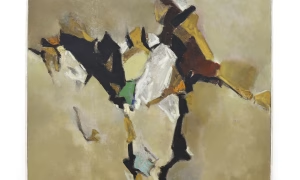





Influential during her lifetime, yet largely unfamiliar outside of central and eastern Europe, the Polish artist Erna Rosenstein (1913-2004) is the subject of a major survey at the Belvedere in Vienna. Spanning the career of the painter, poet and assemblage artist, On the Other Side of Silence examines Rosenstein’s turbulent life and work, which was marked by grief, loss and displacement.
The exhibition is a kind of homecoming for Rosenstein. Born in 1913 in Lviv—then part of Poland, now Ukraine—she studied in Vienna in the early 1930s before returning to Kraków, where she became involved with left-wing avant-garde circles. During Nazi occupation, Rosenstein survived by hiding under false identities and fleeing across Poland, resulting in scant evidence of her early work. Adding to her adversity, Rosenstein witnessed the murder of her parents. These years of trauma became the dark gravitational centre of her art, which she made for decades before her death in Warsaw in 2004.
Erna Rosenstein studied in Vienna in the early 1930s
Photo: Tadeusz Rolke, Agencja Gazeta. The Estate of Erna Rosenstein. Courtesy of Foksal Gallery Foundation and Hauser & Wirth
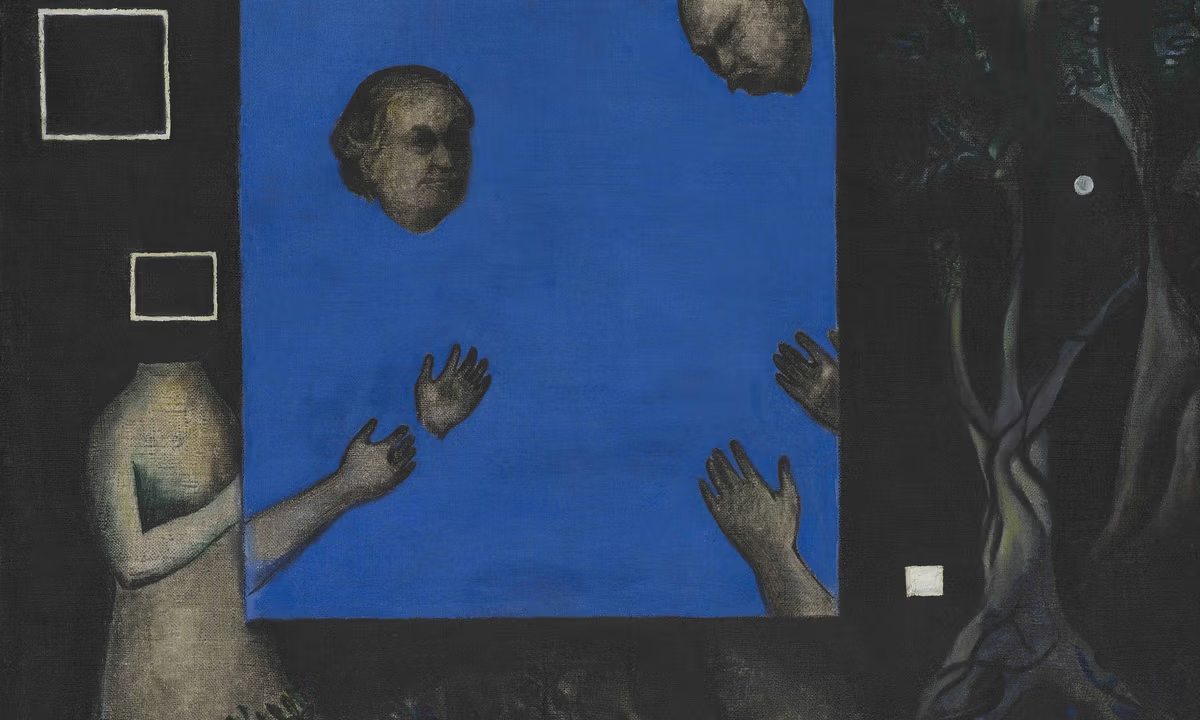
“Rosenstein’s work is characterised by a lifelong exploration of the death of her parents during their flight from the Shoah,” says the exhibition curator Stephanie Auer. “For more than five decades, the portrait-like, severed, floating heads of her father and mother appeared in various paintings, drawings and assemblages by the artist. Initially embedded in the narrative context of the night of the crime, they were later integrated into surreal-seeming landscapes, but also reproduced in isolated form, almost like a double portrait.”
The Belvedere exhibition traces how Rosenstein developed this visual language, which fused Surrealism, biomorphic abstraction and figuration, into something uniquely her own. The 1951 painting Screens, for example, indirectly evokes her parents’ deaths. A blue rectangle floats like a screen in a nocturnal forest. Hovering within this blue space are the hands and faces of the artist’s parents. “By adding a picture within a picture, the artist disconnects the scene from real space and situates it in the realms of the imagination,” Auer says. “The monochrome field acts as a projection surface, adding a sense of detachment while also alluding to the recurring and ever-changing nature of memories.”

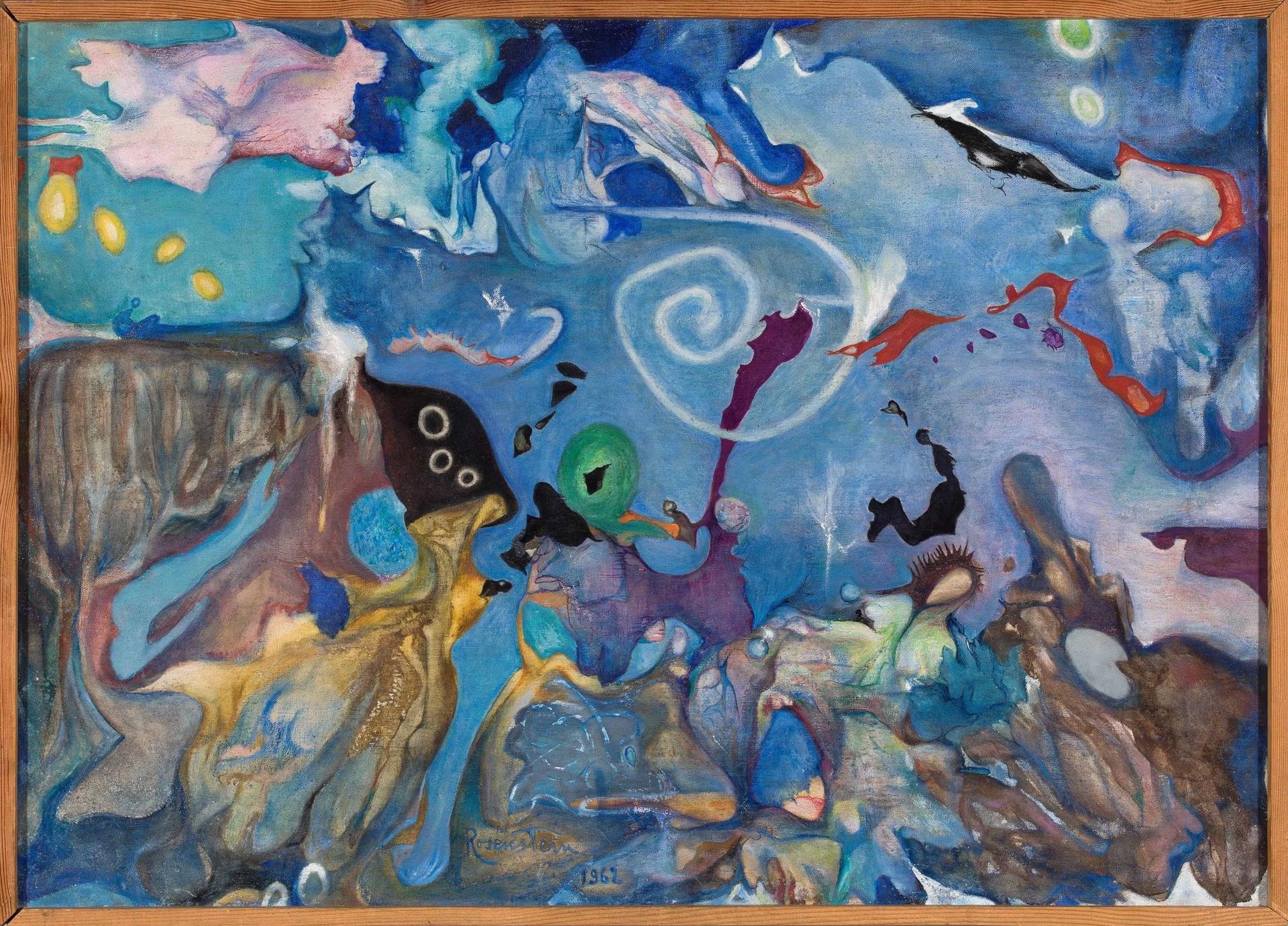
Erna Rosenstein, On the Other Side of Silence (1962)
The Estate of Erna Rosenstein. Courtesy of Foksal Gallery Foundation and Hauser & Wirth
The show builds on the recent interest in Rosenstein’s work. She was featured at Documenta 14 in Kassel in 2017, as well as in the exhibition Surrealism Beyond Borders, which opened in 2021 at the Metropolitan Museum of Art in New York and travelled to London’s Tate Modern in 2022. Indeed, Rosenstein’s work has contemporary resonance. Her practice, Auer explains, “addresses central questions that shape our museum practices today: how can memory be preserved? How can history be told when its traces have survived only in fragments?” Rosenstein’s art speaks to themes that feel urgent today, as war and displacement cast a shadow over Europe again.
• Erna Rosenstein: On the Other Side of Silence, Lower Belvedere, Vienna, 3 July-10 January 2027


