






One of the most spectacular surviving masterpieces of Romanesque art, the Sijena murals have long been a prominent emblem of Spanish heritage. Now, however, a long-running battle over their guardianship has flared up, with a local municipality accusing a Barcelona museum of failing to protect them properly and threatening legal action for defamation.
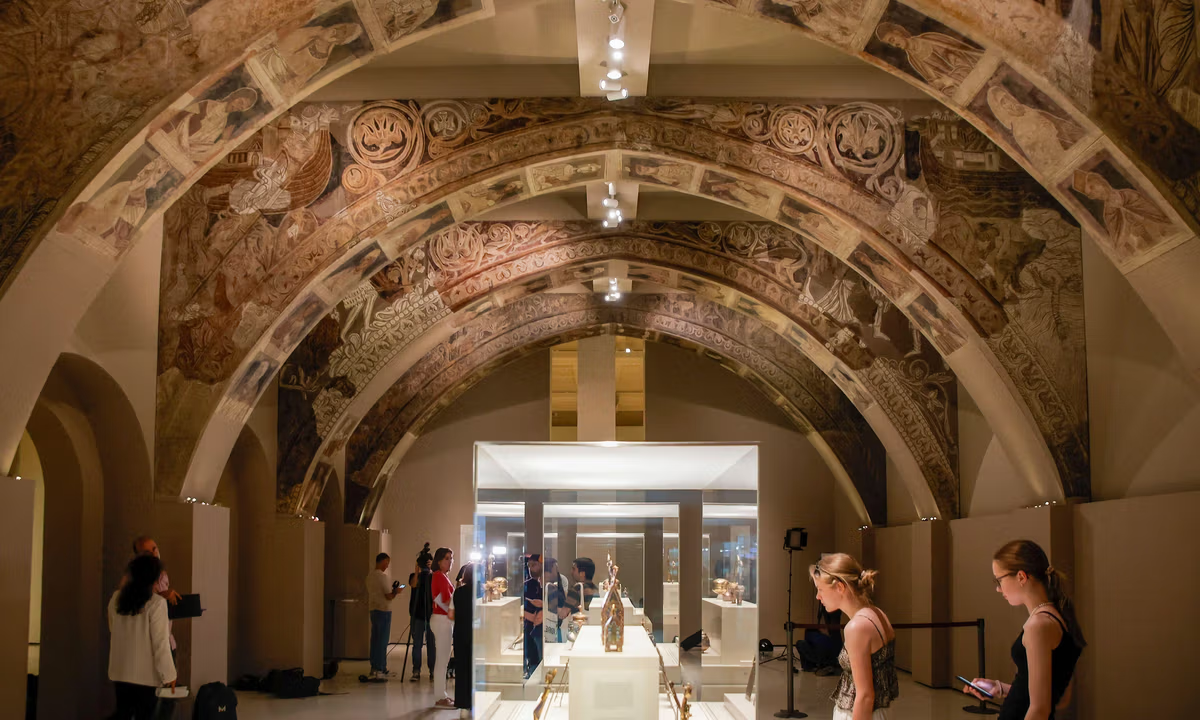
Painted in the 12th century by an anonymous artist, the Sijena murals were created for the arches of the chapter house at the Royal Monastery of Sijena in Aragón and are often described as the “Sistine Chapel of Romanesque art”. The murals depict biblical scenes—including the Creation of Adam and Eve, the expulsion from Paradise, and Noah’s Ark and the flood—and were badly damaged during the Spanish Civil War, when anarchists set fire to the monastery. They were removed to Barcelona in 1936 for restoration and have remained on public display at the city’s Museu Nacional d’Art de Catalunya (MNAC) since 1961. They are currently displayed in a sealed section of the Oval Hall, a large centre at MNAC built in the 1920s for cultural events, on specially made arches created to look like those at the monastery.
Following years of legal dispute, in May last year Spain’s supreme court ordered MNAC to return the works to the Sijena monastery. MNAC was given a month to deliver the works but that deadline was not observed, with the museum saying the works’ condition needed to be evaluated before their removal could be authorised.
Controversy intensified in November over a music event by the Spanish singer-songwriter Rosalía in the Oval Hall, planned as a presentation for her new album, Lux. Claiming vibrations from the performance could damage the fragile murals, Jorge Español, a lawyer representing the municipality of Villanueva de Sijena, filed a request for the event to be cancelled. The concert went ahead as planned.
The Villanueva de Sijena municipality tried to stop the singer Rosalía performing near the murals Alamy Stock Photo
Pepe Serra, MNAC’s director, later publicly commented on the affair. “What’s unacceptable is considering that a Rosalía concert could affect the paintings and that squeezing them into 74 pieces is easily done. Whoever says this needs to see a doctor,” he said while presenting the museum’s 2026 programme at a conference in December.
His remarks drew a furious reaction from Español, who threatened to sue Serra for defamation and demanded he pay €90,000 to compensate for “moral damages”. Separately, Pedro Olloqui, the Aragón region’s director of culture, accused Serra of showing an “intolerable contempt”.
‘Technical arguments’
A spokesperson for the museum tells The Art Newspaper that no lawsuit had been filed at the time of speaking. She adds that concerts were regularly held at the Oval Hall, without prior criticism, and denies they risked compromising the murals. “The Oval Hall, where Rosalía’s listening party took place, regularly hosts events, including concerts,” the spokesperson says. “The Sijena rooms are completely isolated, so there is absolutely no risk.”
Asked why the museum has not yet returned the murals, the spokesperson says MNAC’s position has “always been based purely on technical arguments” and is “grounded in scientific analysis and knowledge of the artworks”. A report jointly issued by the Catalonia regional government and the Barcelona city council in August concluded that various layers of paint on the murals showed signs of damage, adding that changes in climate, vibrations or movement could cause deterioration. The paintings were currently stable because the museum is climate controlled and continuously monitored, the report said.
The risks of transportation and reinstallation are not fully known
ICCROM report
In a separate report issued in September, ICCROM, a Rome-based organisation dedicated to advancing the conservation of cultural heritage, “strongly advised” carrying out a comprehensive values-based risk assessment before relocating the murals. “The risks of transportation and reinstallation at the Monastery of Sijena are not fully known, which raises concerns regarding the preservation needs of the paintings,” the ICCROM report states. “This should include not only material considerations but also a heritage values assessment, weighing the social and cultural significance of relocating the paintings together with the material conservation risks, to identify appropriate measures.”
The municipality of Villanueva de Sijena did not immediately respond to a request for comment.


