






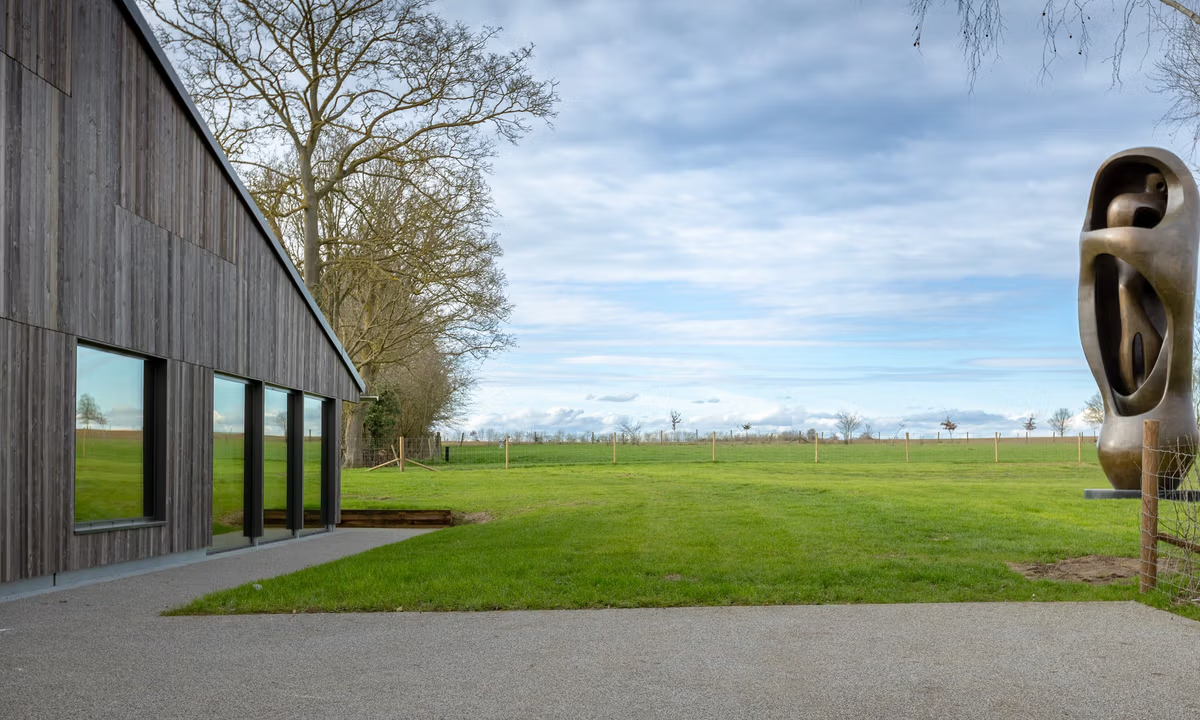
The legacy of Britain’s most famous 20th-century sculptor will be enhanced this April with the launch of the redeveloped Sheep Field Barn gallery and education complex at Henry Moore Studios & Gardens at Perry Green in Hertfordshire, east England.
The barn was originally a steel-frame farm building used for storage by Moore, and was later adapted by the architects HawkinsBrown in 1999. Now, following a £5m refit by the London-based architecture and urban design practice DSDHA, the building opens on 1 April with an improved suite of exhibition galleries and two purpose-built learning studios.
Inside Sheep Field Barn © Henry Moore Foundation, photo: Rob Hill
One of the galleries is dedicated to recounting the story of Moore’s life and work. Godfrey Worsdale, the director of the Henry Moore Foundation, says that by drawing on the foundation’s exceptional holdings of the artist’s work and its unrivalled archive, the exhibition places Moore firmly within the artistic, social and historical contexts of the 20th century.
“By foregrounding process, experimentation and education, as well as a remarkable range of Moore’s sculpture, the presentation reveals a more rounded and dynamic understanding of Moore as a great and versatile artist, but also a scholar, teacher, advocate and champion of the history and potential of sculpture,” he says.

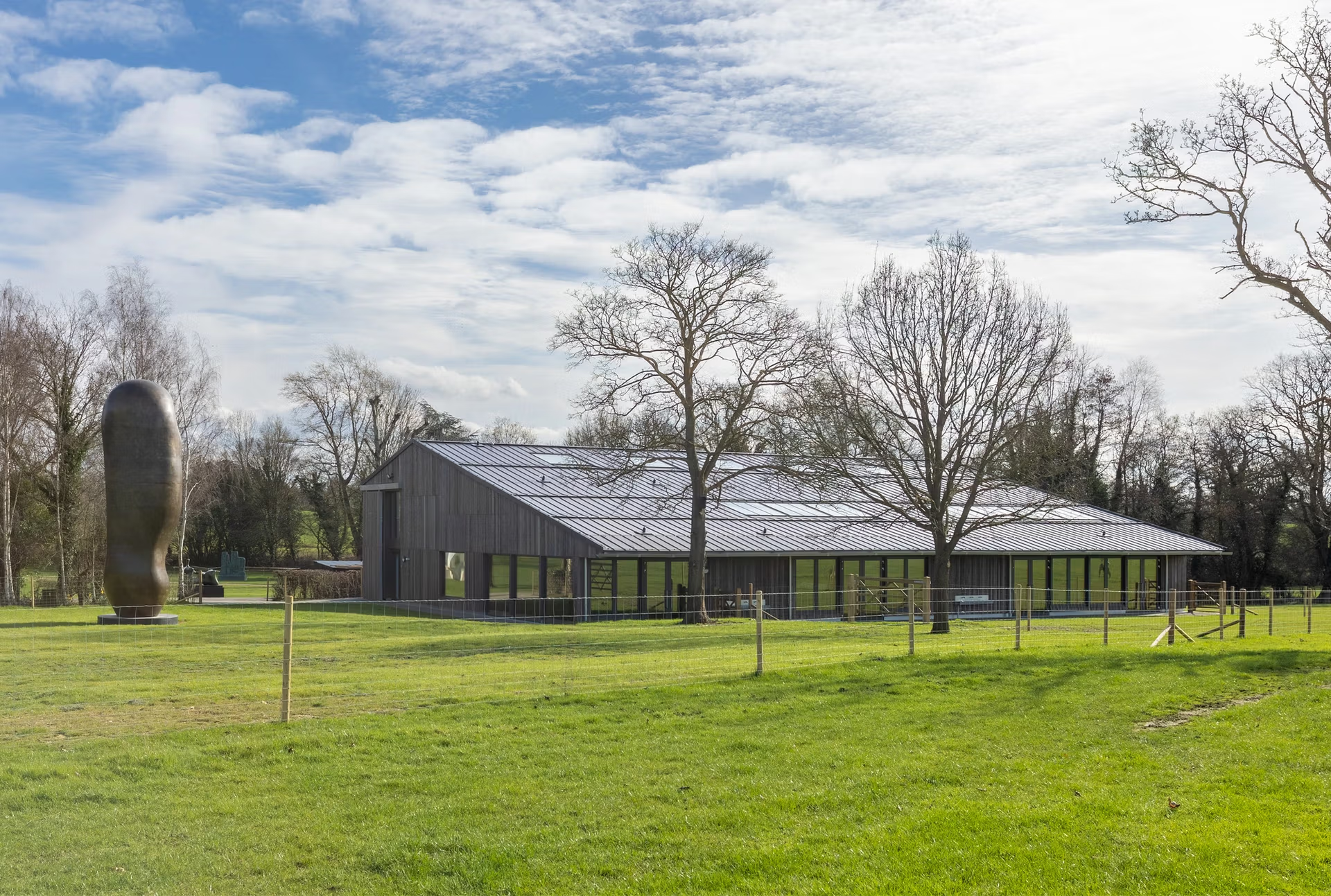
Sheep Field Barn © Henry Moore Foundation, photo: Rob Hill
When Moore and his wife Irina settled at the 17th-century farmhouse called Hoglands in 1940 following the bombing of their London flat, he intended for them to stay there only for a few months. But he was so captured by the tranquility of the east Hertfordshire landscape that he would come to call it home for the next 40 years. Today, the gardens that surround the house and its neighbouring studio are occupied by the Henry Moore Foundation. The 72-acre parkland contains many of Moore’s most notable works, including the looming Large Reclining Figure (1984).
Alongside the main gallery presentation in the Sheep Field Barn, the first temporary exhibition in the upstairs gallery will focus on Moore’s influential Shelter Drawings, a group of 1940s drawings commissioned by the War Artists Advisory Committee.
‘Vulnerability and resistance’
“Showing Londoners sheltering in the London Underground during the Blitz (1940-1941), these were among the first works that Moore made after he moved to Perry Green from the capital,” Worsdale says. “The deeply moving scenes witnessed by Moore of people huddled together in cramped tunnels inspired a series of drawings that are both despairing and intensely human, combining vulnerability and resilience. This will be the first exhibition devoted entirely to this landmark series of works this century.”

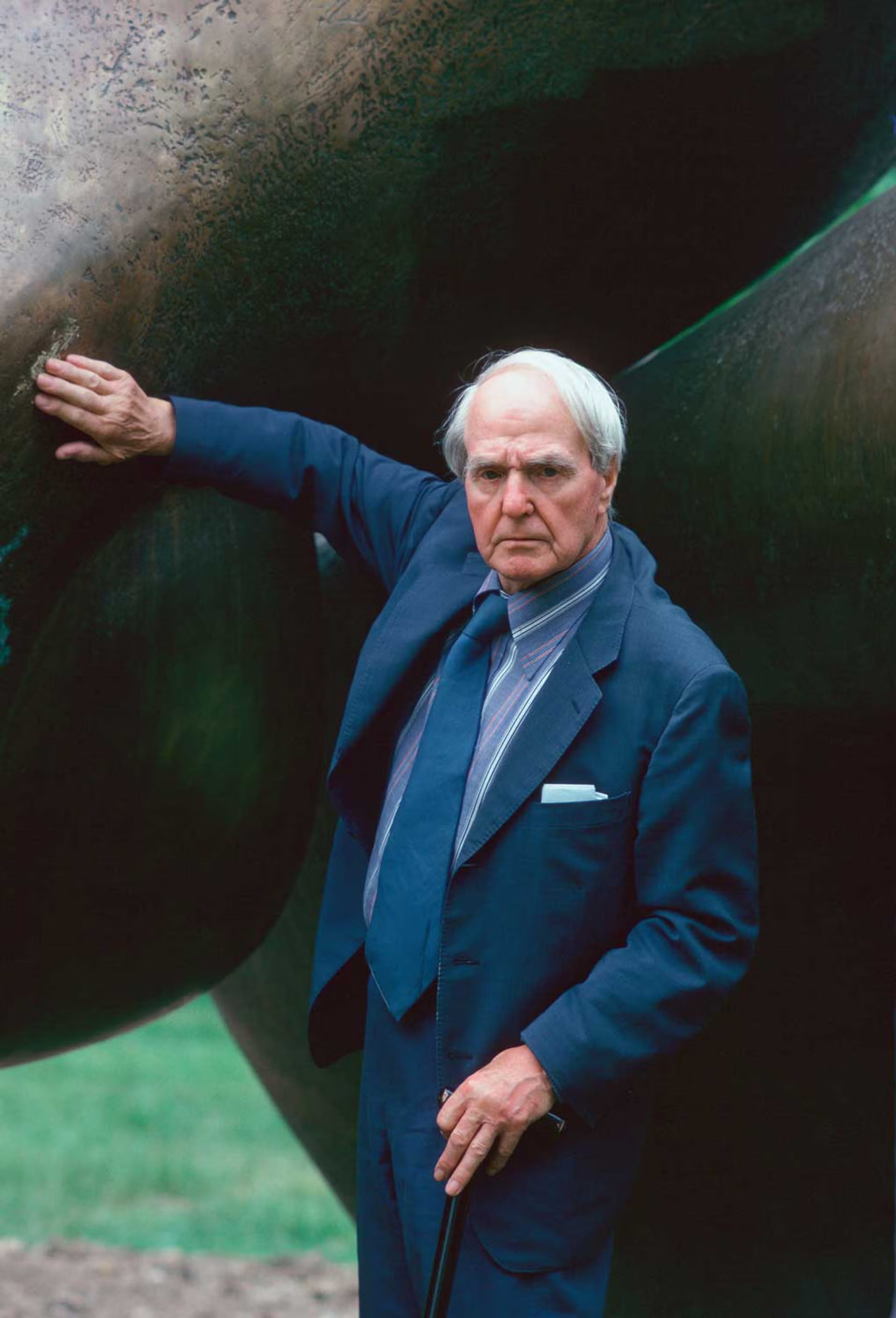
Henry Moore with Sheep Piece (1971-72) at Perry Green, where the redeveloped Sheep Field Barn gallery opens in April Photo: Tim Graham
Future temporary exhibitions are being developed as part of a longer-term programme that will explore different dimensions of Moore’s practice and legacy, he adds. “The Sheep Field Barn is for everyone—from schoolchildren to academics and everyone in between. It has been designed as an inviting space for all that reflects Moore’s lifelong passion for art education,” Worsdale says.
The foundation is keen to prioritise art education by launching the learning studios suite and appointing a new learning and engagement coordinator. “For the first time in decades, working studio spaces will sit on the same site as Moore’s own, equipped with tools and resources to place making back at the heart of the site,” Worsdale adds.

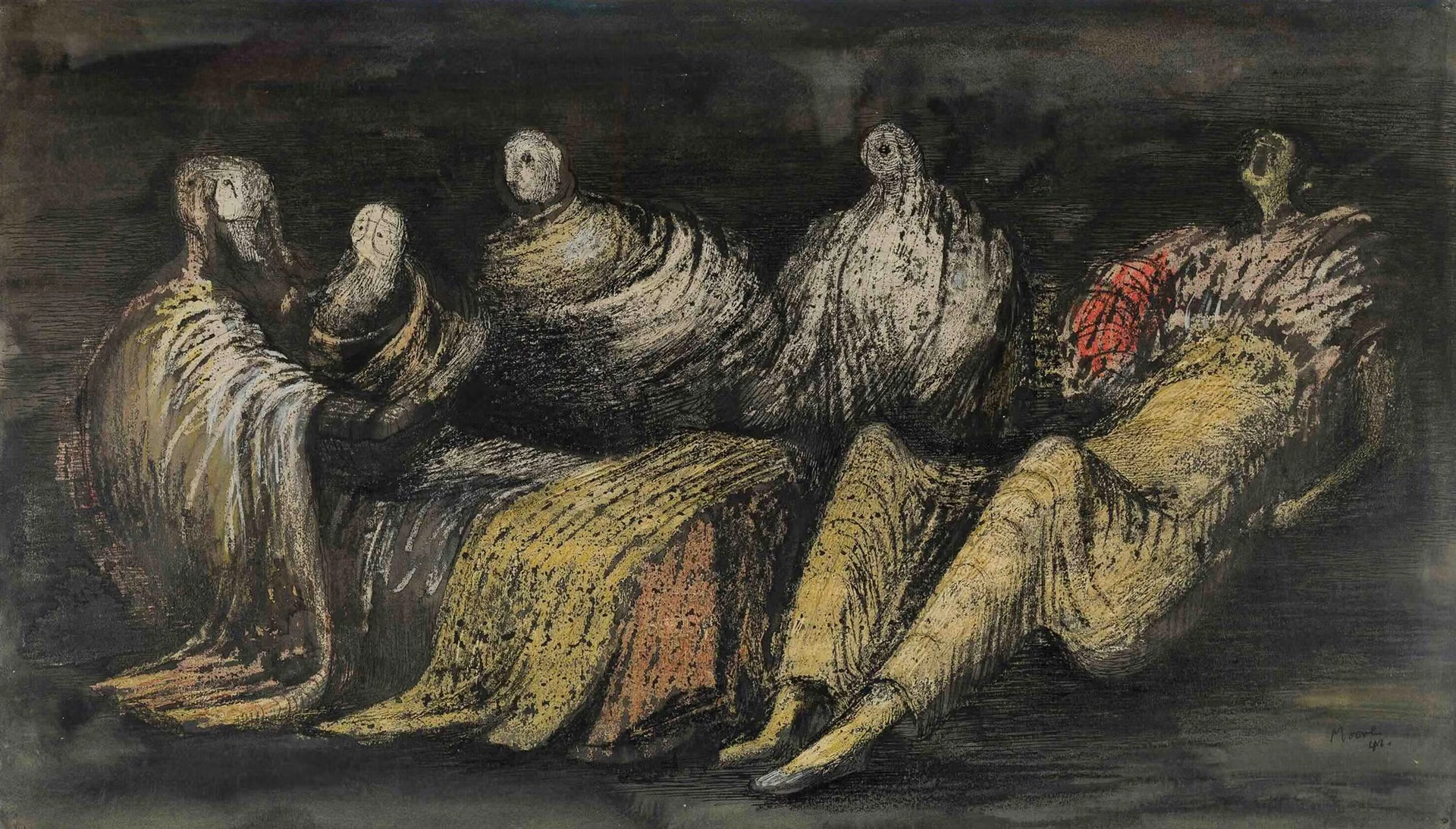
Group of Draped Figures in a Shelter (1941), from the Shelter Drawings series depicting life during the Blitz © Henry Moore Foundation
The total £5m budget for the Sheep Field Barn refurbishment is wholly funded by the Henry Moore Foundation, he says. The foundation’s annual report for 2023-24 meanwhile states that it holds total funds of £127.4m. (The foundation, a registered charity, also runs the Henry Moore Institute in Leeds.)
The reopening of the Sheep Field Barn will coincide with the largest outdoor exhibition of Moore’s work ever presented. Thirty works by Moore will be displayed at Kew Gardens—a Unesco World Heritage site—in west London in the exhibition Henry Moore: Monumental Nature (9 May-31 January 2027), providing another platform for the sculptor who dominated 20th-century sculpture in the UK. The Henry Moore Foundation is lending most of the pieces, which include Large Two Forms, Oval with Points (1968-70), Reclining Woman: Elbow (1981) and Three Piece Sculpture: Vertebrae (1968-69).


