






The Pérez Art Museum Miami (PAMM) will present Jean-Michel Basquiat’s record-breaking Untitled (1982) as part of “Basquiat: Figures, Signs, Symbols.” The show opens on June 25th, during the FIFA World Cup, and will feature nine paintings and one sculpture by the artist.
“As Miami prepares to welcome a global audience for the FIFA World Cup, Pérez Art Museum Miami offers an extraordinary opportunity to experience visual art from across the Americas,” said collector Kenneth C. Griffin, CEO of Citadel LLC, who is loaning the works in the show. “I am proud to partner with PAMM to present some of the greatest works by one of America’s most iconic artists, Jean-Michel Basquiat, whose art has a unique power to connect across communities and generations.”
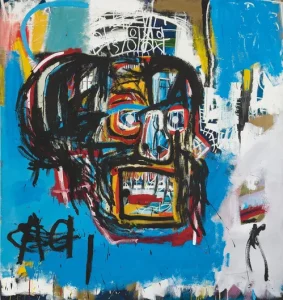
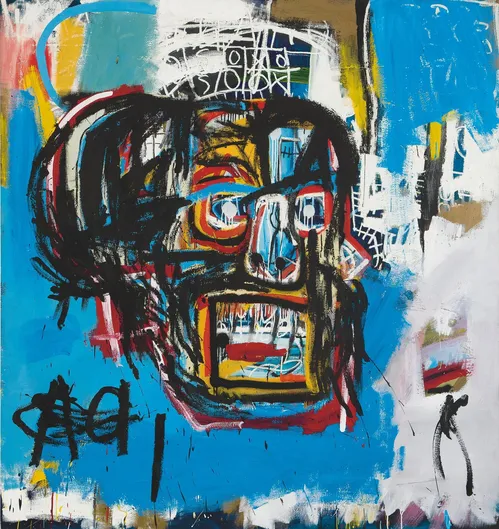
Untitled (1982) is an iconic example of Basquiat’s paintings of the human head. The canvas features a giant skull with intense red-and-white eyes against a blue background. It sold for $110.5 million at Sotheby’s in 2017, to Japanese billionaire Yusaku Maezawa, setting the artist’s auction record. At the time, it was the most expensive artwork by an American artist. Griffin is reported to have privately purchased the work from Maezawa for $200 million in 2024.
Other exhibition highlights include Untitled (Tenant) (1982), a portrait of a skeletal man throwing his arms up in discontent among burning city buildings, and In Italian (1982), a painting that features several human figures among enigmatic phrases such as “Diagram of the Heart Pumping Blood” and “Sangre Sangre.”
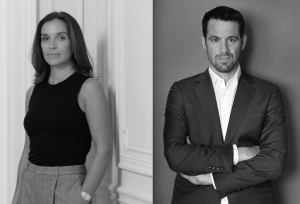
Megan Kincaid, curator of the Kenneth C. Griffin Collection, and PAMM director Franklin Sirmans are collaborating to curate the exhibition. Sirmans was previously involved in Basquiat’s posthumous 1992 retrospective at the Whitney Museum of American Art and in the Brooklyn Museum’s 2005 traveling exhibition of the artist’s work.
“This is a compelling moment to revisit Jean-Michel Basquiat not as a market phenomenon or pop icon, but as a rigorous, self-taught master of painting and form,” Sirmans said. “By bringing together works that are rarely seen in depth, we’re inviting audiences to slow down, to look closely, and to encounter a new way of understanding an artist whose name is universally known but whose complexity still demands deeper study.”


