







Collectors and curators in Chicago this week will of course spend the better part of at least one day plying the aisles of Expo Chicago inside the vast festival hall at Navy Pier, but many will also trek to a small storefront space seven miles south in the McKinley Park neighbourhood and stroll a couple miles north to a colourful apartment in a historic Gold Coast building. The two satellite fairs in these very distinct, intimate settings offer opportunities to have conversations in a less high-pressure commercial context and gain an appreciation for the communities of artists and dealers at the core of the Chicagoan art scene’s vitality.
The sixth edition of Barely Fair (until 19 April) features 32 exhibitors taking up 20in-square stands in McKinley Park, with an especially strong showing by local galleries and artists. While the concept of having galleries curate tiny cubbies is disarmingly charming, the presentations themselves are quite rigorous, with a mix of artist-run, emerging and more blue-chip galleries responding creatively to the format.
“We want to make sure that the fair is always institutional in its seriousness, but also generous in spirit,” says Roland Miller, the fair’s director of operations and a co-director of the Chicago art space Julius Caesar.
The International Waters stand at Barely Fair, featuring works by Patrick Carlin Mohundro Courtesy Barely Fair
Patrick Carlin Mohundro, who is participating as both an artist (he has a solo stand with International Waters from New York) and a curator-dealer (his space PAD has a solo stand by Alex Schmidt), concurs: “Everyone is convinced to attend by the seriousness—the artists, the dealers and the collectors.”
Both the presentations he is involved with bear this out. His solo stand of stained glass squares and assemblages, priced from $150 to $1,500, marry a historic craft process with the formal languages of Minimalist sculpture. The entire stand features a somewhat steep incline intended to evoke International Waters’ actual loading dock-like space in Brooklyn. The PAD stand, meanwhile, features panels painted by Schmidt for its three walls, plus two small freestanding paintings, all evocative of a deconstructed architecture. The entire installation is available for $8,000, or individual parts are priced on request.

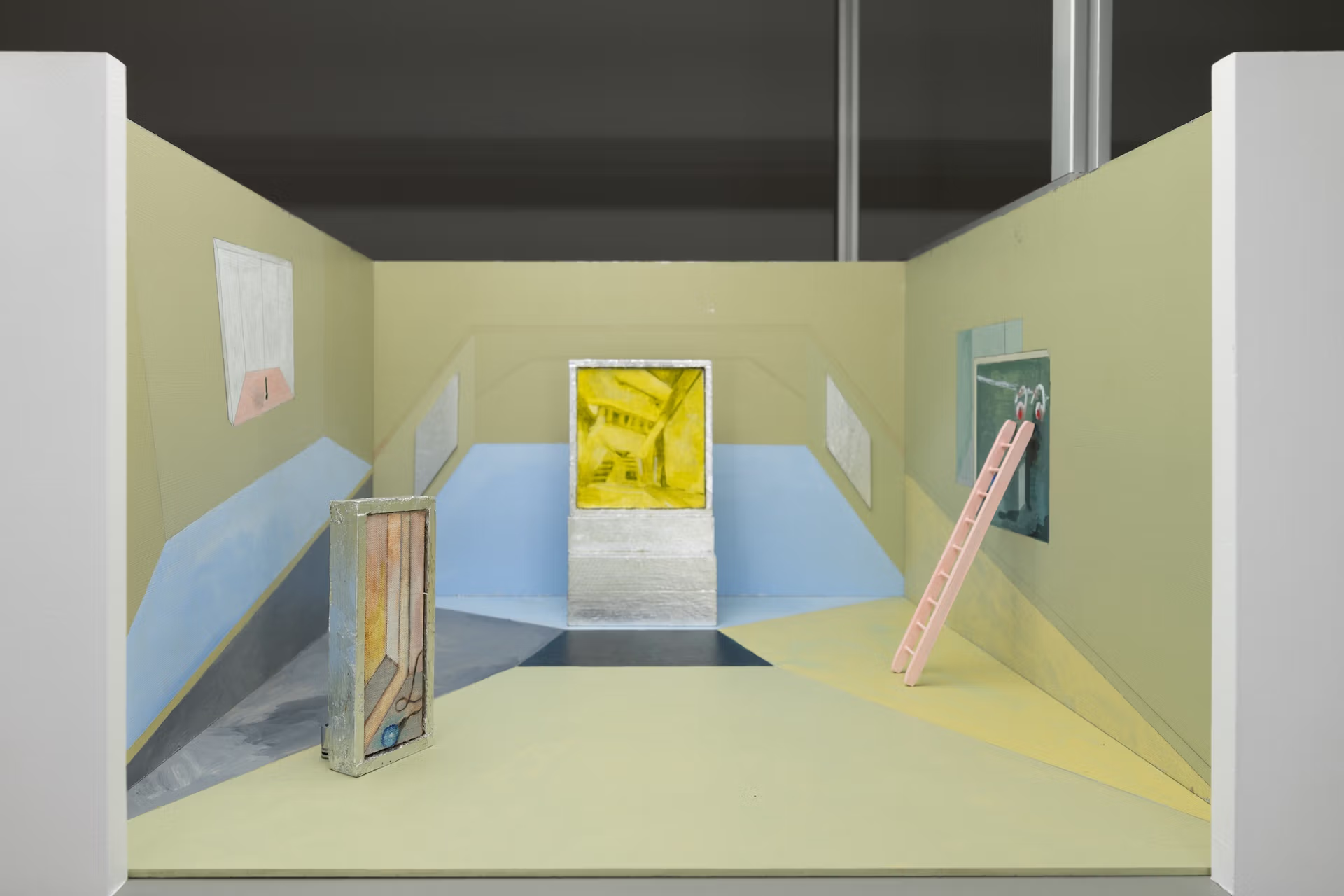
The PAD stand at Barely Fair features works by Alex Schmidt Courtesy Barely Fair
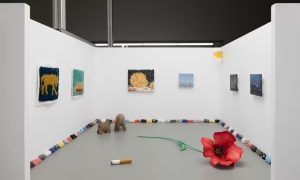
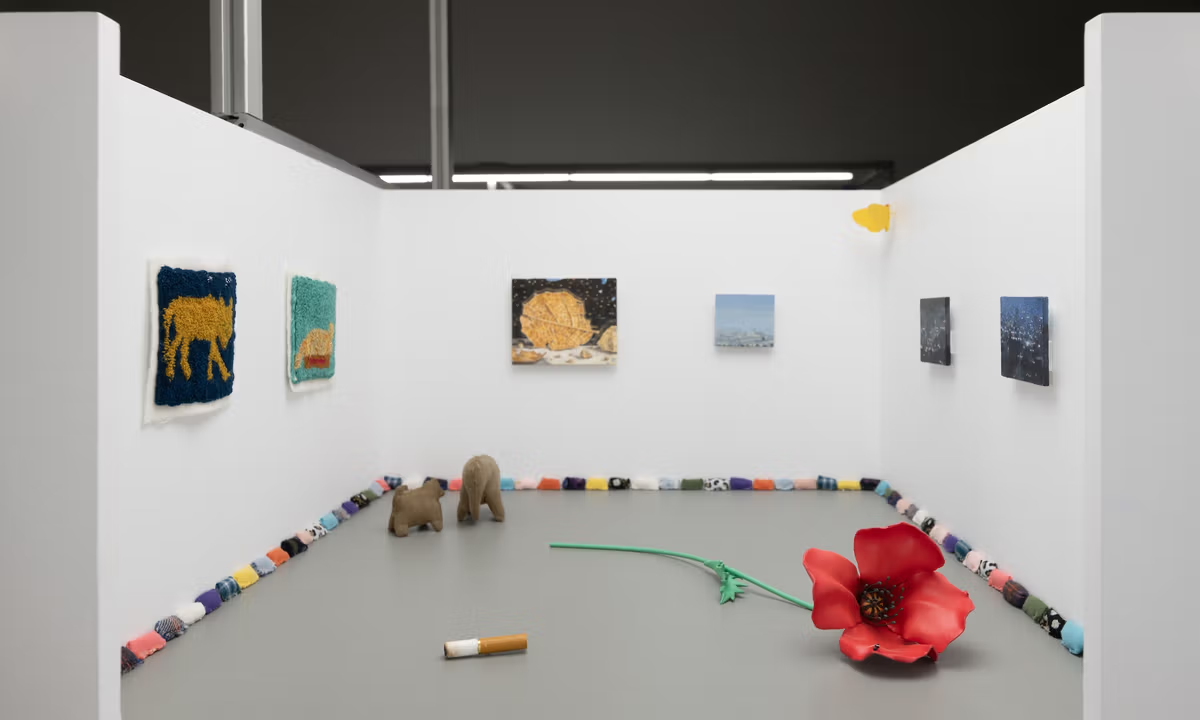
“We organise the fair so that every single booth is operating at a different scale from the one before,” Miller explains. So, while the PAD and International Waters stands resemble, broadly speaking, miniature galleries, New York’s Jack Barrett Gallery is treating its space more like a tabletop, showcasing playful, pastel-hued ceramic sculptures by Amy Brener (priced from $200 to $1,200). Others deliberately juxtapose differently-scaled objects, like the roving Good Naked Gallery, whose stand features several diminutive paintings and soft sculptures (by Mary Tooley Parker, Rachel Borenstein and Ryan Richey) paired with three hyperrealist, normal-scale sculptures by Langdon Graves (a poppy, a cigarette butt and a wall-mounted moth).
“I don’t curate my booths at Barely Fair all that differently from most other fairs,” says Jaqueline Cedar, the gallery’s founder. “I did try to install the booth in a way that creates a sense of illusion, but also humour.” Works on the stand are priced between $20 and $2,000. And if they sell out, one advantage of a miniature fair is that it makes bringing extra inventory much simpler—Cedar has several additional pieces on hand, packed in tiny crates. “I love having my own little ‘back room’ of extra works in my bag,” she says.
Multiple participants said one of Barely Fair’s strengths is that its scale and the price of participation give dealers and artists permission to experiment. Mohundro says: “The format means people feel they can take risks.” Miller adds: “Right now there’s a sense of permission in the art market to try different things, to experiment with formats, in a way that there wasn’t ten or even five years ago.”
One such experiment is the brand new fair Neighbors (until 12 April), which features 15 exhibitors (nine of them Chicago-based) in a domestic, stand-free setting, with works installed on mantles, in the bathroom, in kitchen cabinets and elsewhere. The fair was founded by the Mexican American collector Mirka Serrato and is staged in her former apartment (she now lives in Dallas); it was curated by the London-based artist and gallerist Jonny Tanna (whose gallery, Harlesden High Street, is one of two participating London spaces, along with Gathering).

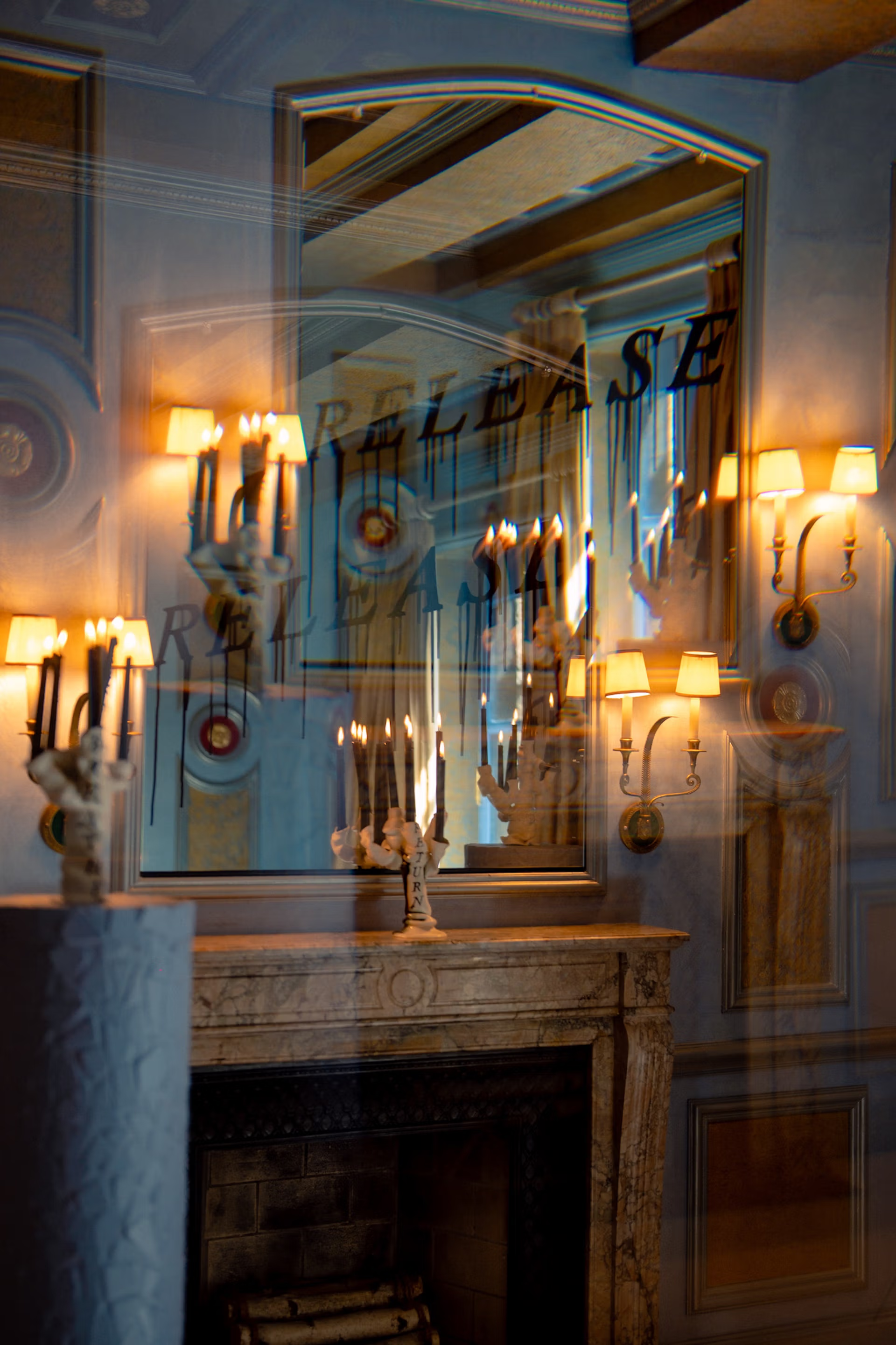
Installation view of works by John Garcia, presented by Tureen, at Neighbors Image Courtesy of Neighbors. Photo by Carlos García
“I traveled the fair circuit for a year looking at what was working and what wasn’t,” Serrato says. “This came from a personal need to try something different, but also to offer galleries an affordable, alternative in a context that would play to their strengths.”
Many exhibitors have embraced the ornate domestic setting’s unique features. The Dallas-based gallery Tureen, for instance, is showing works by the artist John Garcia in what was once the bedroom, including a site-specific text painting on a mirror installed above a mantlepiece. The artist also created custom plinths—painted to match the wallpaper—that hold many-limbed ceramic candelabra sculptures.
“When I met Mikra, she told me about Neighbors and I had a project in mind with John that I knew would suit the space really well,” says Cody Fitzsimmons, Tureen’s co-founder. Garcia’s works are priced between $2,800 and $5,600.
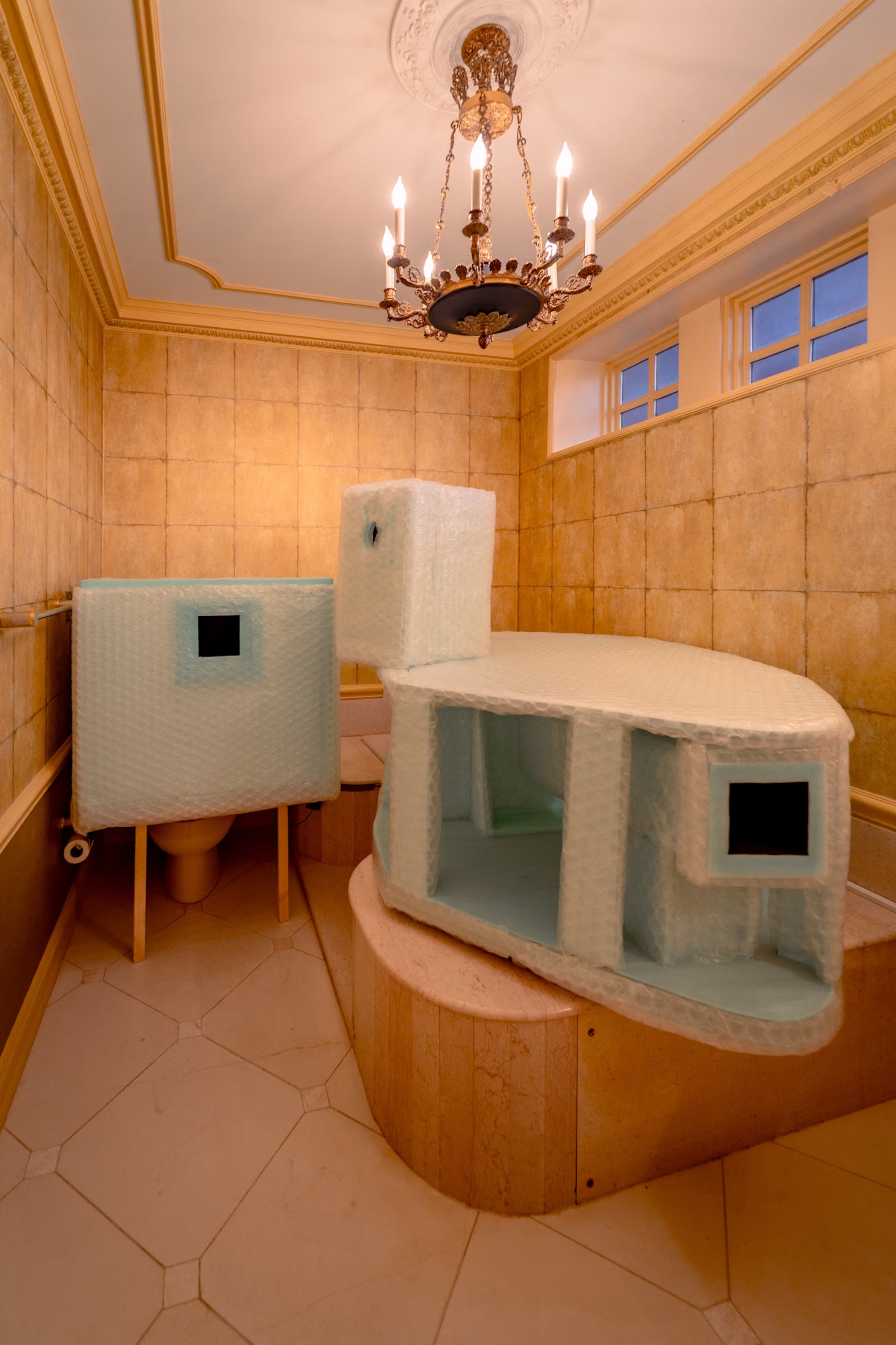
Installation view of works by Caitlyn Min-Ji Au, presented by Shanghai Semenary, at Neighbors Image Courtesy of Neighbors. Photo by Carlos García
Next-door, in the bathroom, the Chicago-based gallery Shanghai Seminary likewise made the most of the space’s constraints with its presentation of works by the local artist Caitlyn Min-Ji Au. Most of the room is occupied by a boxy, three-part sculpture that contains water tanks, drippers and sculptural dioramas that are animated by dripping water.
“I had known about this work for a while, but it’s never been shown before,” says Qiuchen Wu, the gallery’s founder. “When I saw this bathroom, I thought: finally, the perfect setting for this piece!” He likened Min-Ji Au’s main sculpture to analogue video art, as viewers observe the slow, subtle movement inside the sculpture through small rectangular and circular apertures. The main work is not for sale, but Wu says it could be the basis for a commission for an interested collector. Two other pieces—one installed on the ceiling of the shower stall, the other a fountain made from an upside-down Chinese vase—are priced from $2,800 to $5,600.
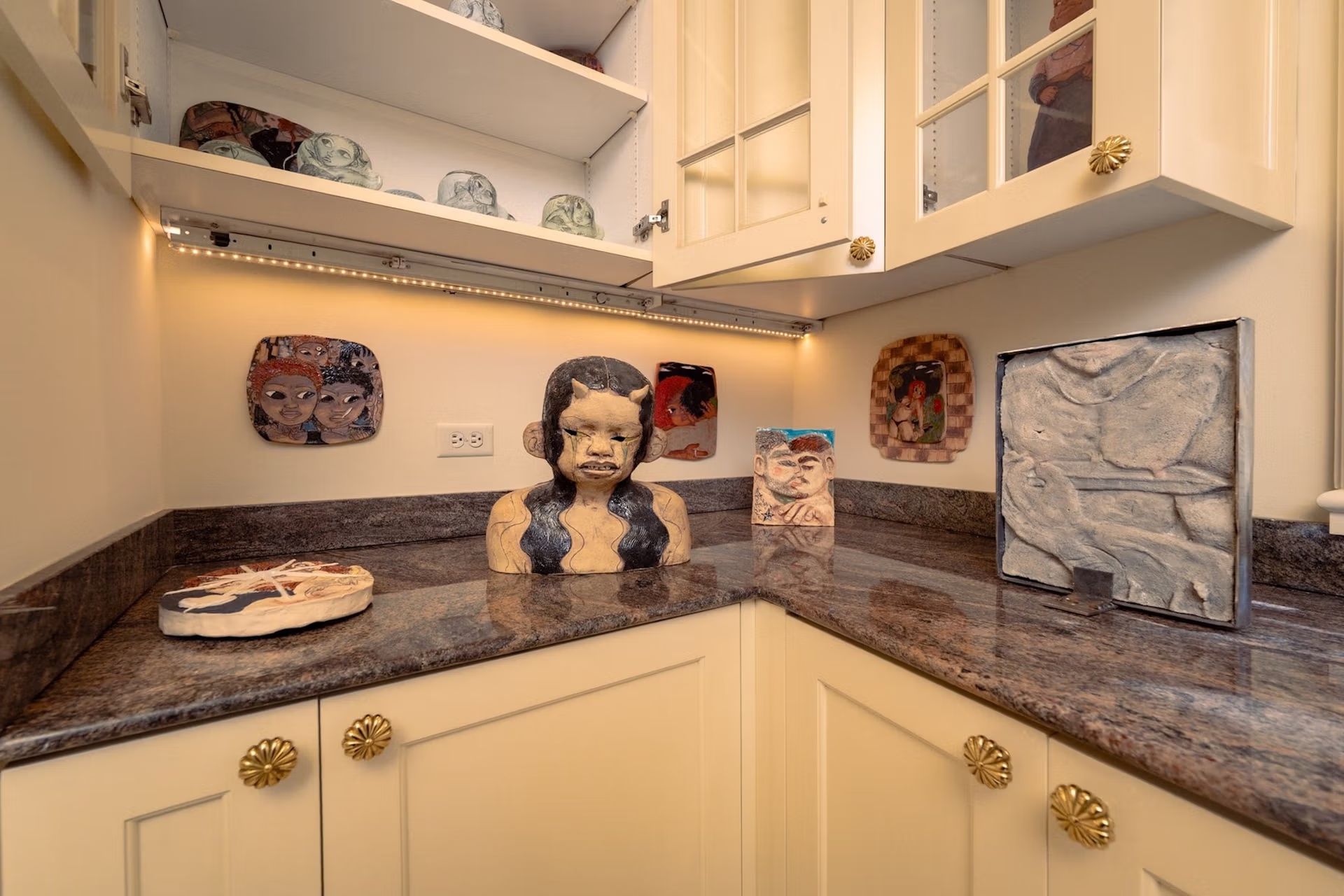
Installation view of works by Juan Arango Palacios, Haylie Jimenez and Sydnie Jimenez, presented by Feia, at Neighbors Image Courtesy of Neighbors. Photo by Carlos García
In the kitchen, the Los Angeles-based gallery Feia is showing works by three Chicago-based artists working in ceramic: the twin sisters Haylie Jimenez and Syndie Jimenez, and Juan Arango Palacios, who is currently earning his MFA at the University of Chicago. Many works are presented in a playful, quasi-domestic manner, including ceramic vessels and free-standing figures in the kitchen cabinets, drawings by Arango Palacios on the refrigerator and a large winged figure by Sydnie Jimenez, Curtain Hair Guardian (2025), installed on the stovetop. Works are priced from $200 to $8,000.
“Having a space like this gives you a formal constraint,” says Thomas Martinez Pilnik, Feia’s co-founder. “I have known all three artists for years, so when we were invited to do the fair I said, ‘Only if the artists are interested.’ As soon as I told them about it, they were on board, and the response has been wonderful.” Pilnik adds: “A professor of Juan’s came during the fair’s first few hours and bought one of his drawings—as a signal of support outside the classroom, that was so genuine and moving.”
- Barely Fair, until 19 April, McKinley Park, Chicago
- Neighbors, until 12 April, Gold Coast, Chicago


