The London-based Working Arts Club (WAC), an independent organisation that aims to support people from lower socio-economic backgrounds who work in the UK art scene, is expanding to northern England. The new chapter will launch in Manchester on 24 March, followed by programming across the region and online.
“Working Arts Club was always going to exist outside of London because class issues in the art world are systemic not geographic,” says its founder Meg Molloy, who works in London as a freelance communications consultant for the art world. “The need for what our network can do is widespread and going to northern England felt like a natural next step in our operations.”
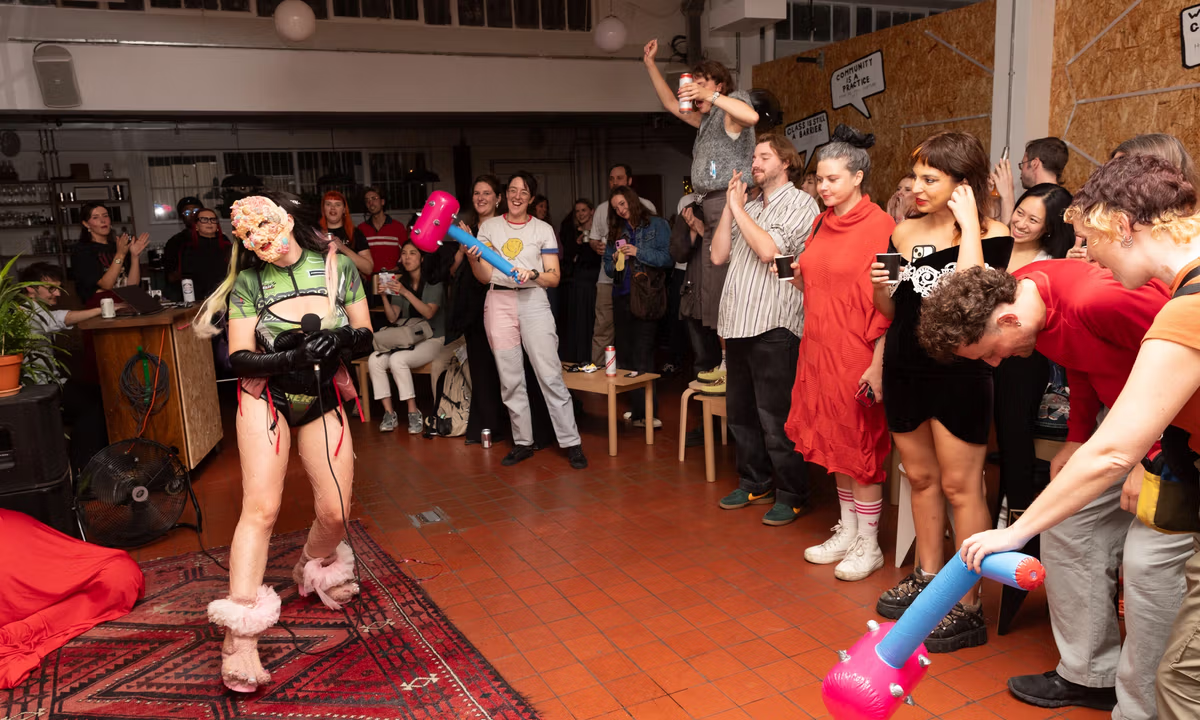
Almost 1,200 art world professionals have registered for the free club since WAC’s launch in mid-2024. Regular events aimed at connecting and empowering members, range from social gatherings to gallery tours and panel discussions and have proved extremely popular—the group’s most recent talk with Kate Bryan, the art director at Soho House, sold out in under four minutes, according to Molloy.
Last month, a report on working class participation in the arts in Greater Manchester found that over half of respondents experienced class-based discrimination. One senior-level respondent observed that breaking into museum and gallery work can be “out of reach” for working class people without the flexibility to fund degrees and build volunteer experience. Another respondent found that, even after getting their foot in the door at a public art gallery, they were “talked down to” by colleagues from higher income backgrounds.
For northerners working in London, accent bias can be a major obstacle, with one anonymous WAC member previously noting that they were “told not to answer the phone” in their northern accent.
Kirsty Jukes, a communications officer at the Manchester Art Gallery, will lead WAC’s development in northern England. Based in Merseyside, Jukes describes herself as a “late bloomer” in the art world, having worked in a variety of jobs after completing secondary school. Ten years later, she started taking evening courses after work, ultimately completing her BA in History of Art on a low-income bursary at the University of Manchester.
“I wanted to be involved as I know how it feels to be the one of the only people in a cultural setting who doesn’t have financial privilege… to miss out on certain signals, experiences or just generally not have the same background references as my peers,” Jukes says.
Looking ahead, WAC will follow up its Manchester launch with an April meet-up in Liverpool, eventually expanding programming across the region’s seven counties. Molloy and Jukes also say that they will be developing more online events, connecting members no matter where they are located.