





The Headlines
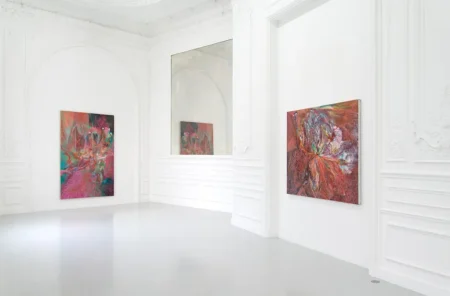
AN AMICABLE SPLIT. Dealer Michael Werner, founder of Michael Werner Gallery, and his longtime partner Gordon VeneKlasen are calling time on their joint business venture. In a statement to ARTnews, they said that—after 35 years of collaboration—they have mutually decided to separate, though they will still work together on select artist projects and museum exhibitions involving the gallery’s roster of artists. Following the split, each dealer will pursue an independent path. Werner will continue running Galerie Michael Werner in Berlin, maintaining the legacy he began with Werner & Katz in 1963 and expanded with Galerie Michael Werner in Cologne in 1969. VeneKlasen, who joined the gallery in 1990 to establish its New York space and became a partner in 2005, will launch an international gallery under his own name. He will assume control of the gallery’s current locations in New York, London, and Los Angeles. These changes take effect in February, with VeneKlasen announcing his program later in the year.
ZILART PLOUGHS AHEAD. As many Russian private museums fight to stay afloat, or shut down altogether, a billionaire couple from St. Petersburg, Andrey and Yelizaveta Molchanov, are pressing ahead with a new cultural venture, the Art Newspaper writes. Their museum, Zilart, opens in Moscow on December 2 and will showcase their diverse collection. Andrey, head of the St. Petersburg property developer LSR and a former member of Russia’s Federation Council, has assembled with his wife an eclectic holding that spans Russian avant-garde, Soviet nonconformist art, international contemporary works, photography, design, and decorative arts. The collection includes pieces by Vik Muniz, Mike Kelley, and Helmut Newton, as well as more than 1,000 African artworks. Zilart emerges at a moment when political repression and sanctions have made Russia’s private museums vulnerable, with several owners and curators fleeing abroad. Yet the Molchanovs maintain close ties to the state, and the museum’s adviser is Alexander Borovsky of the State Russian Museum. Supported entirely by LSR, Zilart reportedly holds around 10,000 works. Its creation has been fraught: an early Hermitage partnership dissolved, and an original design by Hani Rashid was replaced by a new concept from architect Sergei Tchoban. Irina Tolpina, formerly of Moscow’s Manege exhibition hall, will serve as Zilart’s director.
The Digest
More than 70 paintings from the Leiden Collection, owned by Thomas S. Kapln and featuring the largest private collection of Rembrandt canvases, are now on display at the Norton Museum of Art in South Florida. [New York Times]
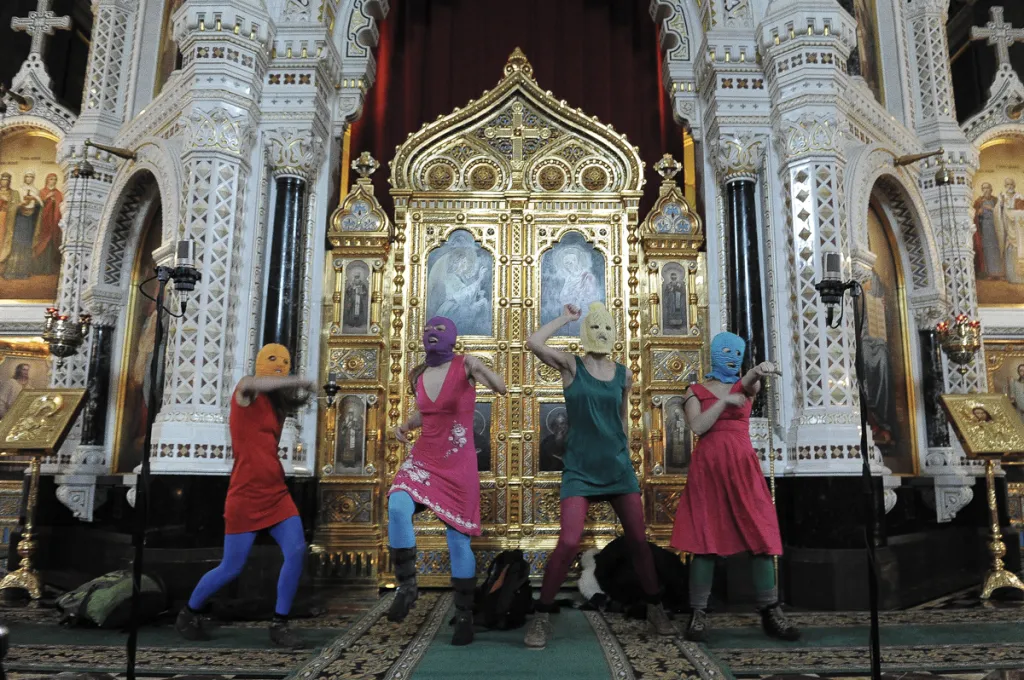
During Nadya Tolokonnikova’s live durational performance POLICE STATE at the Museum of Contemporary Art Chicago, the Russian Ministry of Justice moved to classify the Pussy Riot collective as an extremist organization. [Associated Press]
A lost ancient Amazon world just reappeared in Bolivia, and it could teach us some urgently needed lessons about sustainability. [Science Daily]
The Biennale de Arte Paiz, nearly half a century old, recently opened its 24th edition. This year’s iteration, “El Árbol del Mundo” (“The Tree of Life”), marks the organizers’ bold bid to expand the event’s reach and claim a stronger place on the global stage. [Artnet News]
The Kicker
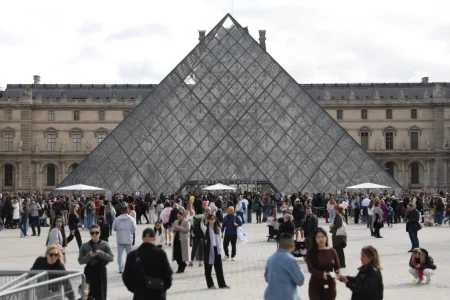
MUSEUM THEORY. As the Times’s Huw Oliver writes, one of the most unavoidable travel trends of 2025, at least online, is “airport theory,” the idea that you should arrive at the terminal just 15 to 20 minutes before boarding and sprint to the gate, supposedly still making your flight. Oliver is someone who likes to be early for every stage of air travel, and had no desire to test it. But during a recent visit to Florence’s Galleria dell’Accademia, as he pushed through crowds and squinted at repetitive religious paintings and sculptures placed far too high to appreciate, he felt the same exasperation airport theorists claim to avoid. It made him realize that if anywhere deserves a more streamlined, strategic approach, it’s museums. With winter city-breaks underway and the vast Grand Egyptian Museum, home to 100,000 artifacts, dominating travel wish lists, he proposes a new concept: “museum theory.” “The first tenet of museum theory is that you should never visit more than one per day,” he writes. “I once slogged through Madrid’s big three—the Prado, the Reina Sofia and Thyssen-Bornemisza—back-to-back, and now I never want to see a Goya again. Book that ticket in advance too, so you don’t kick off with a queue.”