





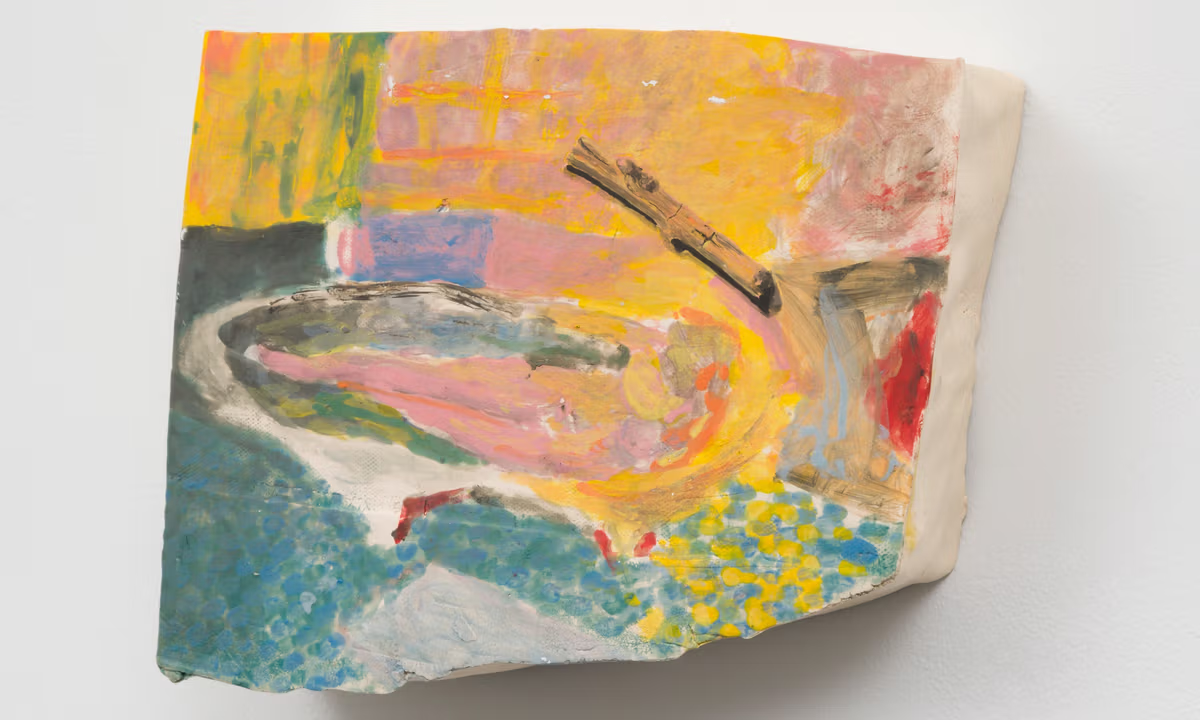
A new alternative-model art fair, Enzo, opened on Wednesday (25 February) in Echo Park to a buoyant, young crowd. Facing an 18-hour flight delay, because of severe snowstorms in New York, the exhibitors Laurel Gitlen and Margot Samel had just arrived in Los Angeles at two o’clock that morning. “I hung Peggy Chiang’s work over the phone last night,” says Gitlen, referring to Chiang’s suspended assemblages of saddles and wrought wire. Paintings by Sam Linguist, executed on materials like a tortoise shell and dominoes cast in plaster, arrived safely in the
gallerist’s luggage.
The fair is hosting nine galleries based in New York’s Chinatown and Lower East Side. Alongside Gitlen and Samel, these include Alyssa Davis Gallery, Bank, ILY2, Magenta Plains, Sara’s, Silke Lindner and Wschód. With no cost for entry or participation, Enzo joins a growing number of alternative fairs aimed at lessening the burden on smaller galleries in the face of a contracting art market.
Enzo takes place in Alabaster Projects, a project space and gallery founded by R Parmar, a collector based in Los Angeles and New York’s Chinatown. After hearing gallerists’ complaints about the rising cost of fair participation, he says he began planning Enzo last summer with the goal of creating a low-cost, collegial environment. “There’s no build-out, there’s no division, there are no walls,” he says. “It feels almost like one presentation amongst nine galleries I really love.”
Participants praise the fair’s friendly atmosphere. “We’re all pooling our energy to bring our clients to the fair,” Gitlen says. “It’s good to be within this very democratic space without the huge financial pressure of participating in an art fair,” says Piotr Drewko, founder of the Warsaw- and New York-based Wschód. Even as galleries and artists adapt to a more challenging market, he finds that most fairs have only gone up in cost without changing their offerings. “I think Enzo is letting us breathe.”
Drewko brought a monumental installation by the artist Radek Szlaga depicting an abstraction of the Los Angeles landscape made from a range of found textiles, raw canvas, bits of plastic and paper. While the entire piece is priced at $50,000, its individual parts are available starting at $4,000. By the afternoon of opening day, Drewko had sold one work priced at less than $10,000 and, when asked if his ambition was to be seen rather than to sell, he said: “I think it’s more to just do what we love doing.”