






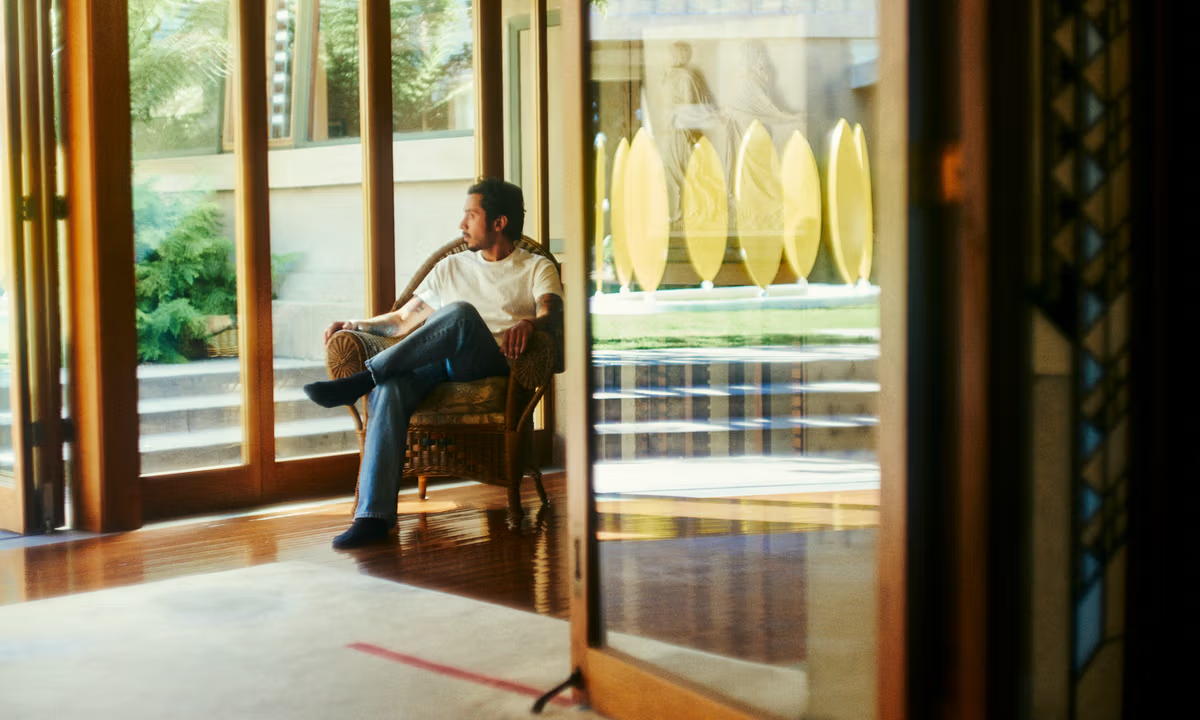
The Los Angeles-based artist Ryan Preciado consistently blurs the boundaries between functional craft and sculptural inquiry, drawing on carpentry, material histories and everyday encounters to rethink how objects shape space. In Diary of a Fly, his current exhibition at Frank Lloyd Wright’s Hollyhock House (a Unesco World Heritage Site), Preciado places high-gloss steel sculptures, woven tapestries and Memphis Design-inflected furniture in conversation with the late architect’s Modernist masterwork. Rather than clashing with Wright’s rigorously choreographed interiors, the works are absorbed into the house’s rhythmic play of light and shade, reframing the encounter as a collaboration.
The exhibition follows Preciado’s first institutional solo show, So Near, So Far at the Palm Springs Art Museum in 2024, which engaged with the story of Manuel Sandoval, a 20th-century Nicaraguan American carpenter who worked under Wright. In 2023, some of Preciado’s “insecure sculptures” were included in Acts of Living, the sixth edition of the Hammer Museum’s Made in L.A. biennial. He has also been the subject of solo exhibitions at Matthew Brown in Los Angeles and Karma in New York.
Ryan Preciado’s wood and painted-aluminium sculpture New Feeling (Baby Blue) (2023)
Courtesy of the artist and Karma
The Art Newspaper: There are sculptures, textiles, design objects and furniture in the exhibition. How do you navigate between making something functional—say, a bed—and something purely aesthetic? Is there a difference in how you approach them?
Ryan Preciado: I started as a carpenter, and I still really like making furniture. I call them “insecure sculptures”, because they feel like sculptures that have to prove themselves. They have to be useful, which is such a human feeling. I like including furniture in my shows, because it’s disarming. If you’re 17 and going to a gallery for the first time and you see an abstract painting, maybe you’re too nervous to explain how it makes you feel. But everyone can talk about a cabinet or a chair, and maybe that makes you curious enough to keep going. As I get more confident—maybe that’s not the right word?—the things I make are becoming less functional, which is exciting. I think I’ll always do both.
You asked if there was a difference for me, and there’s not. It goes back to my time at South Willard, the ceramics gallery in Chinatown, where I met Ryan Conder. He talked about architecture, art, clothes and movies all in the same way; there was never a distinction between what mattered more or less, or was more or less important. That was formative for me. Whether I’m painting a truck or that egg cupboard, I approach it the same way.
You call the circular sculpture in the courtyard with the yellow, geometric forms the “engine” of the exhibition. Why is that?
My dad’s a mechanic, so I think my brain just goes to that language. I first noticed those forms at a construction site near Mariachi Plaza. There was this kid, Carlos, cutting slits in the privacy mesh fence, and they looked like the slices in a Lucio Fontana painting. We started talking, I showed him pictures of Fontana’s work, he showed me the leftover scrap pieces he’d cut away and I immediately knew I wanted to do something with them. The title, Eight Different Ways, comes from something he said about cutting them six different ways. It’s been really comforting for me to bring that interaction, that piece of life, into art spaces.

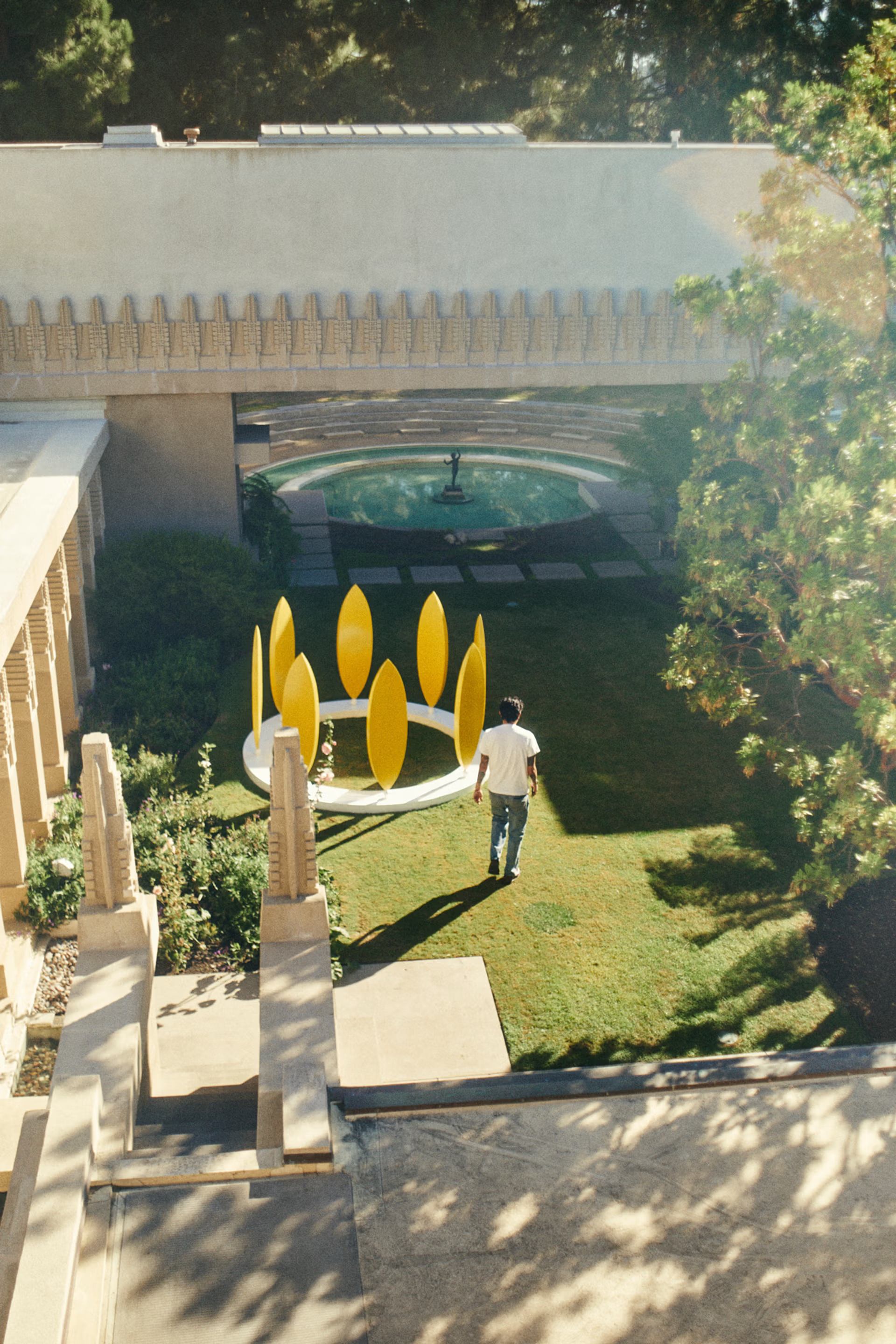
Preciado’s Eight Different Ways (2025) in the courtyard of Hollyhock House
Photo: Roman Koval; © Ryan Preciado, Courtesy of the artist and Karma
Do everyday moments often influence your practice?
Totally. I’ll take inspiration where I can get it. I didn’t go to art school, so I had to look elsewhere for ideas. I’m also always driving around in my truck, picking up materials in the Valley, going between my wood shop in South Central, the paint booth at the autobody shop in East L.A. and my live-work studio where I draw everything in Central L.A. I get a lot of inspiration doing that, and from the city itself. I’m very in love with Los Angeles; it’s neverending and incredibly generous with ideas.
Your exhibitions often involve other artists. Here, for instance, there are paintings by Matt Connors and a musical score by the composer Spencer Gerhardt. What is the role of collaboration in your practice?
That’s just pure selfishness. It’s comforting to bring friends in with me. South Willard is such a collaborative environment, where people are constantly helping each other out, so it was just something I picked up naturally. Also, so many people have done such nice things for me, and I like being able to do the same. It’s fun to bring people together, hang out and hear what they’re working on and thinking about. The kind of work I do also involves a lot of people anyway.
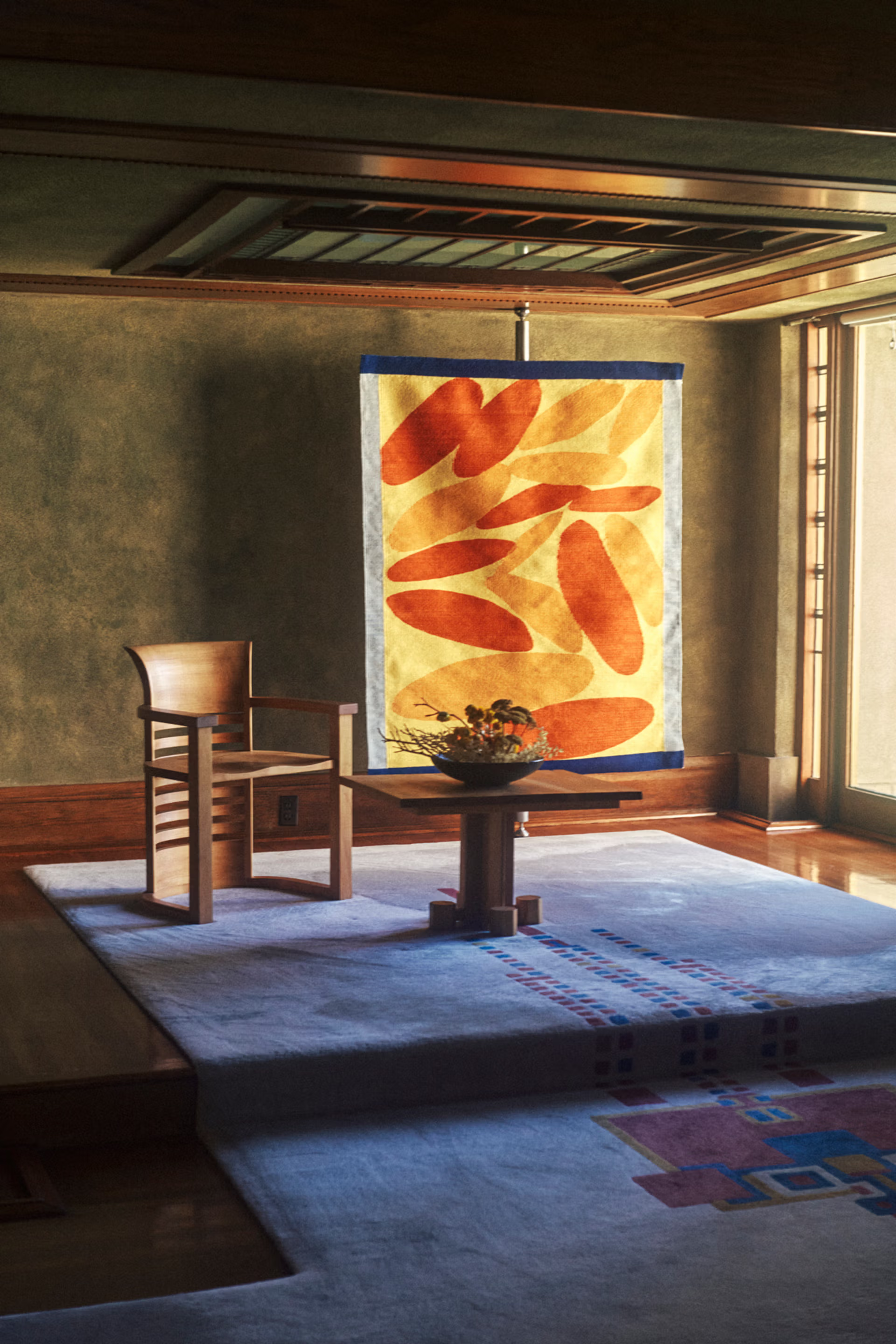
Preciado’s furniture and textile works inside Hollyhock House
Photos: Roman Koval; © Ryan Preciado, Courtesy of the artist and Karma
Including the textiles—your first time working with fibre. What was that like?
I was showing friends these drawings that were sort of like field notes for Eight Different Ways, and they asked if I’d thought about textiles. After telling them how much I love Anni Albers and the Bauhaus, they recommended this family in Oaxaca. I was on a plane three days later. We dyed the fabrics together; they taught me how to load the loom. I loved the process and getting to spend time with them. I didn’t set out to make two-dimensional work; it just ended up working out and making sense alongside the sculptures in this space.
Was there anything that surprised you about showing the work at Hollyhock House?
I thought the house was going to be way more of a bully. It was strange how easily it absorbed the colours and accepted everything. This is a very pretty show because of the house. I think my next one will be a little uglier—in a good way.
- Ryan Preciado: Diary of a Fly, Hollyhock House, East Hollywood, until 25 April


