





To receive Morning Links in your inbox every weekday, sign up for our Breakfast with ARTnews newsletter.
The Headlines
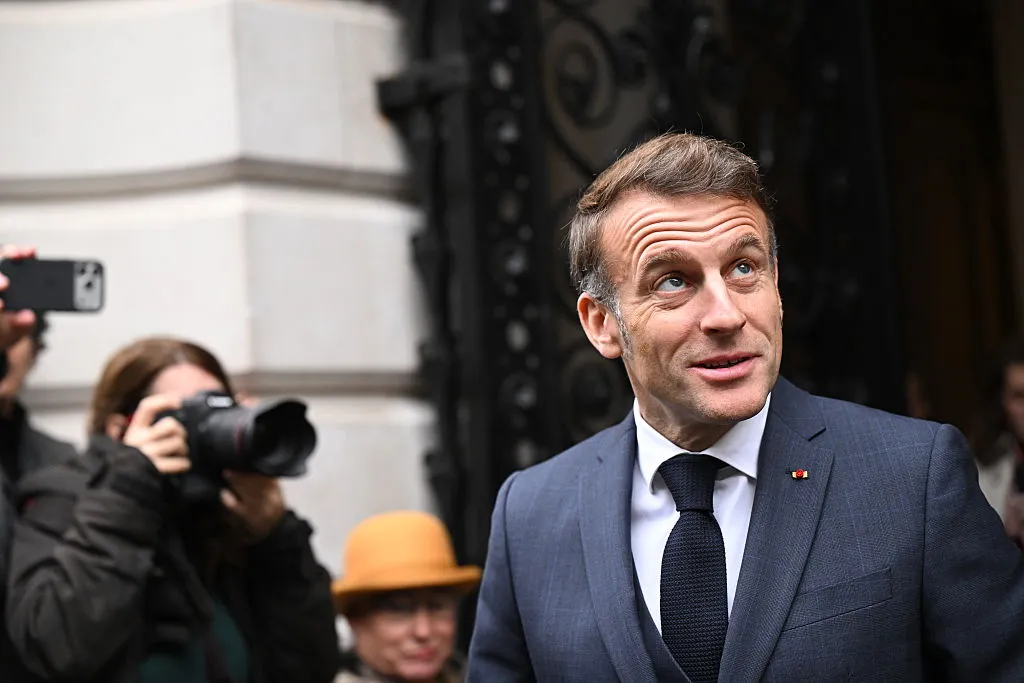
HISTORIC VOTE. France’s lower house of parliament, the National Assembly, unanimously voted late last night in favor of a long-anticipated bill to facilitate the restitution of artworks looted during the colonial era, making good on a nearly decade-old pledge by president Emmanuel Macron. ARTnews attended the lively late-night debate, where many lawmakers described the legislation as “imperfect,” yet still a meaningful step toward confronting France’s colonial past and returning cultural goods that were unfairly, and often violently, seized in the 19th and 20th centuries. Why “imperfect”? A central issue is that the bill does not explicitly mention the word “colonialism,” despite being conceived with that context in mind. Instead, it specifies that artworks looted between 1815 and 1972 are eligible for a fast-track restitution process to countries that submit formal requests. The issue remains politically charged. Conservative lawmakers argued that the bill could open a “Pandora’s box” of claims, potentially leading to a wave of restitutions and depriving the French public of prized national holdings. Far-right representative Florence Joubert also warned against approving requests “founded on the notion of repentance,” underscoring ongoing tensions over how France interprets and addresses its colonial legacy. Stay tuned for our full report on the debate and what comes next as the amended bill moves toward becoming law.
GOLD FINGERS. A trial began today for three men accused of stealing an ancient golden helmet from the Drents Museum in the Netherlands while it was on loan from the National Museum of Romanian History last year, reports Dutch News. The Coțofenești helmet, associated with the Dacian people and dating to the 5th–4th centuries BCE, was returned earlier this month along with two of the three stolen gold bracelets. Two of the defendants, Douglas W. and Jan B., reportedly struck a deal with authorities to return the artifacts, and today’s proceedings are expected to shed light on the terms of that agreement. All three suspects are residents of Heerhugowaard in North Holland and are charged with blowing up a museum door before making off with the golden treasures in January 2025. The lawyer for the third suspect, Bernhard Z., maintains that his client was not present at the museum at the time of the theft.
The Digest
Marina Abramović talks about her major retrospective in Berlin’s Gropius Bau that explores eroticism and the body, plus how it ties into her childhood of feeling “very shy” and “extremely ugly.” [Monopol Magazine]
California-based painter Criselda Vasquez says ICE has detained her father. [Hyperallergic]
President Trump’s recent post of himself as a Christ-like figure is “poorly made and overwrought,” and “conveyed more meanings than the artist, or whoever fed prompts into the AI generator, intended,” analyzes Philip Kennicott. [The Washington Post]
What was it like posing for Frank Auerbach? Historian and curator Catherine Lampert discusses her relationship to the artist whose catalogue raisonné she recently co-authored. [The Guardian]
In time for Milan’s Miart art fair held April 17 to 19, the Fondazione Fiera Milano is offering a rare opportunity for the public to view a selection of its contemporary art collection, including works by Nicolas Party, Marisa Merz, and Monica Bonvicini. [Artribune]
The Kicker
FALLEN IDOL. When sexual misconduct allegations surfaced about Cesar Chavez last month, including claims involving the abuse of young girls, San Francisco has been forced to reckon with the many murals depicting the Latino labor leader across the city, from schools to private homes. As KQED reports, residents, some speaking through tears over a sense of personal betrayal, are grappling with whether to cover up these images with paint or even tarps. Yet even that response raises difficult questions. At an elementary school on Shotwell Street, for instance, a mural of Chavez remains on display, prompting filmmaker Rick Tejada-Flores, who knew Chavez, to ask: “How do you talk to the kids in that school? How do you frame that story?” He believes the murals should be removed. Complicating matters further, Chavez is often depicted alongside other iconic human rights leaders, putting entire works at risk of alteration or removal. Ironically, Chavez himself appeared ambivalent about such public tributes. “Statues are for pigeons to shit on. If you want to remember me, organize,” he once said.


