






To receive Morning Links in your inbox every weekday, sign up for our Breakfast with ARTnews newsletter.
Good Morning
- A White House report accusing the Smithsonian’s National Museum of American History of erasing US heritage is unfair, says the institution’s chief, Lonnie Bunch.
- Sheikha Hoor Al Qasimi was appointed president of the Sharjah Museums Authority.
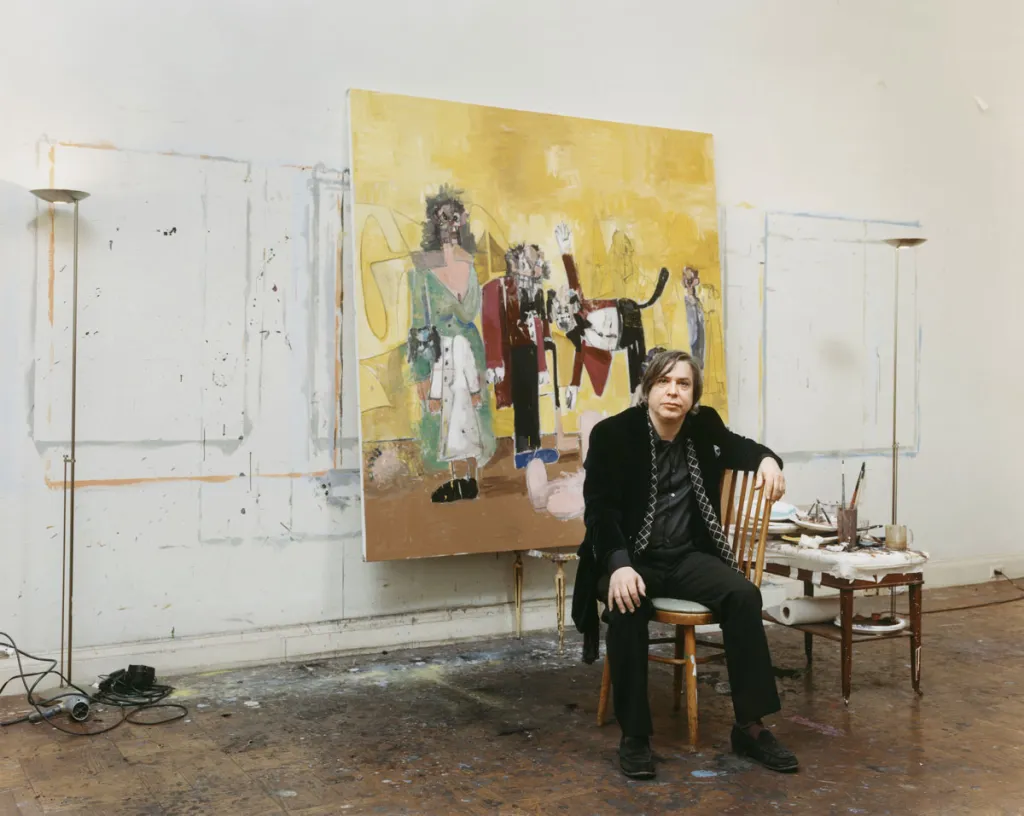
- George Condo is heading back to Hauser & Wirth after leaving the gallery.
The Headlines
BUNCH PUNCHES BACK. Smithsonian chief Lonnie G. Bunch said a White House report published on July 4 accusing the National Museum of American History of programming that “erases” US heritage is unfair, the Washington Post reports. “While there will always be room for improvement, this report is not a fair characterization of the work and totality of the National Museum of American History,” Bunch said in a staff memo sent Tuesday. The White House report accused the Smithsonian Institution leaders of “extreme political activism” and of “having adopted an ideological framework that no longer treats the American story as a shared national inheritance to be taught or celebrated.” Bunch punched back in an email to staff, which the Post reprinted. “At the Smithsonian, our work is driven by scholarship, accuracy, and an uncompromising commitment to tell the fullness of America’s story.” He added that in the coming days, the institution will continue carefully reviewing the lengthy report and will comment as needed.
SO SHEIKH. Sheikha Hoor Al Qasimi was appointed president of Sharjah Museums Authority, where she will oversee the emirate’s over 20 museums, reports The National. Sheikh Dr. Sultan bin Mohammed Al Qasimi, who rules Sharjah, issued the appointment, which expands the sheikha’s already highly influential role in the region. She is currently president and director of the Sharjah Art Foundation and has directed the Sharjah Biennial since 2003, as well as other major international exhibitions. “For me, it’s always about teamwork,” she told The National last year, when she led the Aichi Triennale.
The Digest
George Condo is heading back to Hauser & Wirth soon after leaving the gallery, with a pair of exhibitions in the pipeline. [ARTnews]
The personal collection of the late postwar art doyenne and founder of Christie’s in Paris, Jeanne-Marie de Broglie, is heading to Christie’s on September 30th, with works by Pablo Picasso, Jean Dubuffet, Diego Giacometti, Claude Lalanne, and David Hockney. [Ocula]
The Manhattan District Attorney’s Office has announced it repatriated nearly 60 looted artworks to Italy, Iraq, and Indonesia. [press release]
Ukraine is issuing guidebooks to its soldiers about the “protection of cultural values in the event of armed conflict,” following damage and destruction to Ukrainian heritage since the Russian invasion of the country. [The Art Newspaper]
Curator Ingrid Schaffner discusses “the revelation of landscape” in Henry Taylor’s work, in dialogue with his influential teacher and artist, James Jarvaise, at a Zurich exhibition. [ARTnews]
The Kicker
REBELLIOUS BARD. The discovery of an Elizabethan-era painting that shares symbolic imagery with Shakespeare’s As You Like It has shed new light on the Bard’s own politics and why several of his plays were censored, reports the Times of London. The painting in question, known as The Persian Lady by Marcus Gheeraerts the Younger, shows a woman and a weeping stag. Both motifs also appear in Shakespeare’s play, but were not understood clearly until the painting, like a missing puzzle piece, helped connect the dots. Researchers have now identified the model in the painting as Lady Penelope Rich, the sister of the Earl of Essex. The latter was the leader of a failed uprising against the ruling Elizabeth 1, and the weeping stag was often used as a symbol adopted by the Earl’s supporters. Meanwhile, in Act II, Scene I of As You Like It, we find a “poor sequester’d stag” who had “big round tears” running “down his innocent nose.” The Earl was held in prison at the time. Shakespeare’s description now appears more significant and also helps explain why the Bard’s production of Richard II in February 1601 coincided with the start of the Earl of Essex’s rebellion. “I do think [Shakespeare] was doing something very risky, but he was cleverly hiding it beneath allegory,” said Christ Laoutaris, a researcher at the Shakespeare Institute at the University of Birmingham, who helped decode the painting The Persian Lady.


