




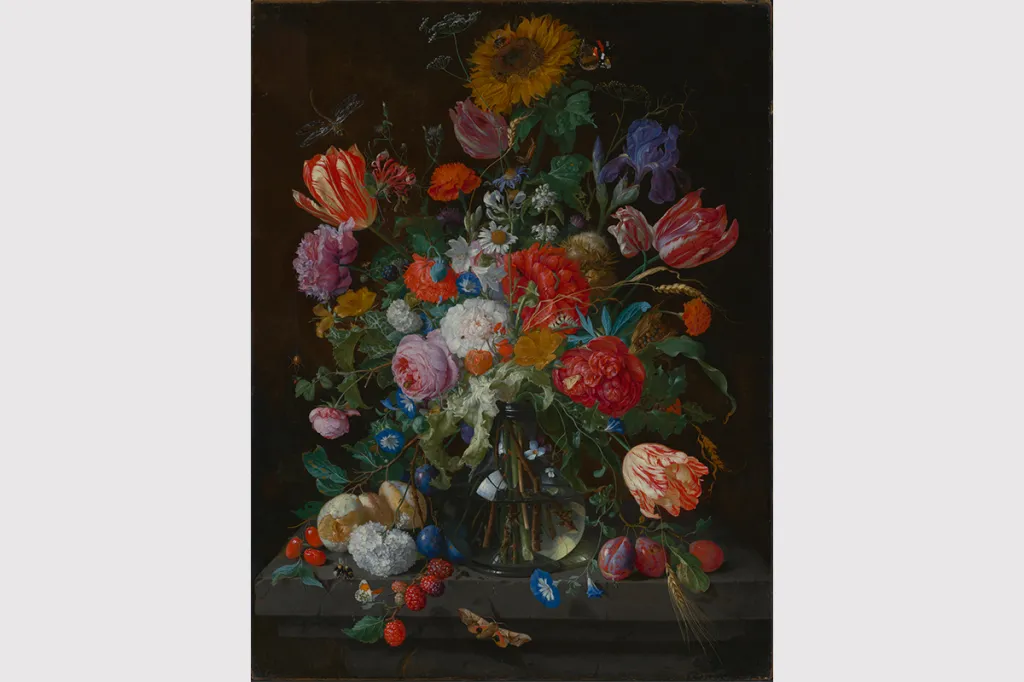
The Getty Museum in Los Angeles has acquired two Dutch still lifes of note—including one that the institution said it “has been seeking over two decades,” according to a press release announcing the news.
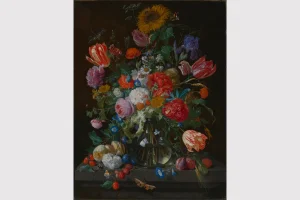
Jan Davidsz. de Heem’s Glass Vase with Flowers and Fruit (ca. 1673–74) is one of nine similar paintings that demonstrate the artist’s “skill of illusionism and accurate botanical and entomological observations,” per the release, and was unrecorded until it came out of a private collection in Germany in 2022. The arrangement includes flame tulips (“still a highly prized flower in the Netherlands”) as well as plums, berries, roses, morning glory, milk thistle, and honeysuckle.
Look closely and you will also see insects going about their business at minuscule scale. “Butterflies and caterpillars, associated with metamorphosis, represented the transience of life and the soul freed from greed and desire,” the Getty’s release reads. “And, according to literary tradition, ants were respected as hardworking and symbolized diligence and frugality.”
De Heem’s painting is already on view in the Getty Center’s West Pavilion, and it will be joined at a later date by the other newly acquired Dutch work, Still Life with Assorted Fruit (1597/98–1660) by Pieter Claesz, a still life painter who influenced De Heem. The assemblage of grapes, strawberries, gooseberries, cherries, and apples signals its status as a style of still life known in Dutch as a “fruitagje.” As the Getty notes, “Still lifes that portrayed a variety of food often alluded to abundance and prosperity—comforting notions during periods of war and religious upheaval.”
Still Life with Assorted Fruit was in a private English collection until the mid-20th century and moved to the Lester L. Weindling collection of Dutch and Flemish paintings in New York. The Getty acquired the work in an auction at Sotheby’s last month for $1.64 million, more than its $800,000–$1,200,000 estimate.