







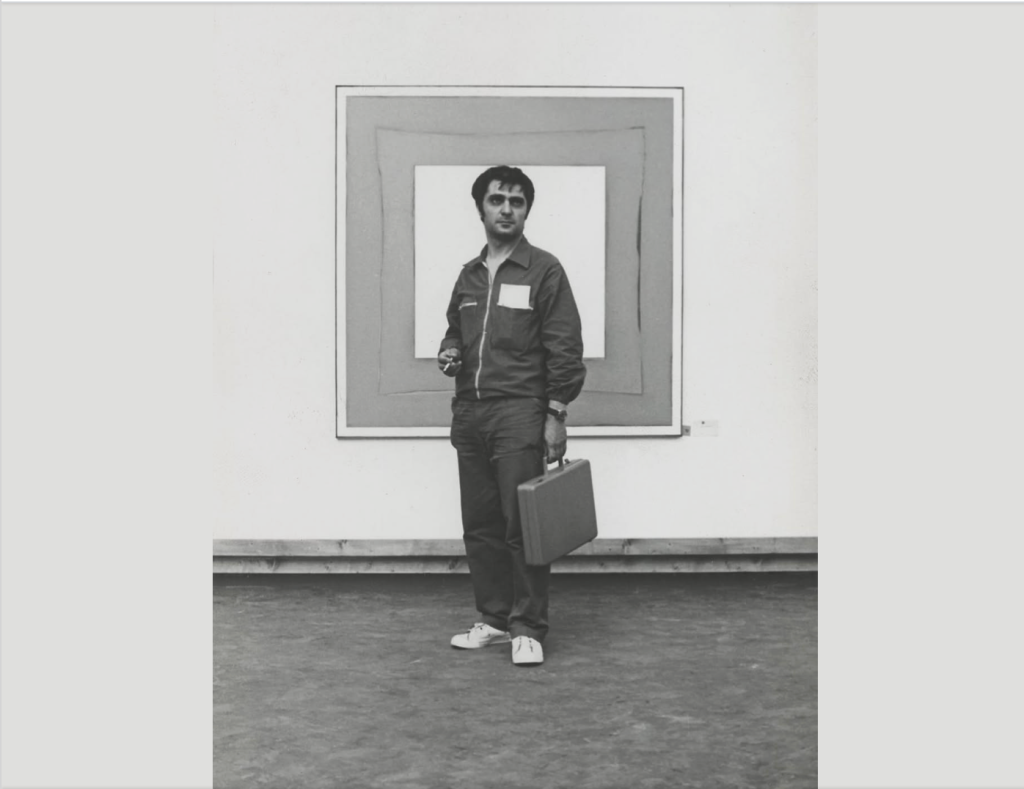
Giancarlo Politi, publisher, art critic, and founder of Flash Art, one of the most influential contemporary art magazines to emerge from Europe’s postwar era, died on February 24. He was 89. News of his death was first reported in the Italian-language press.
Founded in 1967 in Rome, Flash Art was among the first regularly published magazines dedicated exclusively to art criticism—and one of the earliest to circulate internationally. Over decades, it expanded to include editions in French, Polish, Chinese, Spanish, German and Russian-language editions. Yet each edition sought to map the art world as an interlinked entity, presenting it not as a scatter of far-flung scenes but as a constellation of overlapping centers, each in constant exchange.
From its headquarters in Milan, Flash Art documented some of the most seismic art movements of the late twentieth century, including Arte Povera—meaning “poor art”—the radical Italian ideology defined by its use of everyday objects and organic ephemera.
Politi, together with his wife, the art critic Helena Kontova, created a launchpad for artists and critics who continue on to shape the contemporary canon. Marina Abramović, Maurizio Cattelan,, and Jeff Koons were those featured in its pages, which likewise saw bylines by influential art world figures such as Germano Celant, the critic who coined “Arte Povera,” Francesco Bonami, curator of the 2003 Venice Biennale, and the American historian and writer Hal Foster.
Kate Shanley, daughter of former Art in America publisher Paul Shanley and a Flash Art employee from 1980 to 2017, shared a remembrance of Politi on Instagram. She recalled picking up bundles of the magazine at New York’s John F. Kennedy Airport—where customs once objected to an issue featuring artwork by Pierre Klossowski—and driving them straight to SoHo and the East Village to deliver to galleries.
“Giancarlo and Helena Kontova were wonderful to work for. It was a true collaboration with a dynamic couple who were both creative and brilliant,” she said, noting that they trusted their employees “like a family” as the magazine grew, evolved, and weathered the ups and downs of the contemporary art world over the decades.
His leadership, however, was not without controversy. In 1972, Politi advertised his services for $1,000 to “artists, galleries, museums, and universities,” including “special arrangements for really good-looking female artists.” He drew further scrutiny in 1997 for defending Alexander Brener’s vandalism of Kazimir Malevich’s Suprematisme. In 2011, reports surfaced that he had sent inappropriate emails to a female Flash Art intern who had allegedly been denied fair compensation; the messages were later posted online. Politi described the exchange as “particularly aggressive and underhanded” and expressed his regret.
Politi was born in 1937 in Trevi, in Italy’s Umbria region. In 1993, he founded the Trevi Flash Art Museum, which hosted exhibitions by international artists such as Damien Hirst, Vanessa Beecroft, and Andres Serrano. He departed the museum in 2005; it has since been renamed the Palazzo Lucarini Contemporary. In the early 2000s, he launched a series of “no-budget biennales,” beginning in Tirana, Albania, followed by six editions in Prague and three editions of the Prague Photo Biennale.
He is survived by his wife, Helena, and their daughter, Gea, who has also served as an editor of Flash Art.
The article will be updated with additional information as it becomes available.


