







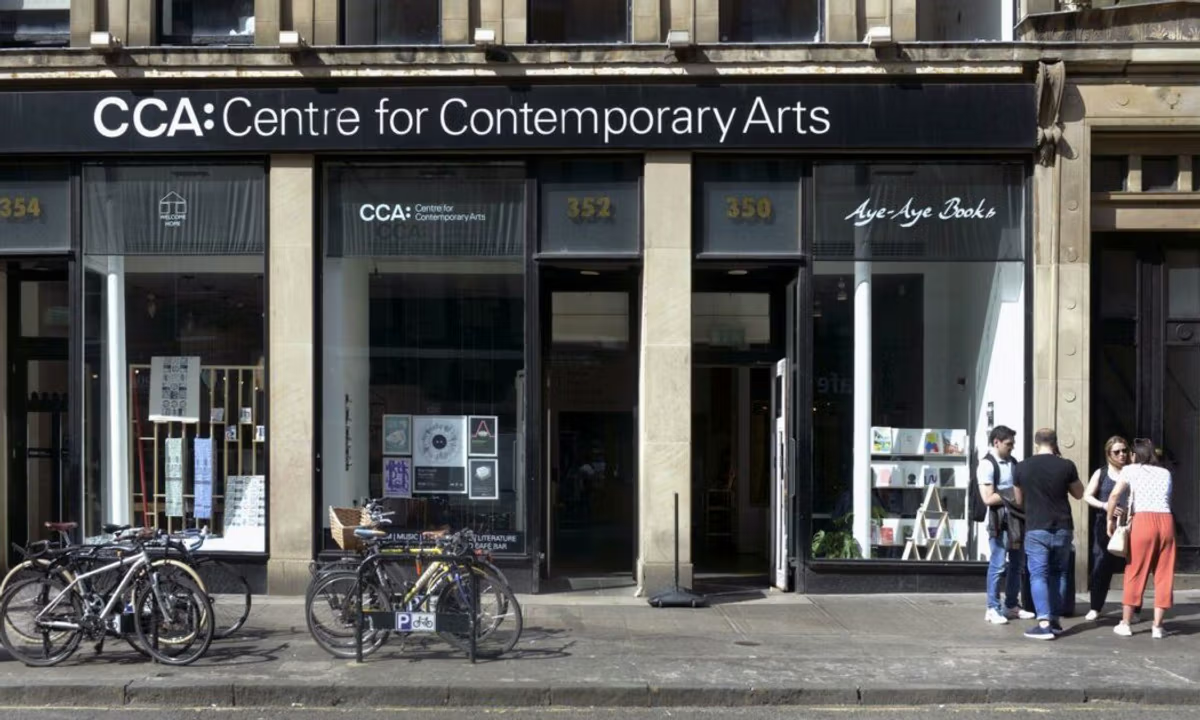
Glasgow’s Centre for Contemporary Arts (CCA) has announced it is closing. The pioneering arts venue, which has championed experimental and contemporary art for 33 years, is entering liquidation, cancelling all programmes and activities and making its 39 staff redundant.
In an emotional statement to partners and artists, the centre’s programme manager Annie Hazelwood described the closure, which came into effect on 30 January, as “deeply painful” and acknowledged it as “a moment of real loss” for Glasgow’s cultural community.
The venue had been a cornerstone of Glasgow’s artistic landscape since it emerged from the ashes of the Third Eye Centre, which ran contemporary arts in the same building at 350 Sauchiehall Street from 1975—but closed due to mounting debts in the early 1990s. Its galleries, performance spaces and café have hosted countless exhibitions, screenings, talks and performances from the likes of Damien Hirst, Allen Ginsberg, Whoopi Goldberg and Billy Connolly.
Creative Scotland, which owns the building and leased it to CCA for £1 per year, confirmed it has suspended further funding payments as the organisation “is unable to demonstrate its ongoing viability”.
This is despite CCA winning three years of funding worth £3.4m from Creative Scotland in January 2025. The centre had suffered a series of setbacks in recent years. For safety reasons it was forced to close for four months following a 2018 fire which ravaged the nearby Glasgow School of Art. This was compounded by the Covid-19 pandemic and then a staff dispute, causing the closure of its café.
In April of last year the centre shut after a protest by Art Workers for Palestine Scotland calling on it to adopt a Boycott, Divestment and Sanctions policy on Israel. After calling the police to clear protestors from its premises, the CCA apologised for its handling of the incident and replaced senior staff and board members.
In a statement published on Sunday on its Instagram account, Art Workers for Palestine Scotland called on Creative Scotland to reverse the decision to cut funding for the centre. It added: “It was not our demands and our campaign that caused this. It was years of mismanagement and ethical rot and a final destructive act by the board.” The group also criticised CCA’s decision to lay off staff without a public consultation which could have “led to solutions generated by the sector”.
Hazelwood’s statement emphasised that staff wellbeing remains the “absolute priority” and praised the team’s “extraordinary care, professionalism and emotional labour” during “profoundly challenging conditions”. She stressed the closure reflects wider systemic issues rather than any failing by staff or programming quality.
Despite the closure, Hazelwood struck a note of cautious hope, suggesting the building might “find new forms, shaped once more by the communities and artists it serves”. She emphasised that “the conditions that made CCA possible still exist: artists with ambitious ideas, communities that need space, and a shared belief that work can happen without unnecessary barriers. Those conditions will outlast this singular organisation.”
In their statement Creative Scotland said it would “explore future options, alongside other partners, with the shared aim of the centre re-opening as a cultural resource as soon as is realistically possible.”


