







Greece has introduced a new law designed to tackle art forgery and prevent damage to works of art and collectibles.
Like many countries, Greece previously relied on its broader anti-forgery laws to tackle art-specific issues. However the new bill (No. 5271/2026), introduced in January, targets the issue directly, aiming to combat the “manufacture and circulation” of fakes.
The law proposes the set-up of an independent Department of Works of Art within the culture ministry and the creation of a registry of expert art appraisers. Measures to prevent damage to art are also built in, as well as specific provisions included to protect “cinemas of historical importance”.
The new legislation offers a clearer outline of sentences for crimes against cultural property, including imprisonment of at least six months and a fine of at least €5,000. This rises to a possible ten years’ imprisonment and fines between €10,000 and €300,000 for more serious cases. It also provides for the destruction of works identified as counterfeit.
“Until recently, there was no specific legislation addressing the forgery of artworks and collectibles,” says Aliki Tsirliagkou, the founder and director of the Athens-based ArtSpark Consultants. “Instead, these cases fell under the ‘smoother’ general provisions of the criminal code concerning fraud and forgery, which required proof of a financial transaction in order for an offence to be established.” Under the new legislation authorities need only demonstrate the manufacture or alteration of counterfeit works of art, as well as possession with “intent to distribute”.
Tsirliagkou adds: “That, combined with the digitalisation of sales seen nowadays, as well as the rapid growth of online art transactions and the limited regulation of certain platforms, led to an increase of incidents.”
Trafficking and vandalism
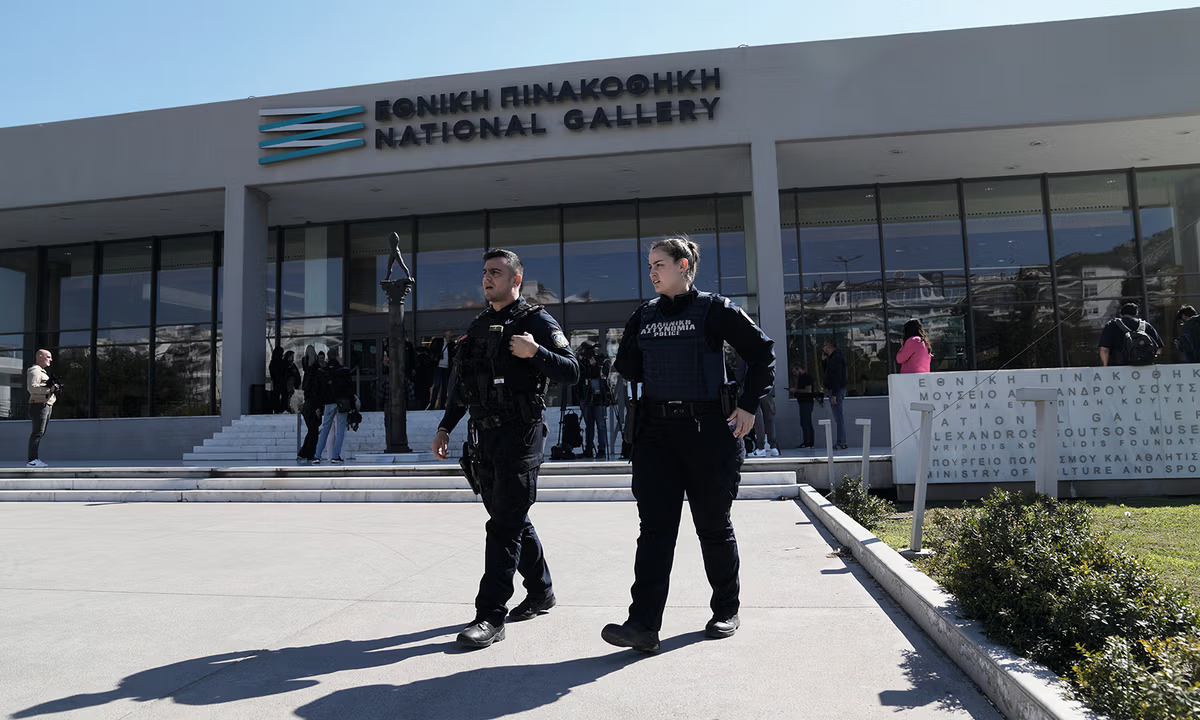
The move follows years of debate about the proliferation of counterfeit works in the country’s art market, with notable cases including the 2025 arrests of 13 individuals involved in a forgery and antiquities trafficking ring in Athens, and the 2024 seizure of more than 120 fake works by Greek Modern painters (including Nikos Hadjikyriakos-Ghikas and Alekos Fassianos), planned to be sold at an online auction house. Vandalism has also been in the news, thanks to last year’s attack of a work by Christophoros Katsadiotis at the National Gallery in Athens, carried out by a member of Greek parliament, Nikolaos Papadopoulos.
Until recently, there was no specific legislation addressing the forgery of artworks
Aliki Tsirliagkou, art consultant
Some have reservations. “The Hellenic Ministry of Culture already carries extensive responsibilities managing museums, archaeological heritage and cultural institutions in a country with an exceptionally rich cultural landscape,” says Achilleas Tsantilis, the president of the Hellenic Association of Art Experts. “For this reason, I am not certain that the ministry is in a position to support such a specialised authentication mechanism through its own internal experts.” He adds that “social partners such as our association were not consulted prior to the law being passed by the Hellenic Parliament” and that the pre-existing court-appointed experts system remains the “most appropriate and established institutional mechanism for providing expert opinions in matters of attribution, valuation and disputes when concerning works of art”.
The decision to create legislation specifically for cultural heritage, rather than enforce broader legislation, has precedent. A prominent example in recent years was last year’s introduction of the EU regulation on the import of cultural goods to tackle antiquities trafficking, which has received a mixed response within the trade.
“Specific laws addressing art and cultural heritage issues are important,” says Leila Amineddoleh, a partner and chair of the Art Law Group at Tarter Krinsky & Drogin. “Criminals and bad actors often think that their crimes will slip under the radar and that law enforcement won’t pursue these matters. Having laws targeting art criminals is a clear way to signal that bad actors will be prosecuted. As such, this amended law is also symbolic.”


