





Can art be both a refuge and a catalyst for change? The 24th edition of Guatemala’s Bienal de Arte Paiz (until 15 February) attests to art’s capacity to question and subvert, but also connect and transform. The Italian curator and artistic director of Museo de Arte Moderno de Bogotá, Eugenio Viola, has orchestrated the largest edition of the Guatemalan biennial under the title and concept The World Tree, a cosmogonic symbol for ancient civilisations—including the Maya, for whom the Ceiba tree represents “the universe’s structure and the interrelation between the levels of existence”—and also a synaptic map drawn from neuroscience often depicted as a tree.
This edition of Latin America’s second-oldest biennial features 46 artists from 30 countries across 11 venues in Antigua and Guatemala City. In addition to being the biennial’s largest edition this is also its longest, with the exhibition’s duration extended to over three months. Another significant development is that the organising non-profit, Fundación Paiz, has created its first permanent exhibition and programming venue, which soft-launched with a performance by the Cuban artist Carlos Martiel on 6 November and will open at the end of the biennial.
These changes signal the organisers’ intention to expand the biennial’s reach domestically and internationally, reaffirming its role as Guatemala’s main private contemporary art initiative since 1978. Fundación Paiz’s president, María Regina Paiz, says the focus “remains on amplifying the biennial’s resonance among Guatemalans”.
Viola’s concept for this edition of “an interconnected arboreal metaphor” takes various forms, many created by artists he has collaborated with previously. Some, especially the 31 pieces commissioned specifically for The World Tree, explore the biennial’s theme through lenses that range from the poetic to the political.
María Adela Díaz’s commission at Munag, Invisible Futures Photo: Sergio Muñoz. Courtesy Fundación Paiz
“The challenge was to curatorially unite 11 venues, moving from the macro—the World Tree—to the micro—the little trees of the synapse,” Viola says. “The venues and artworks operate as sites of emergence, uncertainty and symptoms of our present, creating a counter-cartography of resistance and resilience.”
Fragmented tree branches, reflecting how ancient cultures saw trees as the axis mundi and the present-day lack of connection with nature, inform the Peruvian artist Ximena Garrido Lecca’s work at La Nueva Fábrica in Antigua. The non-profit is also the only biennial venue that is a space dedicated to contemporary art, as the rest are historic buildings or museums, and Guatemala does not have a national contemporary art museum.
At Antigua’s Museo Nacional de Arte de Guatemala (Munag), one of the biennial’s strongest venues, trees are potent metaphors. This is seen in the French Algerian artist Kader Attia’s large-scale installation depicting a desolate landscape populated by dry trees, each bearing a rubber slingshot, representing colonialism but also resilience. The commissioned work by the Mexican artist Tania Candiani explores underlying connections within the earth, specifically mycelium, through a display of dirt encapsulated in glass where the roots, rather than the tops of the plants, are the protagonists. Sounds from deep in the earth create a pulsating atmosphere.

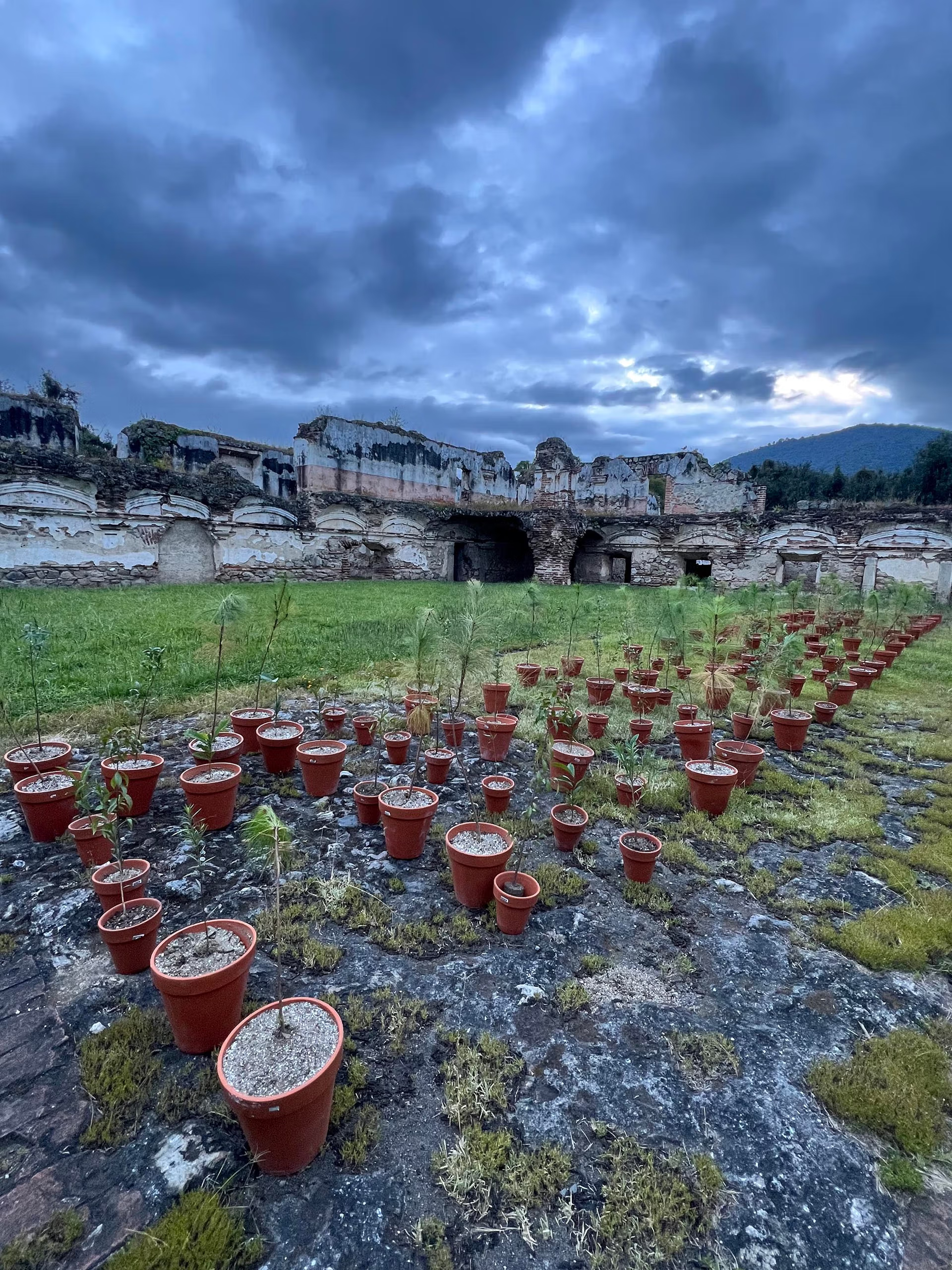
Igor Grubic’s site-specific installation, Migrant Seeds, at Antigua’s La Recolección Photo: Constanza Ontiveros Valdés
At the biennial’s only open-air venue, the dreamy ruins of Antigua’s La Recolección, an 18th-century monastery damaged by earthquakes, the Croatian artist Igor Grubic’s commissioned work features plant pots blending with the landscape. They gesture toward regeneration and adaptation. “Seeds embody the migration of people, ideas and languages, but we need to plant the seeds of love,” Grubic says. Plant motifs also appear in the Brazilian artist María Nepomuceno’s commission at Munag, where a poetic garden of potted plants speaks to humanity’s possibilities.
Trees connected at their roots—encapsulated in the biennial’s official emblem by the Guatemalan artist Erick Boror—are even embedded in Guatemala City’s central plaza, where pedestrians (often inadvertently) walk over them. When standing atop the plaza’s observation deck, the motif reveals itself, leaving a mark on the city’s heart.
Nature more broadly is a recurring concern throughout the biennial, with some Guatemalan artists reflecting on ecological issues using lake water as artistic material. María Adela Díaz tinted 40 yards of fabric with the cyanobacteria affecting Lake Amatitlán, displayed at Munag’s entrance. “The piece is ephemeral as I use live cyanobacteria,” Díaz says. “I intend to continue with this project, calling out environmental degradation; hopefully the government or other organisations can get involved.”
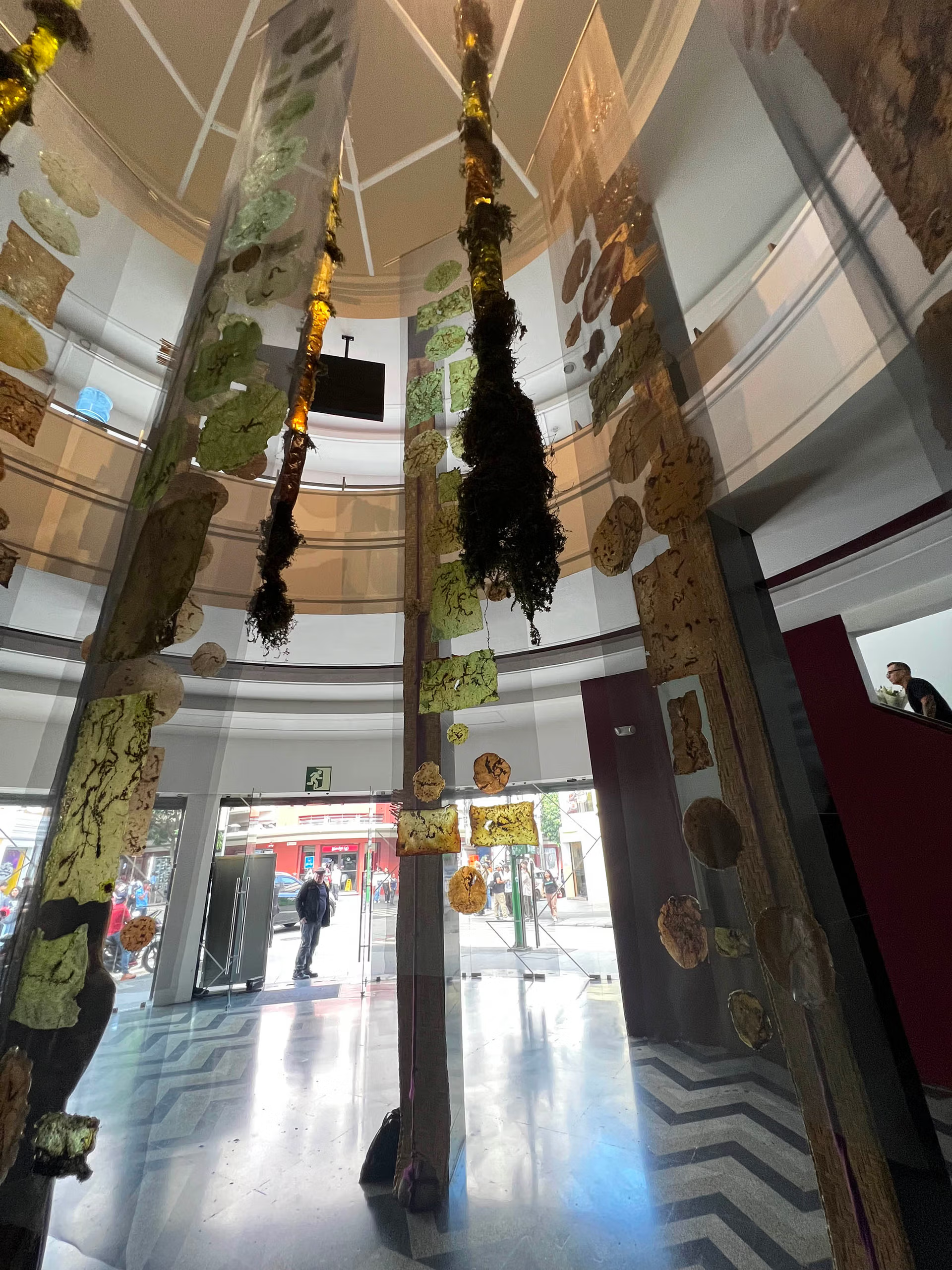
Verónica Riedel’s commission, Fabric of the future, at Guatemala City’s Centro Cultural de España Photo: Constanza Ontiveros Valdés
The commissioned piece by Verónica Riedel at Guatemala City’s Centro Cultural de España (CCE) is composed of figures made of biomaterials, including species invading Atitlán Lake—one of Guatemala’s main tourist attractions—and Mayan curative plants. The work points to pollution and social issues, but also offers means of healing.
Several featured projects are part of transdisciplinary research studios, like Plano Negativo at Antigua’s Centro de Formación de la Cooperación Española (CFCE), which analyses the effects of the forced eradication of the coca plant, which damaged ecosystems. “We show complex dynamics,” says the project’s co-director Hannah Meszaros-Martin. “Our main question in Colombia is how the environment turns into a weapon attacking communities.”
Indigenous representation and Mesoamerican references, mainly Mayan, are also prevalent throughout this Bienal de Arte Paiz. Some projects mostly focus on formal connections, as seen in the French artist Orlan’s self-portrait photographs, part of her Self-Hybridization series (1998-present), at CFCE. In the images, the artist embodies the features of a selection of Mayan figures lent by Guatemala’s Ruta Maya Foundation, which with more contextualisation might have drawn deeper connections but here risks verging on cultural appropriation.

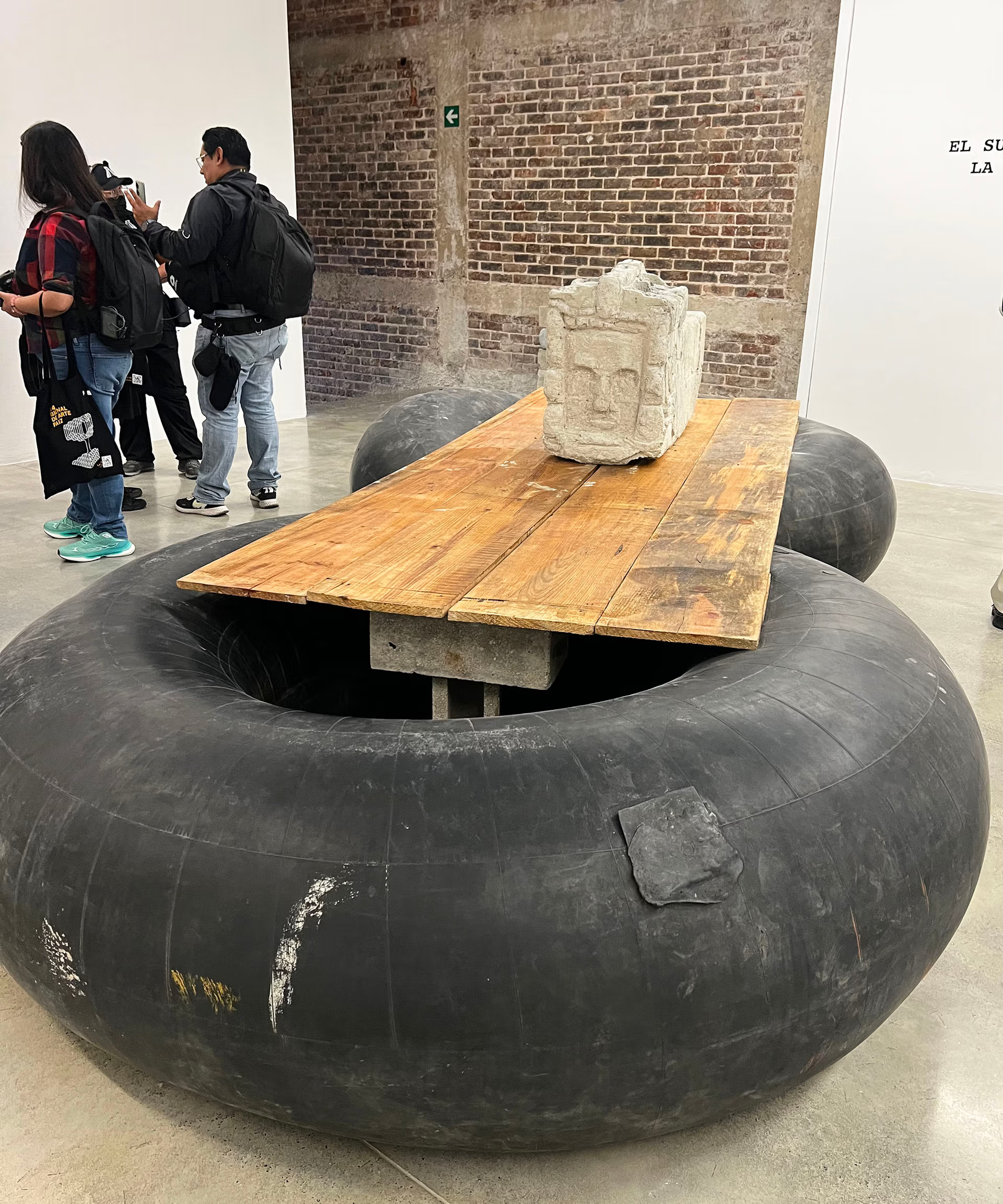
Comissioned project by the Guatemalan Jorge de León, Shipping Documentation, at Guatemala City’s Centro Cultural de España Photo: Constanza Ontiveros Valdés
Others, like the commissioned mixed-media project by the Guatemalan artist Jorge de León at CCE, reveal a more analytical approach, using research on a Mesoamerican object of unclear provenance to uncover issues concerning history, identity and present-day migration. Video works by the Tz’utujil Maya artist Antonio Pichillá further reveal the rhythms, syncretism and symbols embedded in rituals.
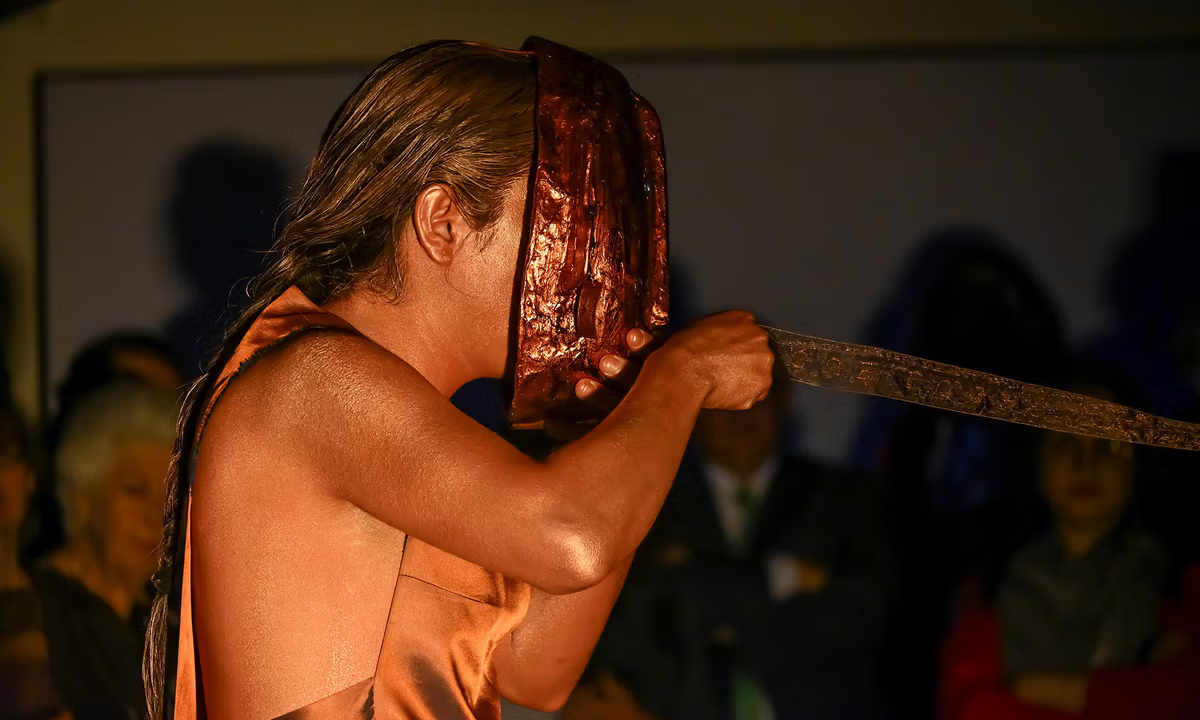
Performance is a significant part of the biennial’s programme, reflecting both Viola’s expertise in the genre and the biennial’s overarching spirit. The Cuban artist Glenda León’s contribution explores spirituality by turning braille representations of deities in several languages into a musical score performed by the Kaqchikel Maya pianist Yahaira Tubac. Other performances are more overtly political. The Chilean Mapuche artist Seba Calfuqueo, for instance, addressed the copper industry’s historical, social, political and ecological impacts embodying a copper figure and wearing copper masks with ribbons bearing woven messages emerging from their mouths as a voice is heard in the background narrating the varied effects of extraction in Chile.

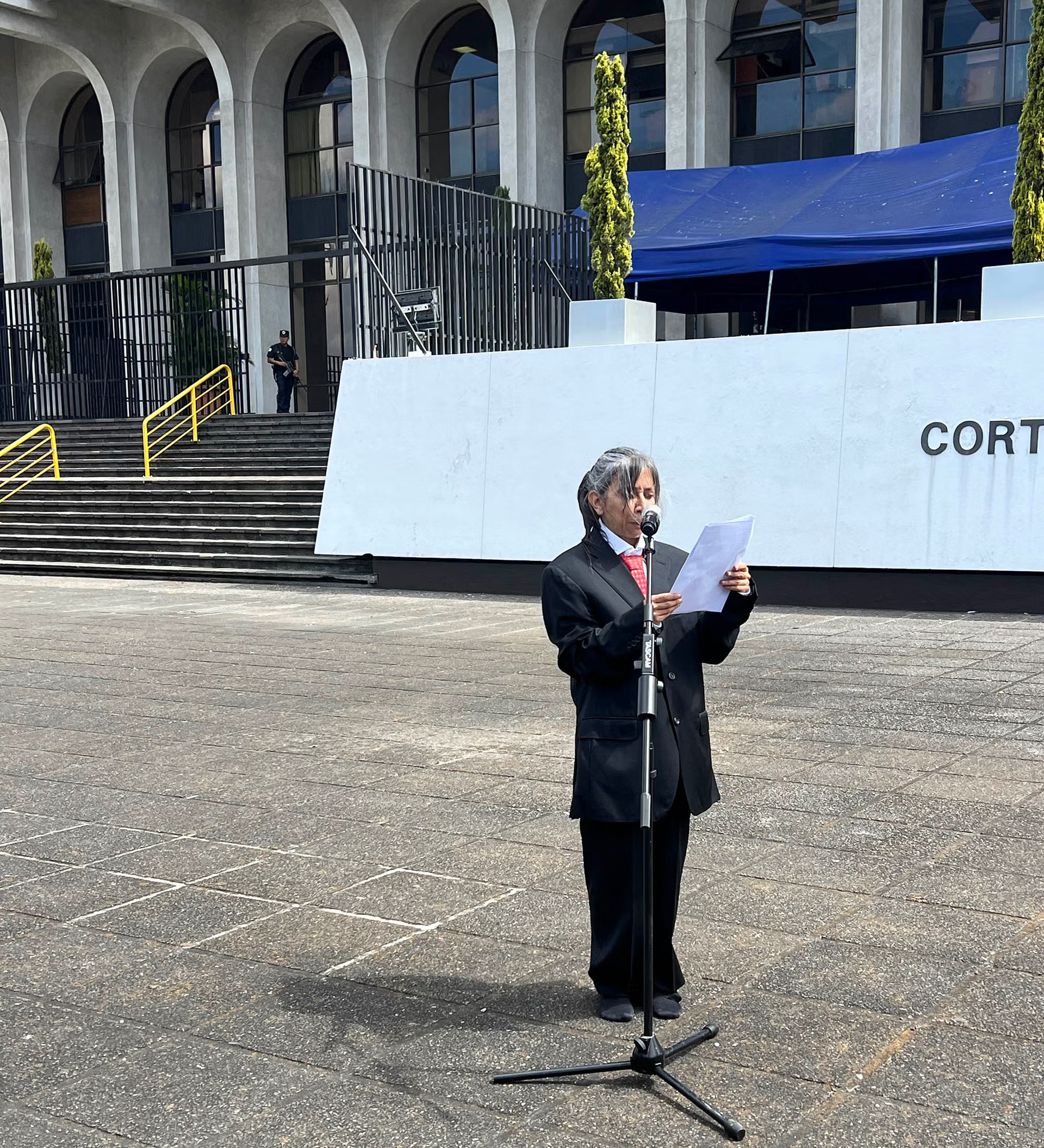
Regina José Galindo’s performance, Yo Me Siento Libre, outside the supreme court of Guatemala Photo: Constanza Ontiveros Valdés
The performance with arguably the most local political resonance was that of the Guatemalan artist Regina José Galindo, who performed as the incarcerated reporter José Rubén Zamora on the plaza in front of Guatemala’s supreme court, reading aloud his letter denouncing years of state oppression. “It is preferable to die standing than kneeling,” the letter reads in part.
Although uneven in some venues and projects—often due to the challenges of installing contemporary work in historic spaces—this edition of the Bienal de Arte Paiz portrays the complexities of humanity while offering much-needed hope and embodying Viola’s conception of art as community. In a way, this reflects the biennial’s larger mission.“This is not the project of one foundation or family, but of a country,” Paiz says.
- The 24th Bienal de Arte Paiz,The World Tree, until 15 February 2026, various venues in Antigua and Guatemala City, Guatemala