






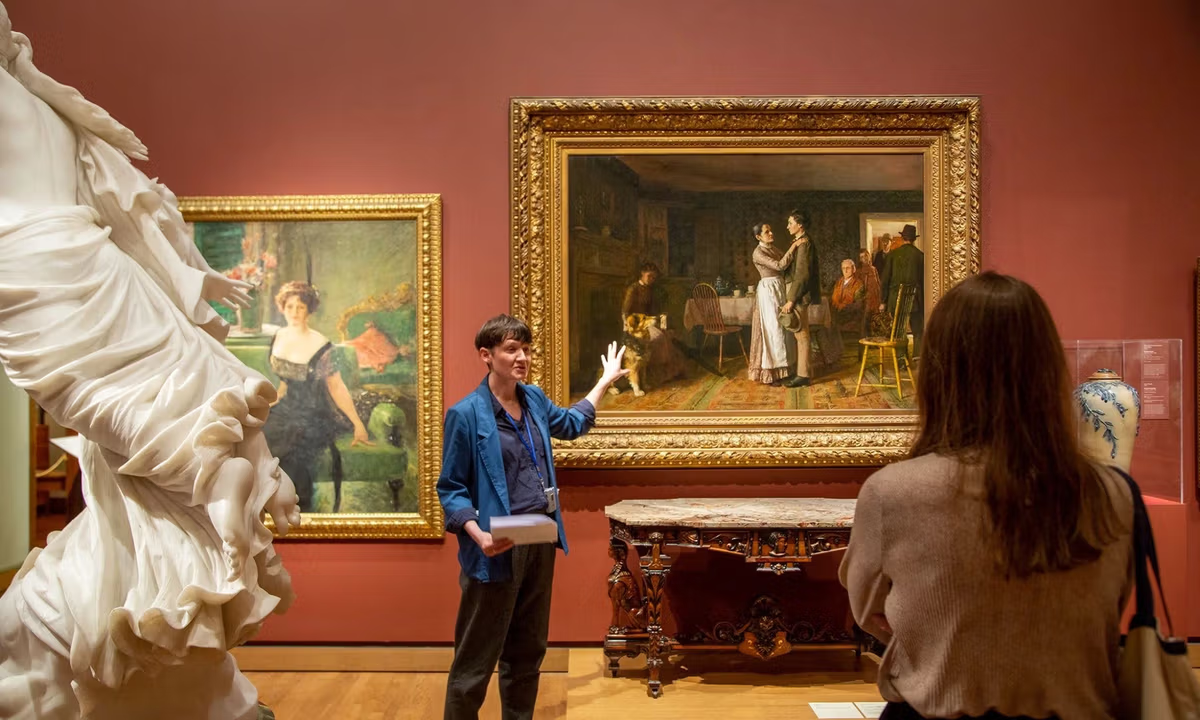
While leading a recent tour of the Philadelphia Museum of Art (PMA), the artist and curator Aislinn Pentecost-Farren paused in front of a landscape painting by Thomas Doughty. Depicting the Fairmount Water Works on the Schuylkill River, a municipal water system from the early 19th century, the piece was made by Doughty in the year of the 50th anniversary of US independence, when growing populations and industries were seen as signs of prosperity. For Pentecost-Farren, however, the painting tells a different story. The shallow Schuylkill River had been transformed, enabling barges to supply Philadelphia with cheap, plentiful coal. With the energy transition from wood and water to coal came rapid expansion across the nation, contributing to the displacement of communities, pollution of the environment and widening economic inequalities. Reimagining the museum’s collection through works like Doughty’s, Pentecost-Farren reveals the history of the climate crisis lying in plain sight.
She developed the free tour for ArtPhilly 2026, the inaugural citywide festival (until 2 July) that reflects on the US’s 250th anniversary, using the past to envision the future. Pentecost-Farren began her project years prior in 2023 as an unsanctioned tour of the PMA in the form of a self-guided brochure styled after the museum’s official map. She left hundreds of copies of her brochure around the museum for visitors to take, even adding them to stacks of the PMA’s own guide.
Thomas Doughty, View of the Waterworks, on the Schuylkill Seen from the Top of Fairmount, Philadelphia, 1826 Purchased with the Edward and Althea Budd Fund, 2019, Philadelphia Museum of Art.
“I had been thinking about the historic places and objects we choose to preserve in the United States and how the climate crisis changes their meaning,” Pentecost-Farren says. “I was thinking initially about heritage connected to industrial history, like coal mining museums and industrialists’ mansions, but quickly realised that most US history since colonisation is connected to the crisis.”
At the same time, Pentecost-Farren saw how museums were becoming sites of contention as climate activists across the world staged protests, including viral actions like throwing soup at art. “Most museums were reacting with indignation, saying, ‘Yes the climate crisis is important but that painting and our collection have nothing to do with it,’” the artist explains. “But the wealth that created these museums is part of the climate story and sometimes even the context and subject of the paintings are connected to the climate crisis if you dig just a little bit.”
In 2024, the PMA’s programming team invited Pentecost-Farren to stage a live version of the tour for Earth Day. For ArtPhilly, she expanded the project to include the Independence Seaport Museum and the Science History Institute. Each location offered Pentecost-Farren the opportunity to tell different stories. “The PMA tour focuses on race, class, Indigenous dispossession and genocide, colonialism, because that is the climate story behind their artefacts,” she says.

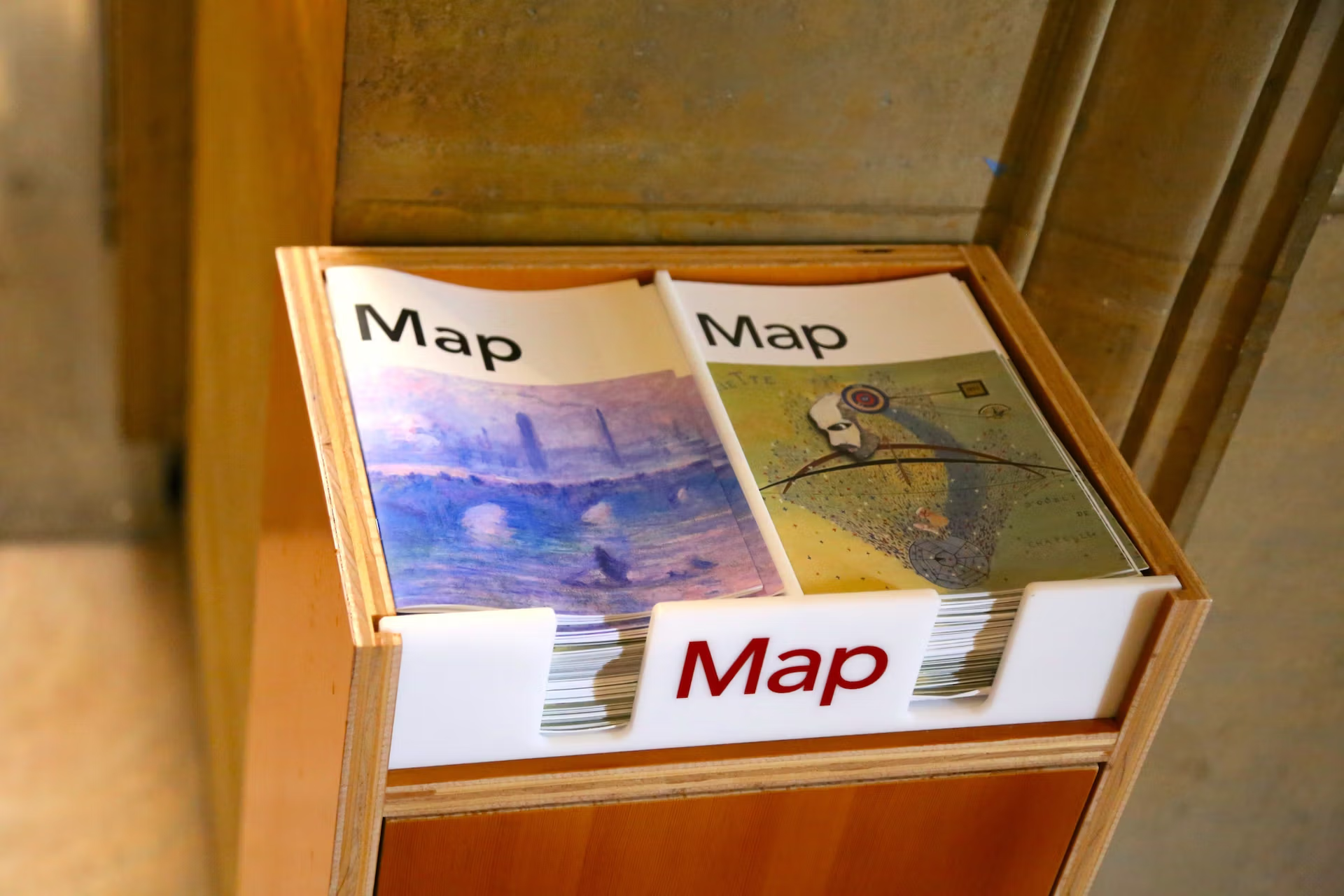
Aislinn Pentecost-Farren’s brochure is on the left, the official Philadelphia Museum of Art brochure is on the right. This photo was taken on a Free Saturday when the artist distributed the project in the museum’s brochure racks. Photo by Aislinn Pentecost-Farren
For the Science History Institute tours, Pentecost-Farren illustrates how the desire for fossil fuel energy and fossil fuel products like plastic were created by petrochemical companies. And the Independence Seaport Museum tour focuses on how energy transitions happen, a message Pentecost-Farren wanted to underscore as the world faces the energy transition to renewable sources.
“What can we learn from the last energy transition?” she asks. “How can history museums demystify energy transitions, and help us see them more clearly now? How can we do an energy transition without repeating the inequality and violence of the last one? If we don’t know the history of the last transition, how will we do this?”
Together, the tours show the connections between major events in US history and the growth of greenhouse gases over time. For Pentecost-Farren, these tours can be a way to think about climate change without feeling overwhelmed.
“Putting it in historical context makes it feel more limited and specific,” she says. “History can show us that things have not always been exactly like they are now, and that there are many ways things could have gone. That understanding can give us the freedom to imagine new futures. I use history to dislodge the intractability of the present and the inevitability of the future. I try to say, ‘Look at what was before, look at why we ended up here, we have not always been like this. How do we want to be next?’”
- From our Forefathers: Climate Crisis through Museum Tours, until 28 June, Philadelphia


