







The Smithsonian’s Hirshhorn Museum and Sculpture Garden in Washington, DC, will reopen its sculpture garden later this year with eight newly acquired works on the grounds. The revitalised 1.4-acre garden on the National Mall will feature a striking group of sculptures by Mark Grotjahn, Raven Halfmoon, Lauren Halsey, Izumi Kato, Liz Larner, Woody De Othello, Chatchai Puipia and Pedro Reyes.
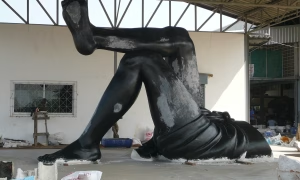
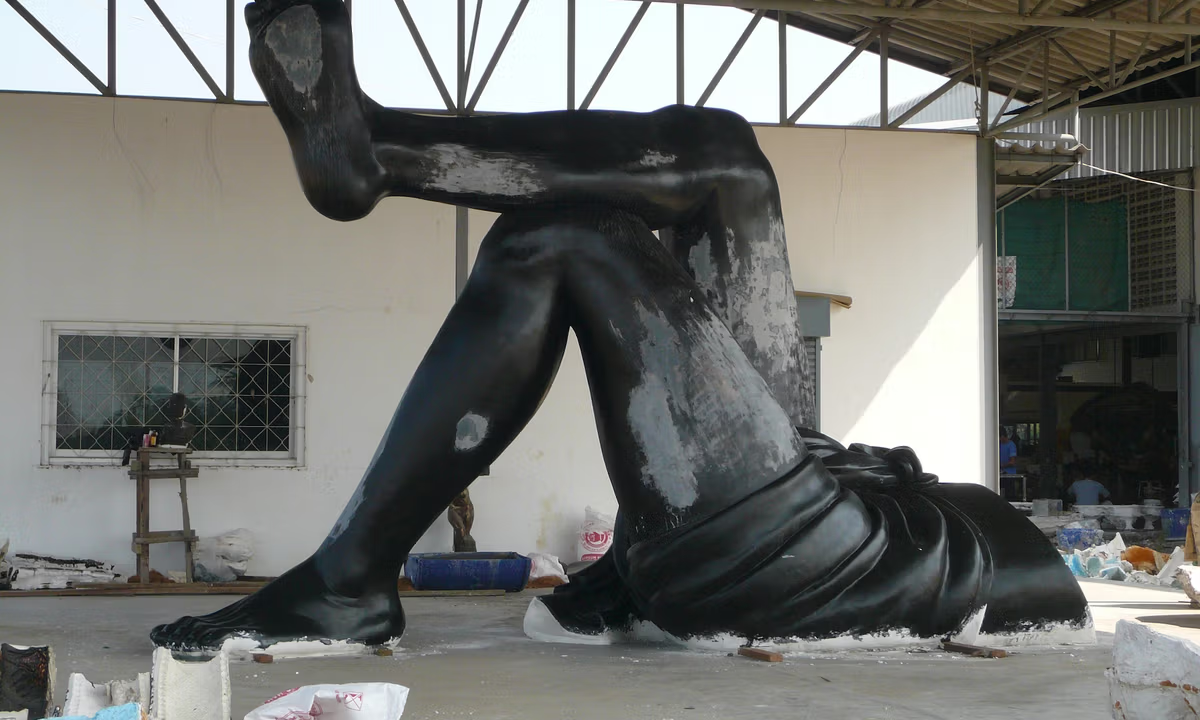
Among the newly acquired works, Halfmoon’s Dancing at Dark (2024) is made of carved stone figures stacked vertically and wearing a headpiece that echoes regalia worn by female Caddo dancers. Puipia’s monumental bronze sculpture Wish You Were Here (2008), depicts the lower half of a reclining figure. Othello’s Cool Composition (2026) takes the form of a cartoonish drooping box fan, which is coated in green automotive paint and will be installed in the east overlook, offering a pause for visitors seeking shade. And Halsey’s Keepers of the Krown (Antoinette Grace Halsey) (2024) aims to reframe how histories become monuments, comprising a column wrapped with references ranging from ancient Egypt to her hometown of South Central Los Angeles, with a portrait of her grandmother at the top.
The sculpture garden revitalisation project was launched in 2020 and is being spearheaded by the architect and artist Hiroshi Sugimoto, who has a long history with the institution. In 1999, the museum exhibited 13 of his Seascape photographs in an exhibition organised by Neal Benezra and Olga Viso, and in 2006 it held the first North American survey of his work. Sugimoto also redesigned the museum’s lobby in 2018, transforming it into a space that streamlined the visitor experience.
Lauren Halsey, keepers of the krown (antoinette grace halsey), 2024. Glass fibre–reinforced concrete and mixed media. Joseph H. Hirshhorn Purchase Fund, 2026. © Lauren Halsey. Courtesy of the artist, David Kordansky Gallery, and Gagosian. Photo: Andrea Avezzù
“Artists know what artists and audiences need,” the museum’s director, Melissa Chiu, tells The Art Newspaper. “Our collection is now modern and contemporary. Sugimoto is adding his layer to the palimpsest, one that will allow us to share our collection of modern and contemporary art.”
The garden was originally designed by the Modernist architect Gordon Bunshaft in 1974. Bunshaft was heavily influenced by Japanese garden design; there are photographs documenting his 1960 visit to Ryoanji Temple in Kyoto with his wife and the artist Isamu Noguchi. His vision for the garden was similarly spare: a white pebbled space mostly free of shade and seating.
“The artwork on view looked fantastic but it was, by the late 1970s, deemed to be too severe, too hot in DC’s summers and unwelcoming to all,” Chiu says. “Adjustments were made, adding seating, shade, native trees and plants, and one ramp entrance. In the 50-plus years since, artmaking and museum-making have changed.”
In 1981, as the museum recognised that the garden did not function well as a public space, the landscape architect Lester Collins oversaw a redesign that added trees and seatings and aimed to entice visitors to stay on the grounds longer.
Before the garden closed for the present renovation in late 2023, it drew around 150,000 visitors annually. The renovation was prompted by “an imbalance”, Chiu says, given that the National Mall receives around 35 million visitors per year. “It was hidden in plain sight. We expect the renovation to triple visitation.”

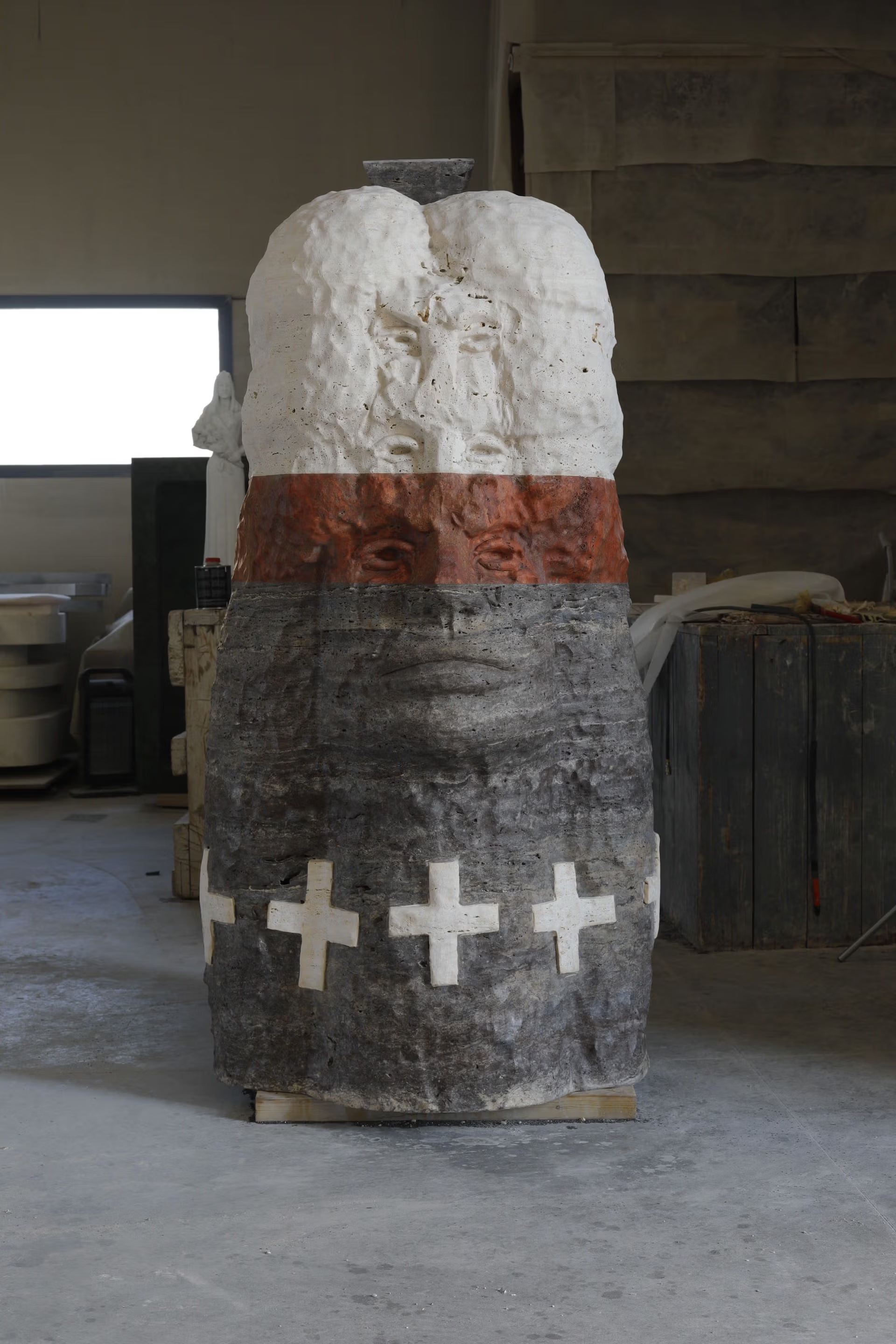
Raven Halfmoon, Dancing at Dusk, 2024. Travertine. Joseph H. Hirshhorn Purchase Fund, 2026. © Raven Halfmoon. Courtesy of the artist and Salon 94. Photo: Paola Tazzini Cha
Chiu describes the redesign as a “mission-driven” intervention: the entrance will be tripled in width, new pathways will improve accessibility and previously obscured views across the garden will be cleared. A key feature will be the reopening of the underground passage connecting the garden to the museum plaza, which will be a “shimmering” space, similar to an immersive artwork, that guides visitors between the two spaces.
As visitors enter the garden from the National Mall, the eastern, central and western spaces, which were previously hidden by concrete walls, will be visible. On the south side, the underground passageway will connect the museum and garden. The redesign also allows the garden to display significantly more art than before, with the east garden displaying Modernist works from the collection by artists like Henry Moore, Barbara Hepworth, Auguste Rodin and Tony Smith.
The $68m renovation was funded through public and private support. When the project was first announced it elicited opposition from preservationists who called for the restoration of Bunshaft’s original design. Work at the site began in late 2022 with a groundbreaking ceremony presided over by then-first lady Jill Biden. The garden is now on track to reopen in October 2026, and Chiu expects it to become “one of the most visited art spaces in the nation”.


