


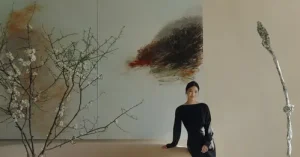





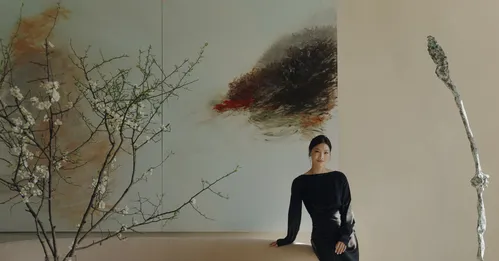
Prints became central to Eden Xu-Martinez’s collection because they offered two things at once: access and intimacy. Long before she began thinking about the art market, Xu-Martinez came to see prints as a way that more people can live with art—and as works capable of carrying just as much personal meaning as any unique piece.
That understanding sharpened when she signed up for a lithography elective while pursuing her master’s in art administration at Columbia University. Seeing the process up close changed her view of printmaking entirely. What she had once understood as an accessible format revealed itself as something far more discerning: a medium shaped by discipline, labor, and intention. Prints were rigorous, carefully made works that could open collecting to more people without sacrificing artistic depth.
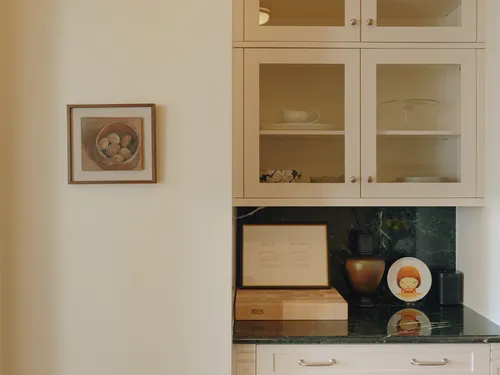

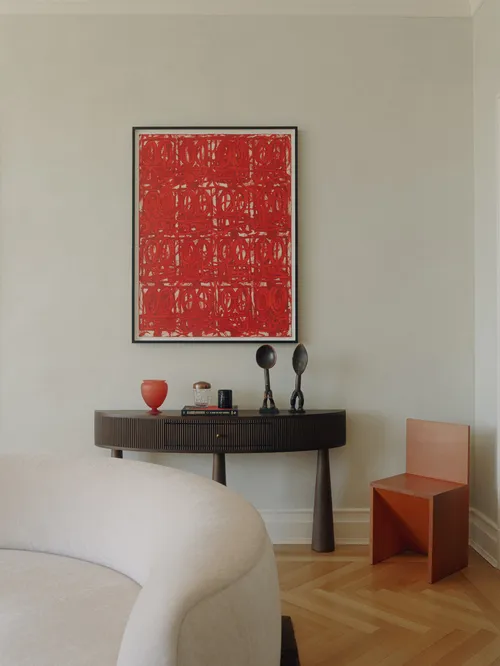
This dual quality continues to define how Xu-Martinez buys art today. A New York–based collector, patron, and philanthropist, Xu-Martinez is the founder of the Eden Arts Foundation, a nonprofit organization supporting contemporary artists and curators, and an active member of the Guggenheim Museum and MoMA. She and her husband, Steve, live in Columbus Circle, New York City, where paintings, works on paper, and prints are woven naturally throughout the apartment that overlooks Central Park. Despite the breathtaking view, a visitor’s attention is likely to be caught by Pat Steir’s Untitled (Red on Blue) (1995), placed on an easel by the window, or a rare work on paper by Alberto Giacometti in the foyer. In her home, prints are a fundamental part of the collection’s emotional and philosophical core.
For Xu-Martinez, that is partly because prints made collecting feel possible.
How Eden Xu-Martinez started collecting

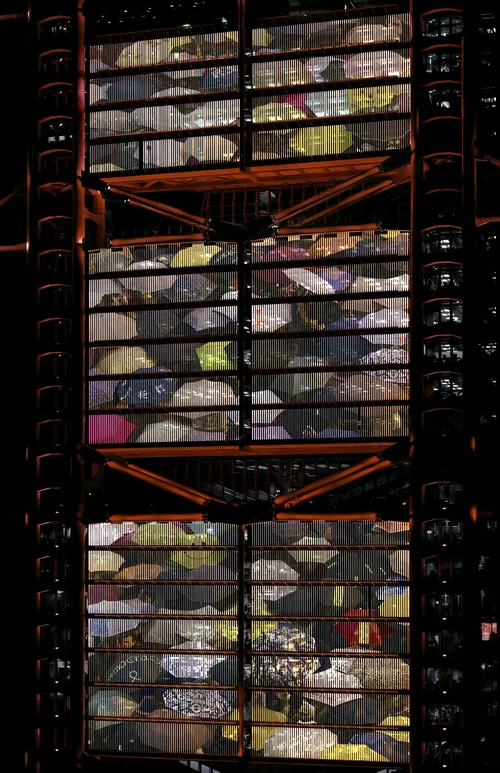

Growing up in Hong Kong before industry giants like Hauser & Wirth and David Zwirner arrived, she experienced the art world at a distance: the occasional local show, museum visits while traveling, a “very limited experience,” she said. That began to change when galleries like Gagosian opened in the city in the early 2010s, and she and her husband were gradually exposed to Western contemporary art through openings, dinners, and repeated visits.
“The more we went, the more I felt like we’ve been educated all along the time,” she recalled. “But we waited for so long to finally have the courage to purchase.”
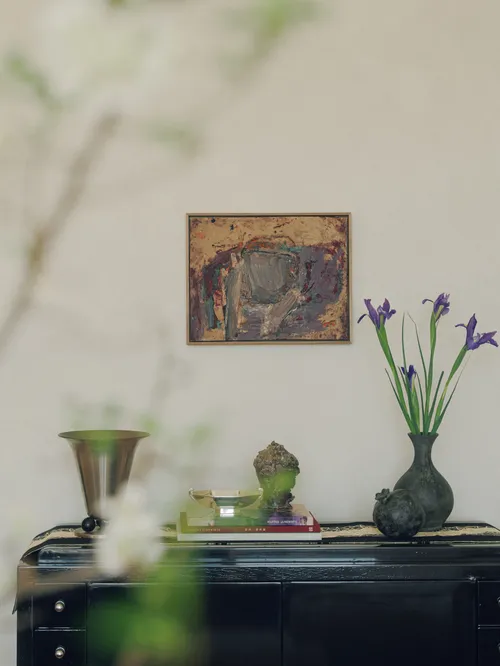
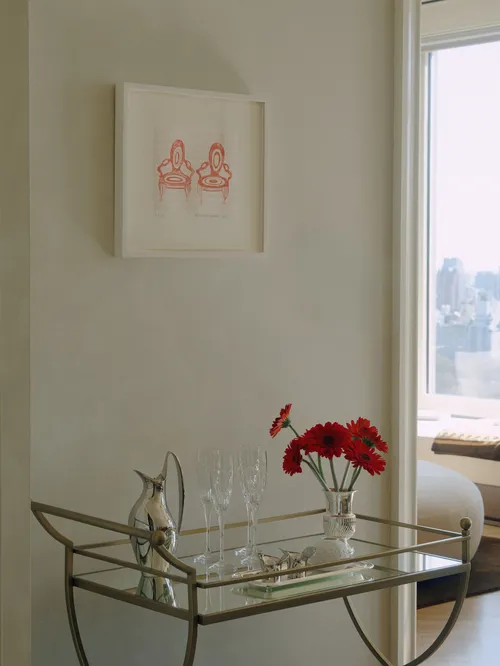
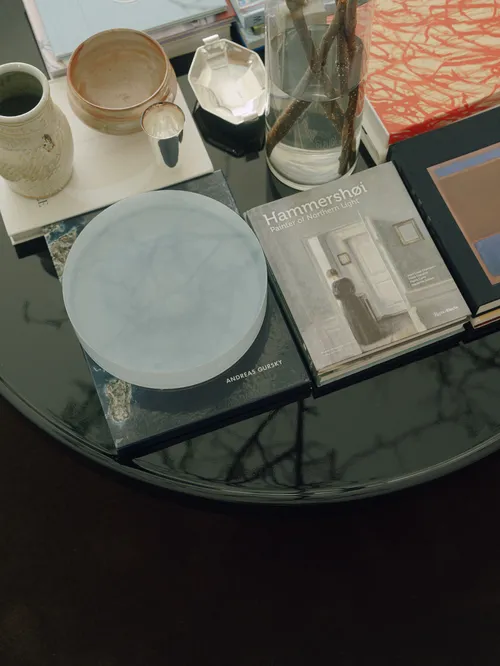
When they did begin collecting, the couple started ambitiously, with a large-scale photograph by German artist Andreas Gursky. Hong Kong Shanghai Bank II (2020), which depicts the HSBC building in Hong Kong at night, is nearly the same view as the one from her husband’s old office in the city. Another of the clearest expressions of Xu-Martinez’s collecting ethos came through a print: Louise Bourgeois’s Twosome (2005), a small work showing two red chairs side by side. She bought it as a Christmas gift for her husband after being reminded of the red chairs at a Pacific Coffee in Hong Kong, where the two used to sit together early in their relationship. “It became our spot,” she said.
Why prints are close to Eden Xu-Martinez’s heart
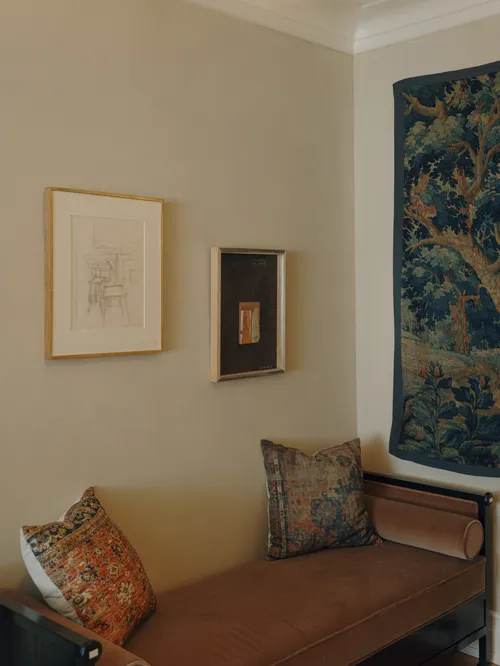
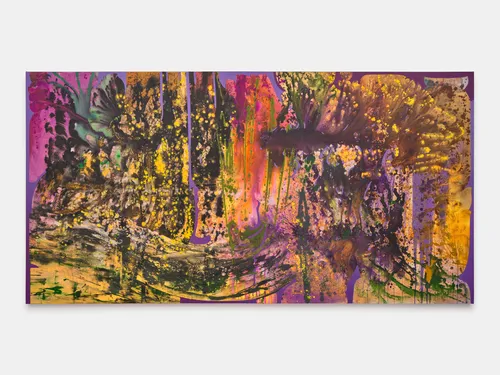
One of the reasons Xu-Martinez still holds this print so close to her heart is that she learned that Bourgeois had a loving marriage as well. Learning about the artists she collects is one of the most exciting parts of the art world. “I get to meet the people; I get to listen to their story; I feel like in some way, I’m also involved and engaged with this global and cultural history,” she explained. For instance, Xu-Martinez explained that she felt grateful to learn about the culture and home of Iraqi artist Vian Sora, whose painting Tamarisk (Purification) (2025–26) will adorn the wall opposite the Bourgeois print.
Prints are also an ideal entry point. They can allow new collectors to begin with conviction, develop their eye, and form meaningful relationships. “Prints are a blessing to the art market,” said Xu-Martinez. “They’re a bridge between authorship and accessibility, because I know that not many people have the privilege to live with art.”
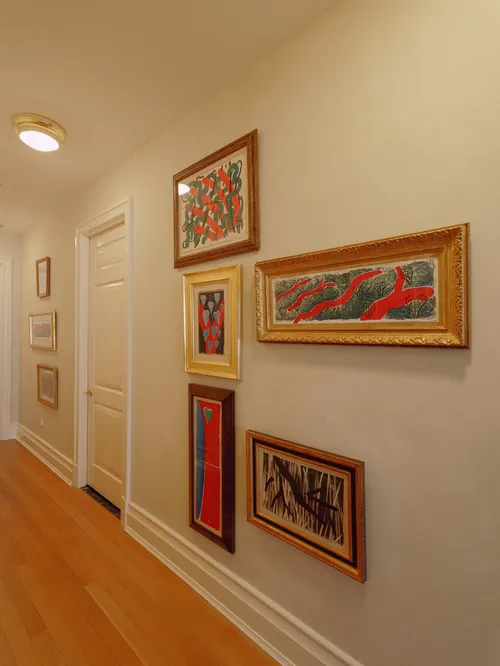
That belief is visible throughout her home. In the hallway of her New York apartment hangs David Hockney’s The Tree, November (1986), composed of eight prints depicting organic forms. She acquired the work at a 2022 benefit auction collaboration between Christie’s and IFPDA. For Xu-Martinez, works like this illustrate the democratic potential of print collecting: They allow people to live with the work of an artist who might otherwise be out of reach.
“With prints, a lot of people get to experience the art,” Xu-Martinez emphasized.
An art collection that builds meaning over time
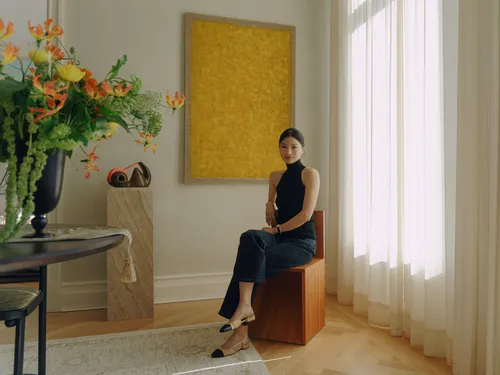
Accessibility matters to Xu-Martinez not only at the level of individual purchases but across the art ecosystem: her collection that ranges from blue-chip stalwarts to emerging names.
Prints create wiser entry points for buyers, support artists, and give galleries and fairs a broader base to build from. “In reality, it’s a way to support artists,” she said. Prints, for her, make market participation more possible.
It’s also the philosophy behind her own collection, where meaning builds gradually rather than through quick decisions. Ahead of this year’s IFPDA Print Fair, which runs from April 9th to 12th at the Park Avenue Armory, she mentioned Julie Mehretu as a dream acquisition, recalling how she has continued to think about the artist’s This Manifestation of Historical Restlessness (2022) since seeing it at last year’s fair. But, like everything else, she believes the process—and taking time to decide—is essential.
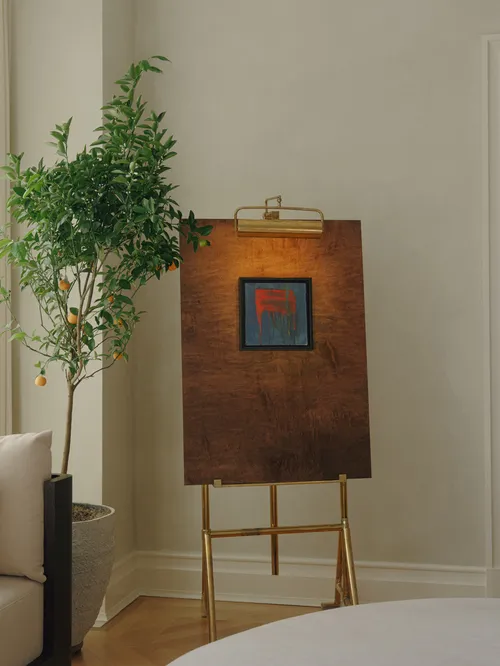
“It’s part of educating yourself,” she said. “It’s a blessing that during this journey, you happen to meet some interesting people, some nice people, genuine people, and then you build some relationships. I always like things to happen naturally.”
In Xu-Martinez’s home, paintings and prints are treated as equals. “I don’t think you should put hierarchy in between [them],” she asserted. What matters more than anything is her connection with the artwork—whether it carries feeling, memory, curiosity, or a relation to the artist who made it. “When I see the piece, I connect with it [first]…it just makes them more genuine, more meaningful,” she said.


