When Gigi Surel first stood in front of Pablo Picasso’s Guernica (1937)—the artist’s monumental, visceral response to the bombing of a Basque town—at the age of 17, her reaction was physical. “[It] made me think deeply about the aura of a painting, about Stendhal Syndrome, about the body’s reactions to art,” she recalled. “I wanted to understand it.”
That moment at Madrid’s Museo Reina Sofía set the tone for everything that followed. Surel, now a London-based collector, patron, and curator, approaches art as a deeply personal, almost physiological endeavor.
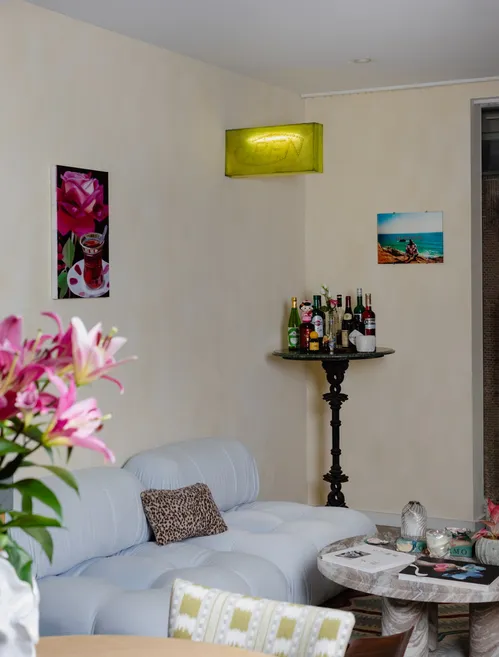
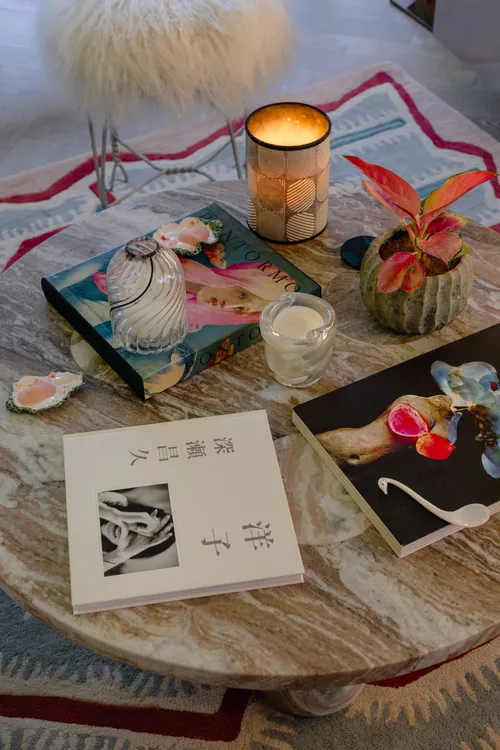
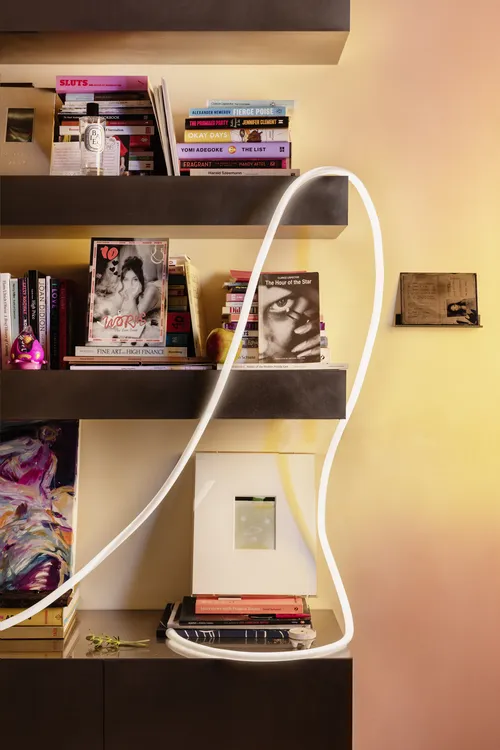
Growing up in Istanbul, she didn’t spend much time in museums until her teens. But once she started, it became an obsession. Today, her London flat reads like a reflection of this. Art books and catalogues are stacked high on the shelves, interrupted by sculptural lights and small works balanced between spines. The space glows with Eva Gold’s golden wall light, Open (2024). Nearby hangs a painting of a Turkish tea glass framed by an oversized rose by Tasneem Sarkez—a quiet nod to Surel’s heritage. On another shelf sit Graham Wiebe’s sliced book sculptures, their collaged titles forming strange poetic phrases.


Her collection—now encompassing works by more than 35 artists—circles themes of sensitivity, memory, and emotion. In recent years, shaped in part by her father’s illness and passing, she’s been drawn to softness and grief. “Lately, I’ve been drawn to vulnerability,” she told Artsy. “Artists exploring vulnerability, grief, softness. It feels important to have that in my home.”
What matters to her most is connecting with art deeply and intuitively. She often buys works by emerging artists, many of whom are unrepresented by galleries. “It makes me feel like I’m contributing, in some small way, to the art of my generation,” she said.
Collecting, for Surel, began as a search for belonging. While studying law in the U.S., she felt isolated during her master’s degree. Museums became a refuge. She bought memberships to MoMA, the Guggenheim, and the Art Institute of Chicago, which introduced her to like-minded people: “I started talking to people and meeting others who loved art,” she said. “It opened up this whole world.”
As the first in her family to attend university, the art world had once seemed distant. Joining acquisitions committees at the Guggenheim and MCA Chicago became her education. “I thought, ‘okay, I can learn how to collect by being in these groups,’” she said. “I treated it almost like a profession at first. I wanted to do it right.”
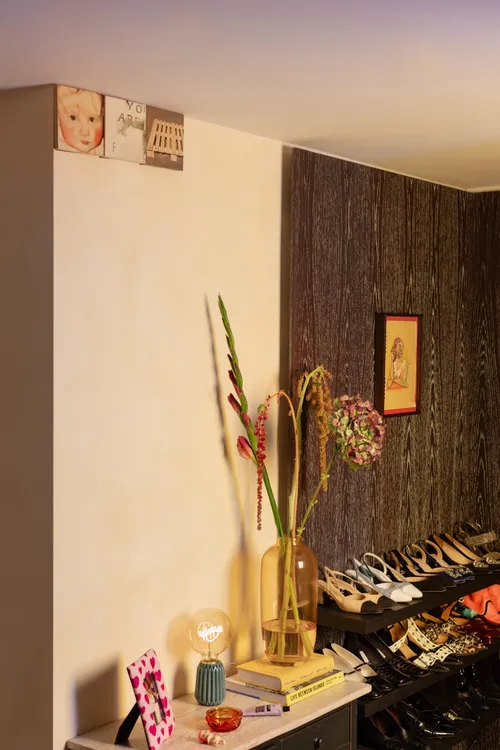
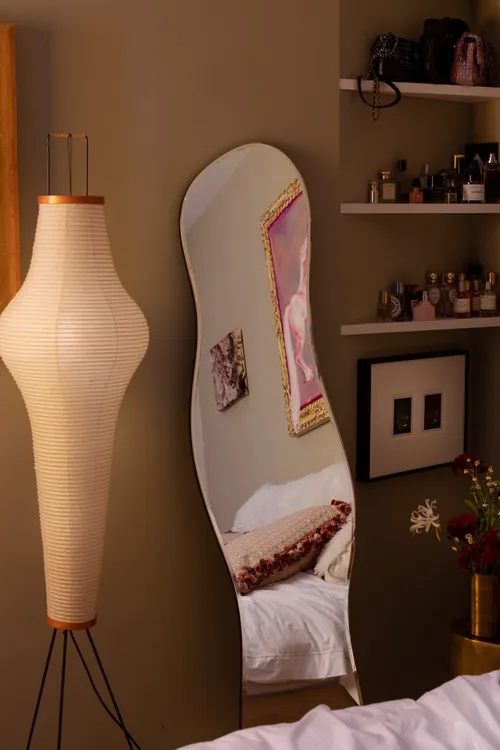
During the 2020 COVID lockdowns, while preparing to move to London, Surel found herself online constantly, poring over degree shows and works by emerging artists. One of her first significant purchases during that period was Xu Yang’s unicorn painting, Mirrored Rapunzel Tail (2020), which now hangs above her bed. Soon after came Yaya Yajie Liang’s Gregor Samsa (2022). “Seeing them still feels like home,” she says. The works have travelled with her from flat to flat.
Her tastes encompass everything from the diaristic and delicate to the sharp and cerebral: Christelle Oyiri, Tasneem Sarkez, Selma Selman, Nat Faulkner, Daiga Grantina, Hélène Fauquet, and Dada Khanyisa are among the artists in her growing collection. She compares collecting to getting a tattoo. Rolling up her sweater sleeves to show me her tattooed arms, she explains the similarities as “personal, diaristic, and permanent…some abstract, some edgy, and others are more delicate.”
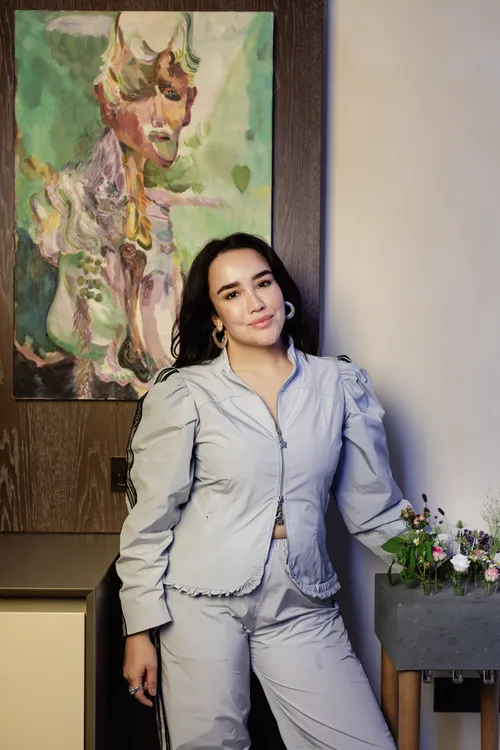
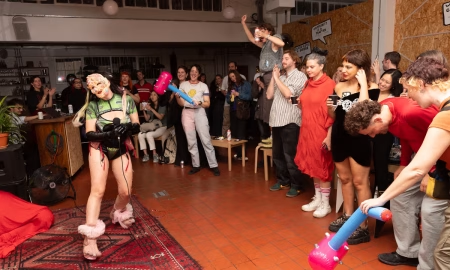
This passion has grown into a profession. Surel writes for Marie Claire Türkiye and the philosophy magazine Perediza. She curates exhibitions, including a recent group show, “Reassemblage,” at the London gallery General Assembly. And last year, she founded Teaspoon Projects, a platform designed to bring new collectors into the fold.
“One of my biggest missions,” she said, “is bringing first-time collectors into the mix, and that’s getting harder. Even people with disposable income don’t prioritize art. They’ll buy a purse before they buy a painting.”
Teaspoon Projects is her counter-strategy: events, conversations, and invitations to see art. “Collecting takes time,” she explained. “I’m trying to offer a soft kind of education, showing potential collectors my art world and slowly building art lovers.”
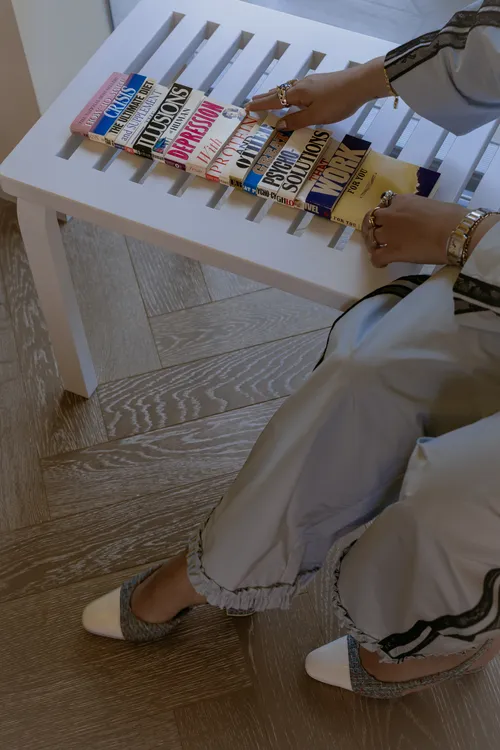
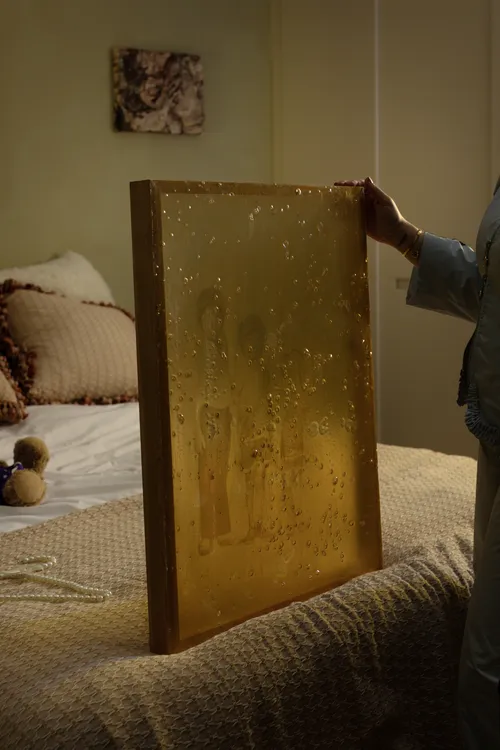
That world is generous, intimate, and rooted in relationships. She moves artworks around her flat almost weekly. She writes about the artists she falls for. She spends hours researching emerging practices. “I take art very personally,” she said.
Her advice to first-time art buyers and collectors is simple: slow down. Accept that your taste will change. Like a tattoo, you might look back years later and feel differently—but the work will still hold a memory of who you were.
“Art is a way of understanding ourselves and the world,” she said. “Collecting is the same.”