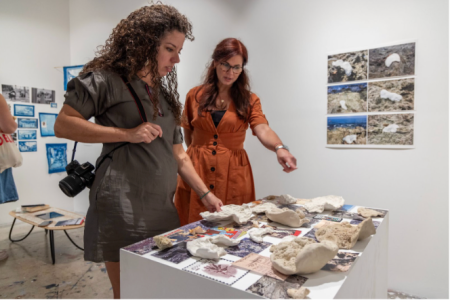





The curator Yasmil Raymond has taken the helm of Art Basel Miami Beach’s Meridians sector for the second year in a row. Last year marked her first time ever curating for an art fair. Now she is a seasoned professional in the role and is concentrating on showing a more diverse group of artists and providing opportunities to newcomers. “We’re very proud to feature a large number of female artists in Meridians this year,” Raymond says. “And for a lot of the galleries and artists, this is their first time at Art Basel. It’s a good entryway into the fair.” Raymond gave The Art Newspaper a tour of some of the section’s highlights.
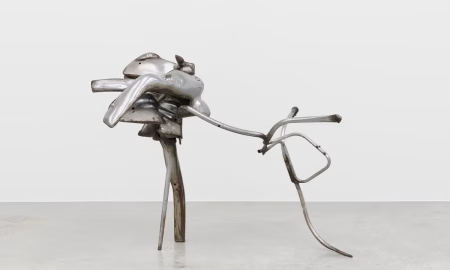
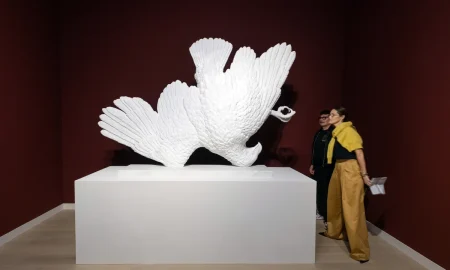
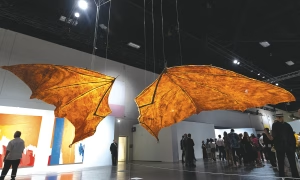
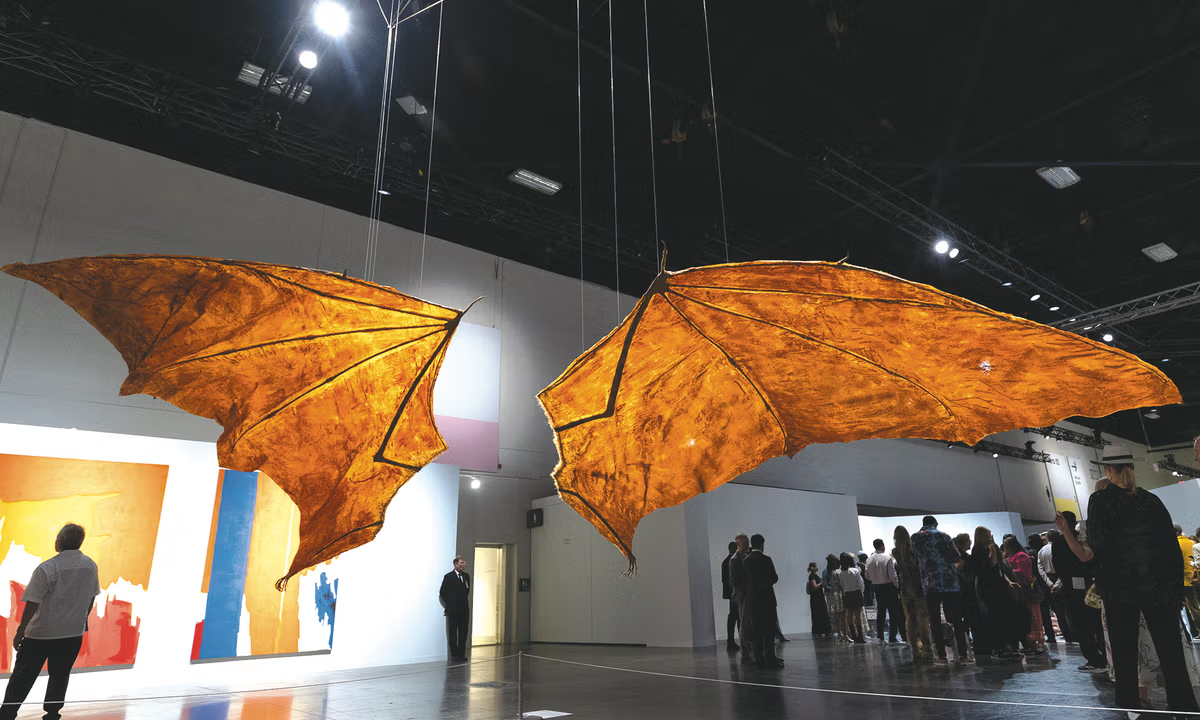
Huang Yong Ping, Double Wing (2016), Tang
Raymond calls Huang “a giant of Chinese art from the diaspora, and his work is very political.” This sculpture is part of a series about a US spy plane that came down over China in 2001 adorned with a bat logo. “In Chinese mythology, the bat represents good luck,” Raymond says. “But this work is also about the relationship between humans and animals, and the mythology we give to them.”
Stephanie Syjuco, Neutral Calibration Studies (Ornament + Crime) (2016)
Liliana Mora
Stephanie Syjuco, Neutral Calibration Studies (Ornament + Crime) (2016), Catharine Clark and Ryan Lee
Syjuco, based in Oakland but originally from the Philippines, made an installation that is “like a prop stage in a photography studio, with the props interrogating Western culture—objects like Freud’s couch next to the Le Corbusier chaise longue”, Raymond says. The iconic wicker peacock chair, a Filipino invention, features prominently in the work, which acts as a critique of the 1913 book Ornament and Crime, in which the architect Adolf Loos associated ornament with “primitive cultures”.

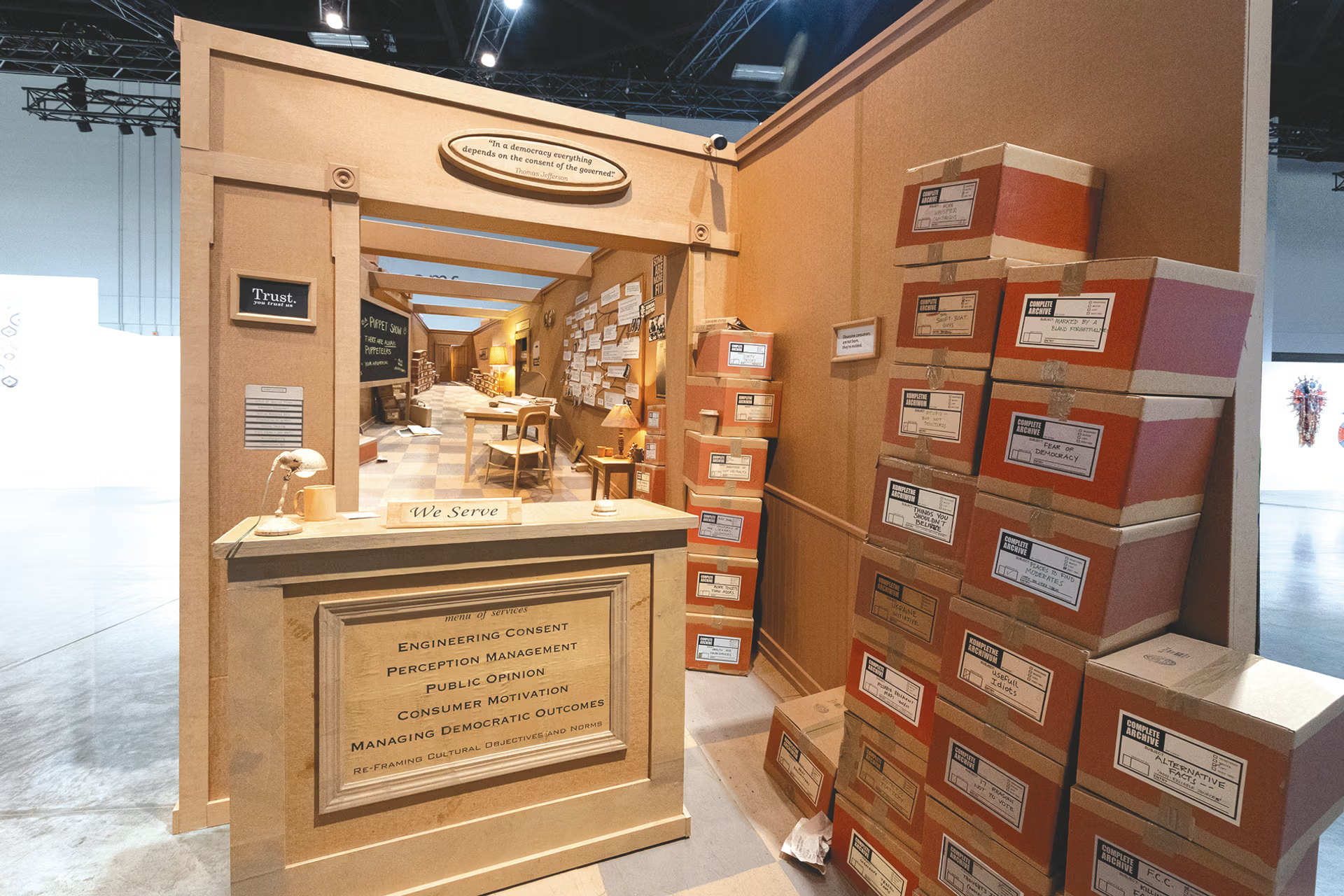
Ward Shelley, The Last Library IV: Written in Water (2020-25)
Liliana Mora
Ward Shelley, The Last Library IV: Written in Water (2020-25), Freight+Volume
“It’s humorous, but it also has a sadness,” Raymond says of this ambitious and deeply political “post-truth” library installation, which combines imaginary books with an office stuffed to the gills with file boxes of things like “dirty tricks”. Raymond says: “The moment we’re living in, everything is twisted. What is the point of this battle?”

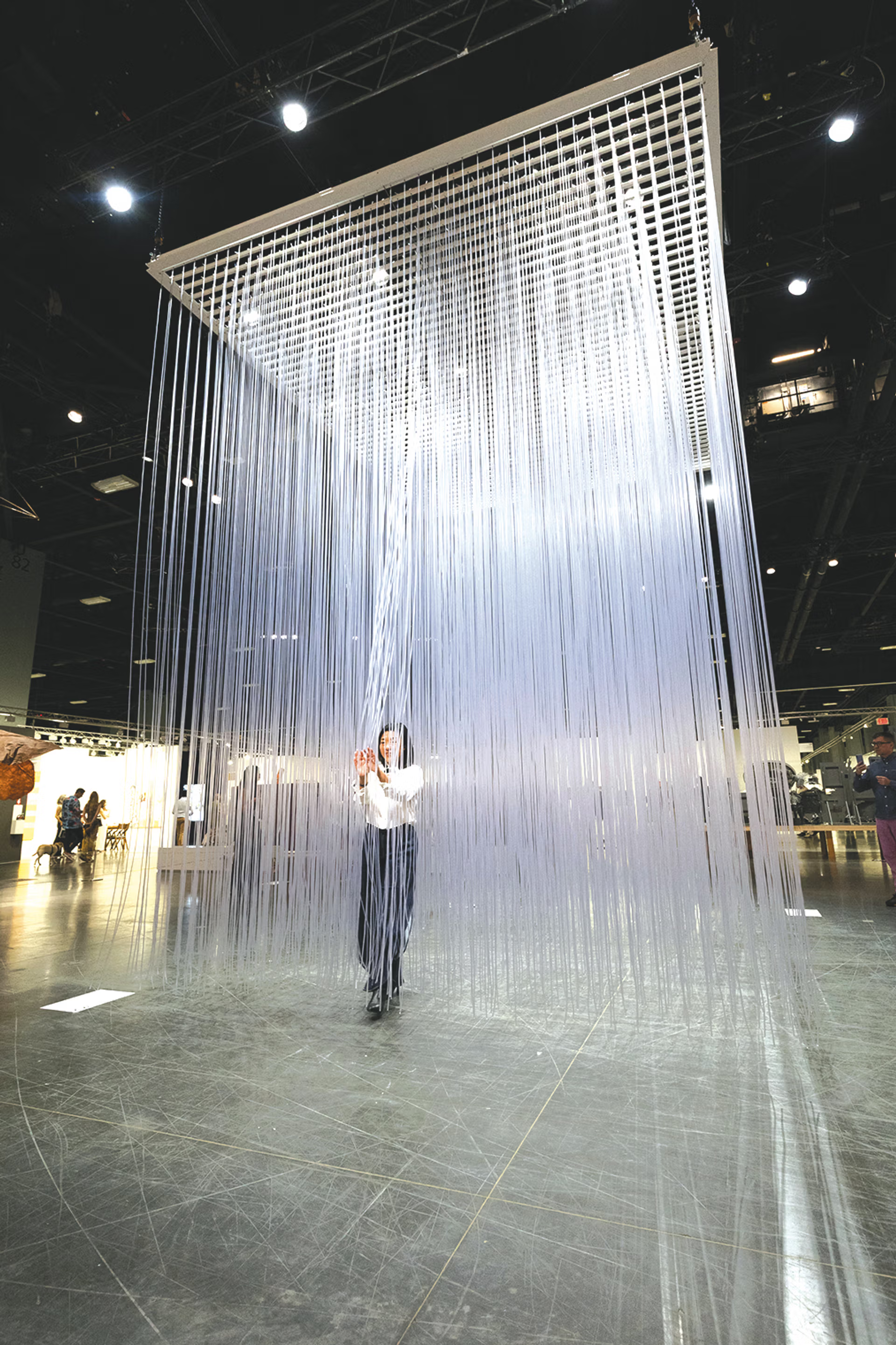
Jesús Rafael Soto, Pénétrable (1992)
Liliana Mora
Jesús Rafael Soto, Pénétrable (1992), RGR
“Soto is a Venezuelan artist, one of the fathers of Neoconstructivism and a giant of Modernism, Optical and Kinetic art,” Raymond says. “He made a number of Pénétrables, which you can walk through and be immersed in. This work makes people smile.” It also has an unmistakable, and rather nostalgic, plastic smell.

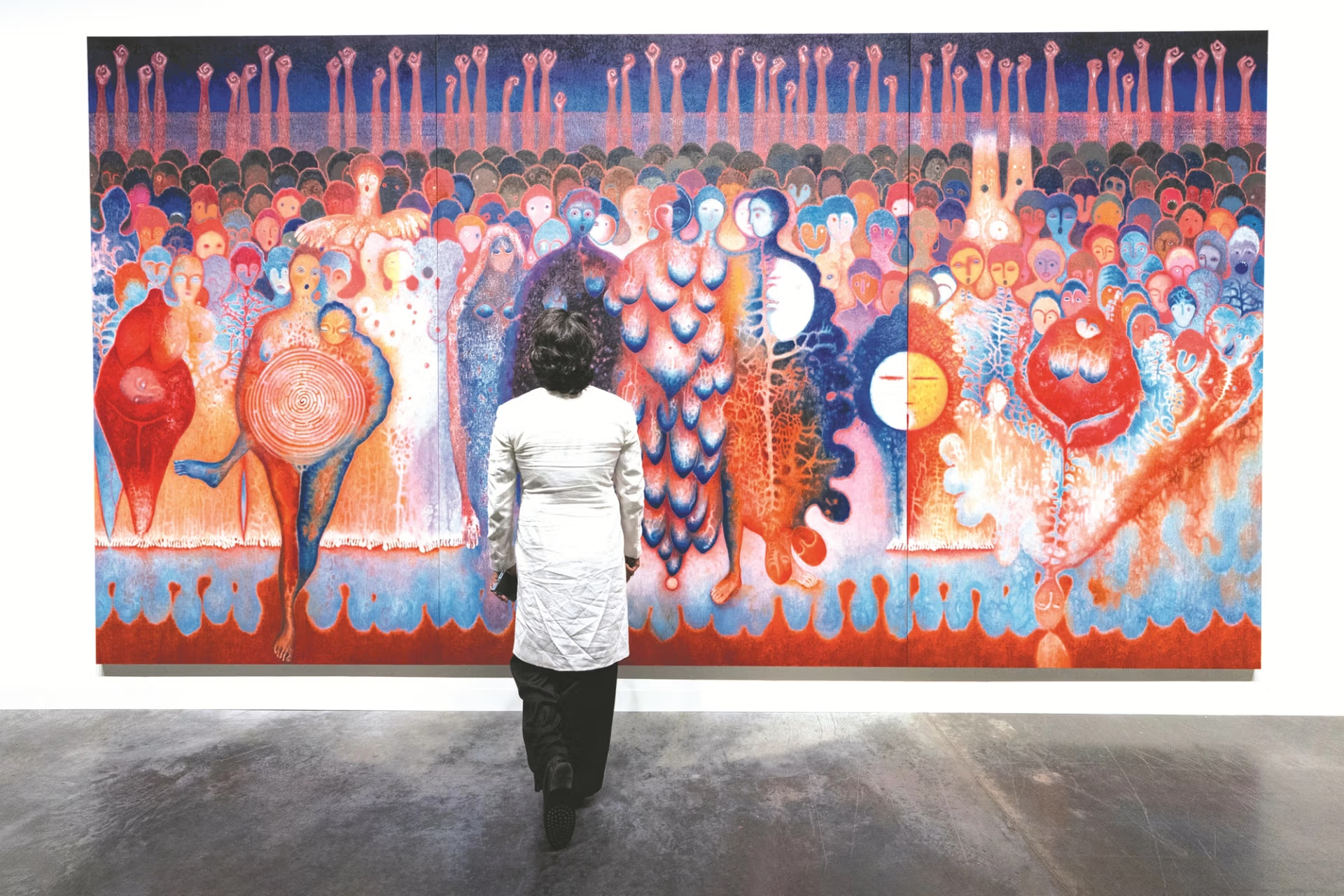
Luisa Rabbia, The Network (2025)
Liliana Mora
Luisa Rabbia, The Network (2025), Peter Blum
The Brooklyn-based Italian artist’s giant oil painting references a 1901 Giuseppe Pellizza da Volpedo painting of a labour strike, “except the protesters are replaced with women and Artemis, a representative of fertility”, Raymond says. “It’s a beautiful portrait of women in solidarity,” especially in a time when reproductive rights are being attacked.

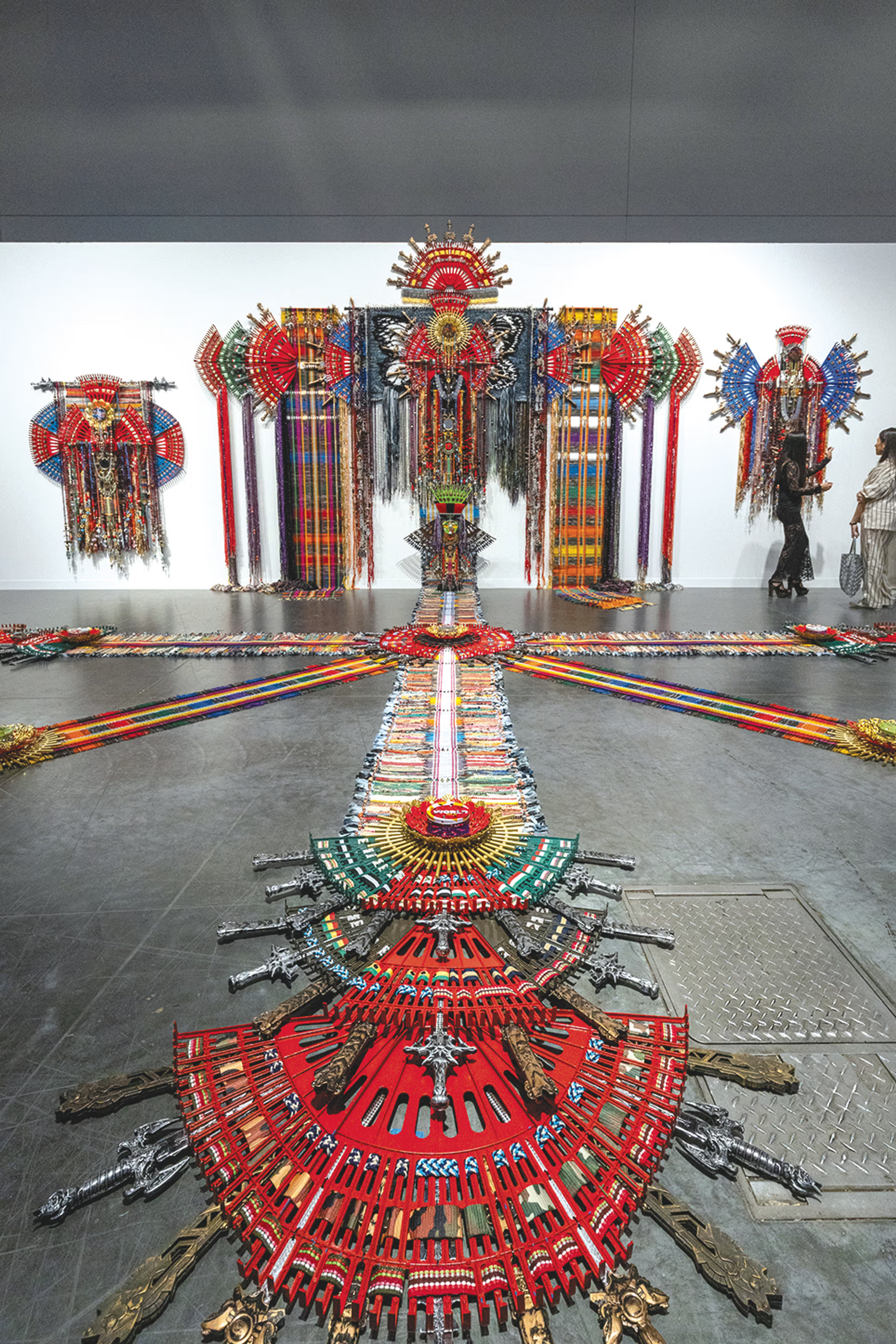
Anne Samat, The Unbreakable Love…Family Portrait (2025)
Liliana Mora
Anne Samat, The Unbreakable Love…Family Portrait (2025), Marc Straus
“The artist goes through dollar and thrift stores, and she used things like rakes and toy swords to create this altarlike portrait of her family, an homage to them,” Raymond says of the Malaysian artist’s giant woven sculpture. “It has a magnetic energy and gives these objects value again as art. It’s about capitalism and globalisation, and the accumulation of labour.”