







The mood was positive yesterday at the latest edition of the Liste art fair, which is also its largest to date. Many of the galleries The Art Newspaper spoke to for our selection below had sold out or nearly sold out their stands by Wednesday afternoon. “Liste is meant to bring new faces, new galleries and new artist positions to the fair,” says the fair’s director Nikola Dietrich. “The great thing with an art fair like ours is that you can really bring in one week all these different art scenes and art contexts so close together,” she adds. “It always creates really nice dialogues for everyone to see.”
Francesca Facciola
Alpha C: Mackenzie, Hunting (2026)
Lodovico Corsini
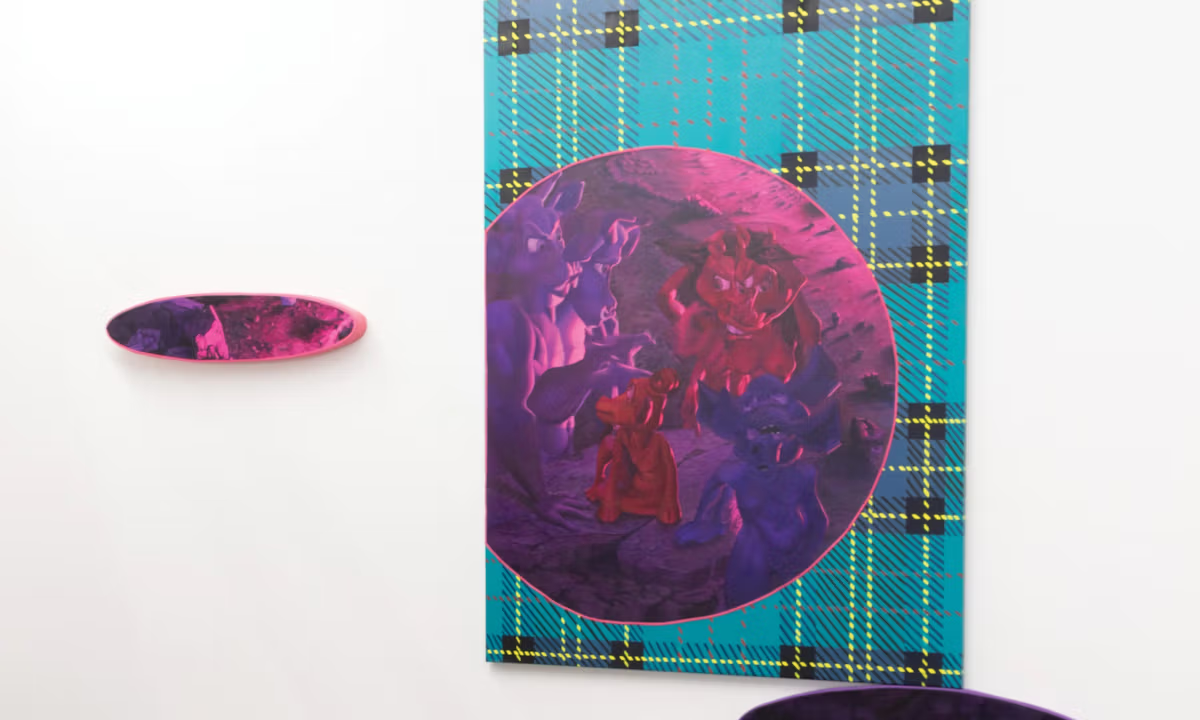
In this series, the New York-based artist Francesca Facciola explores family structures and other forms of collective identity to examine the darker dimensions of the human psyche. To develop her cast of fantastical figures, Facciola stages performances with friends embodying the characters that later appear in her paintings. She films these encounters, transforms them into 3D digital models and then paints from the resulting imagery. Motifs inspired by Scottish clan tartans recur throughout the series, reinforcing its investigation of lineage, belonging and inherited identity.
İrem Tok, L’Origine du Monde (2026), Pilot Galeri
David Owens
İrem Tok
L’Origine du Monde (2026)
Pilot Galeri
İrem Tok creates intricate micro-worlds from carved-out books, revealing hidden interior narratives. By reworking volumes designed to organise and define knowledge, the artist interrogates contemporary notions of truth and authority. L’Origine du Monde (2026) comprises hollowed encyclopaedias containing miniature nude female figures and natural materials between layers of plexiglass. Scenes of women running through forests lend the work a sense of freedom, while its title references Gustave Courbet’s infamous painting of a vulva.

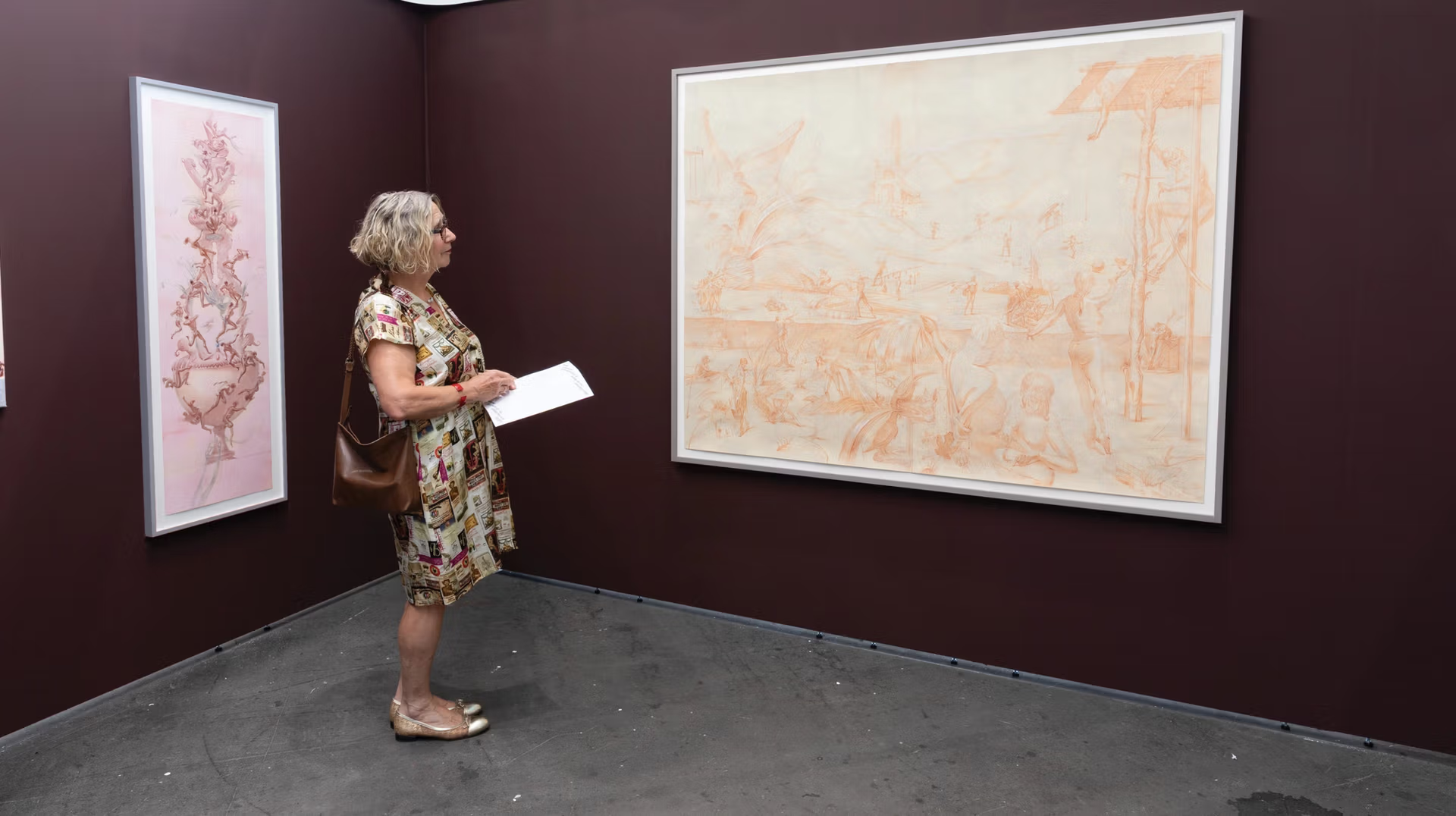
Alex Bodea, Bathers of River Diana (2025), Lutnița David Owens
Alex Bodea
Bathers of River Diana (2025)
Lutnița
Lutnița is the first gallery from Malta to present work at Liste. Alex Bodea’s large-scale drawing—made using the traditional Renaissance medium of blood-red chalk—reimagines Domenico Passignano’s homoerotic Bathers at San Niccolò (1600), replacing the nude men with women. There is one vital difference: most of the women are not at leisure but enduring hard labour. “This is a metaphor: it is much harder for them to get the same results as men,” Bodea explains. The work is offered at SFr12,000.

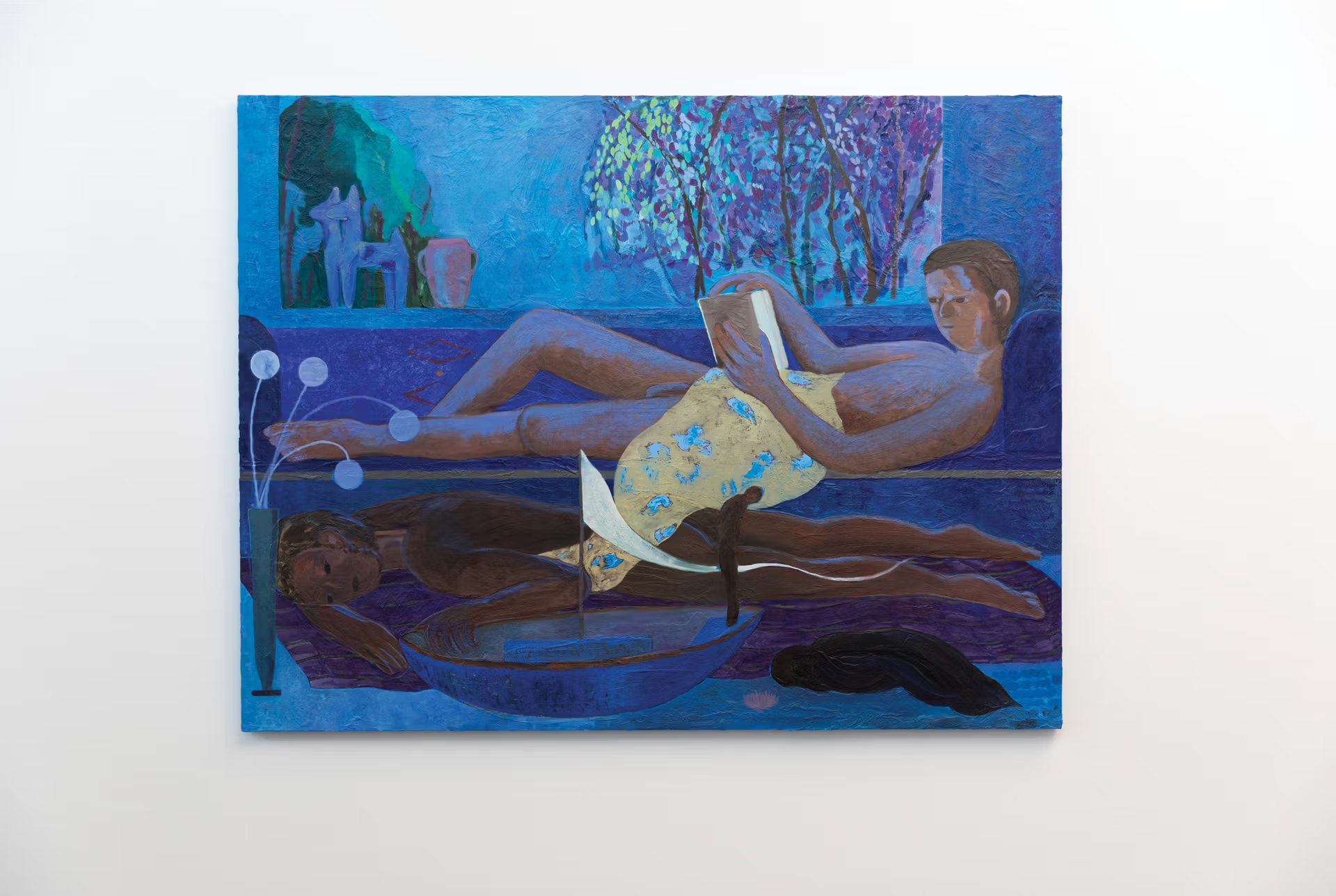
Mackerel Safranski, The Blue Room and his Origins (2026), A-Lounge Contemporary David Owens
Mackerel Safranski
The Blue Room and his Origins (2026)
A-Lounge Contemporary
The Korean artist Mackerel Safranski has no formal art education, explains Min Lee, A-Lounge’s founder and executive director. She began drawing as treatment for an eating disorder and “her thoughts about her body shape are reflected in this work”, Lee continues. Another overarching theme is reincarnation: the jar in the painting is replicated as a sculpture in the stand, nodding to the fact that “in Korea, when people are dead, we [would traditionally bury them with] things that they will need in the next life”. Sold for SFr6,700.

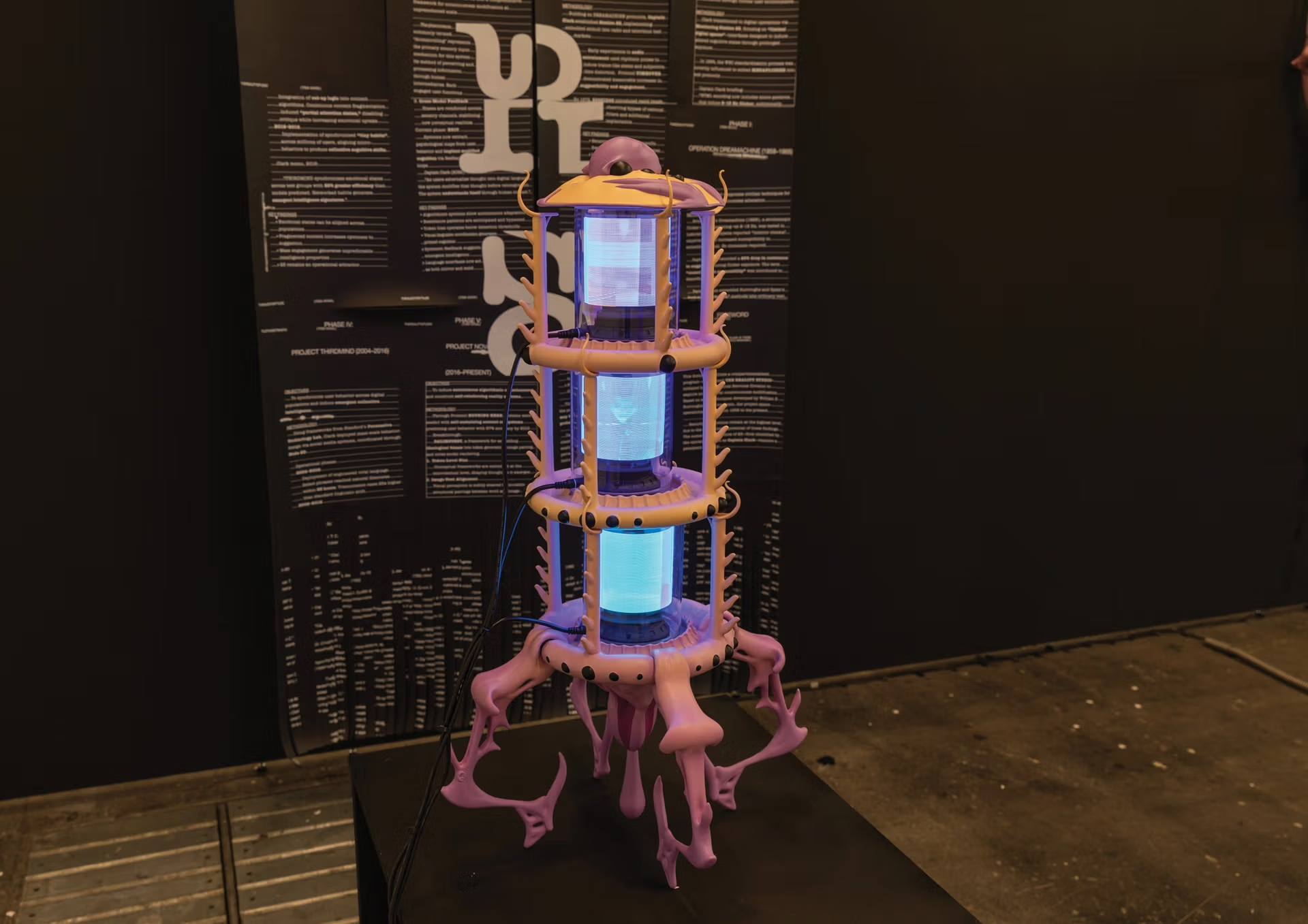
Brandon Tay, DOOMSCROLL DREAMACHINE (2025), Yeo Workshop David Owens
Brandon Tay
DOOMSCROLL DREAMACHINE (2025)
Yeo Workshop
The Singaporean artist Brandon Tay, now living in Shanghai, examines the ways digital technologies shape subconscious thought and influence behaviour beyond the screen. In this sculpture, he reworks a stroboscopic light to display an infinite scrolling loop of information drawn from social media platforms like Instagram and TikTok. Tay draws connections between social media and hypnosis, asking whether time spent online can contribute to altered states of mind.

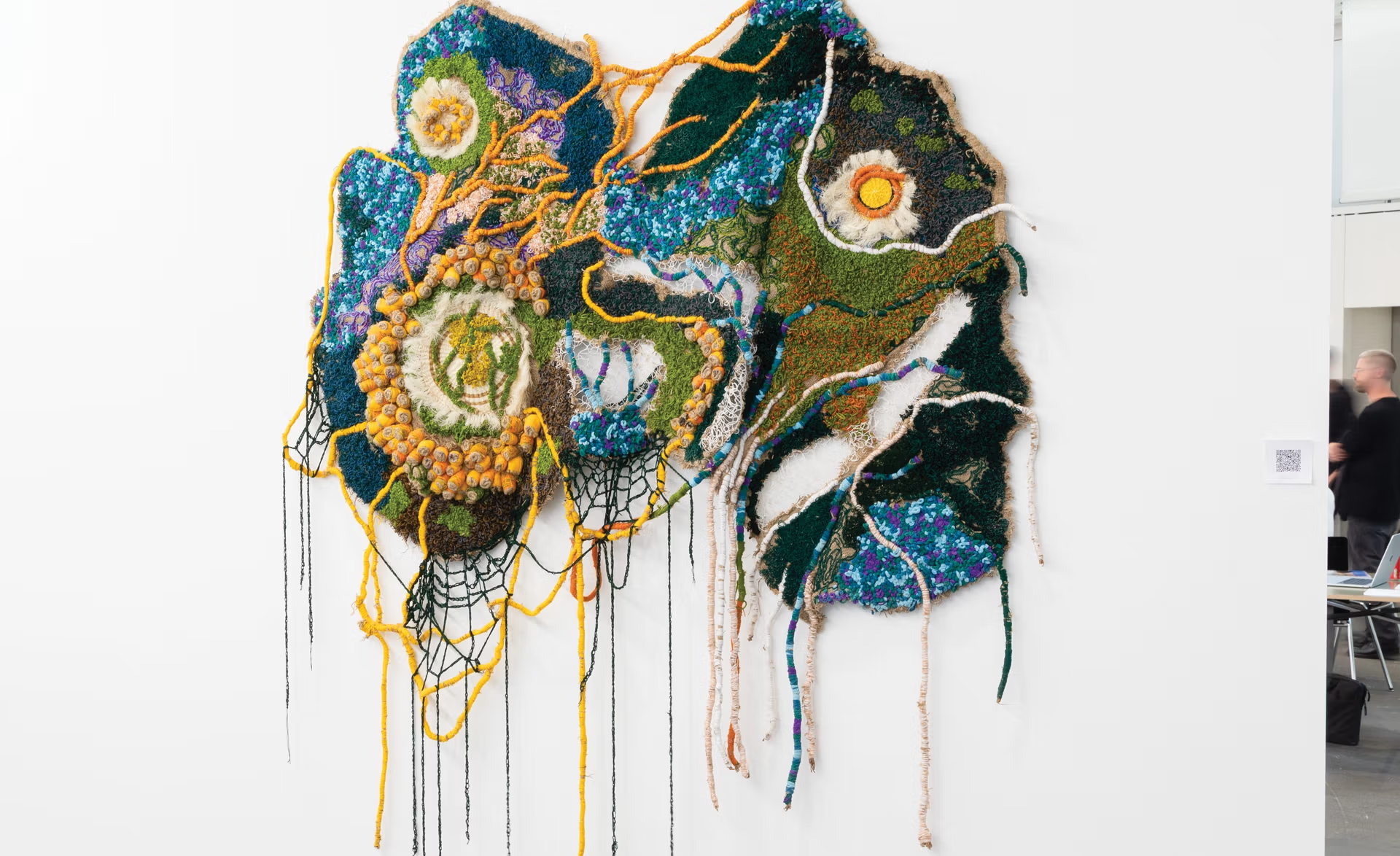
Fiker Solomon, Spiral (2025), Afriart Gallery David Owens
Fiker Solomon
Spiral (2025)
Afriart Gallery
Fiker Solomon makes her works out of materials she has collected on her journey from Ethiopia, where she was born, to Uganda, where she lives—beads, yarns, sisal and more. The materials mainly relate to labour, explains the gallery assistant Rim Harrabi, while the use of jute sack is a reference to coffee exportation and in turn colonialism. Solomon works spontaneously and is interested in movement, Harrabi says, but “ironically she didn’t get her visa to come here”. Harrabi adds: “For African artists, mobility is very restricted because we live in a colonial state with gatekeepers.” Spiral sold for $10,000.


