






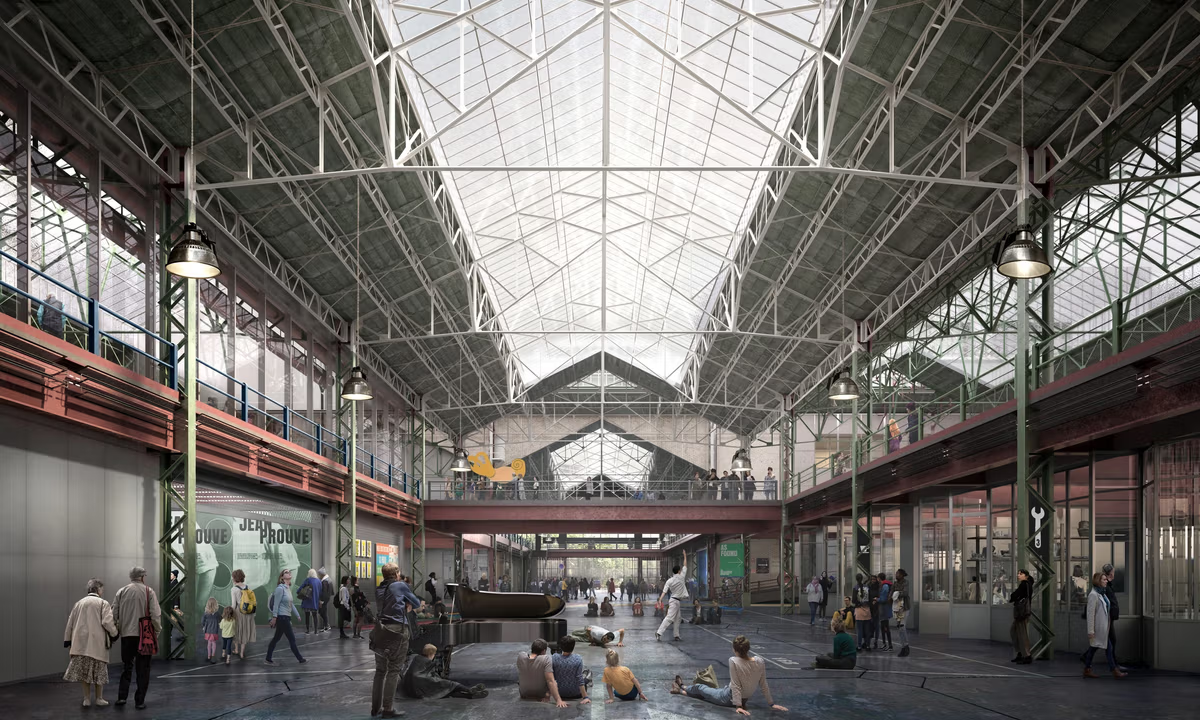
The long-awaited Kanal-Centre Pompidou gallery of modern and contemporary art in Brussels—a vast new art hub rivalling other major European art centres such as Tate Modern—will open 28 November with ten shows including a 350-work exhibition drawn from the Centre Pompidou in Paris.
The new culture hub is housed in a former Citroën garage, an architectural landmark in the city built in the mid 1930s, and includes five floors of gallery spaces, incorporating dedicated areas for the Kanal Architecture programme (formerly CIVA); an indoor playground designed by the UK architecture collective Assemble; and a rooftop restaurant and bar due to open until midnight.
The workshops of the Citroën garage Paul Smith © CIVA Collections, Brussel
The ambitious launch programme includes a new installation by the Nigerian artist Otobong Nkanga, an exhibition of performance and sound works featuring 20 local artists called No Show (28 November-18 January 2027) and a show exploring a colonial propaganda exhibition sponsored by Citroën, which opened across Africa in 1925 (An infinite woman, Black archives in two acts, 28 November-26 April 2027).
The centrepiece exhibition, A truly immense journey (28 November-10 January 2028), will feature over 350 works from the Centre Pompidou—currently closed in Paris for a five-year refurbishment—by artists such as Kader Attia, Lygia Clark, Marcel Broodthaers and Sonia Delaunay. “Inspired by the museum’s location along the Charleroi-Brussels canal—a historical conduit of trade, exchange and migration—[the show] unfolds in three movements,” says a statement.
Beginnings and budgets
The Brussels-Capital Region, the executive body overseeing 19 municipalities including the capital, acquired the 40,000 sq. m Art Deco-style Citroën building in October 2015. The former garage has since been transformed by a team comprising noAarchitecten (Brussels), EM2N (Zurich) and Sergison Bates architects (London) working under the umbrella organisation Atelier Kanal.
Collectors and curators in Brussels have been increasingly vocal in recent years about the need for a major museum of contemporary art in the capital. Their wishes were granted in 2017 when a partnership agreement was signed between the Brussel-Capital Region, the Kanal Foundation and the Centre Pompidou.
Under the deal, Kanal pays the Centre Pompidou €2m annually until 2031. Yves Goldstein, the managing director of Kanal, tells The Art Newspaper: “The idea [behind the partnership] is that it would never be forever structurally. We will assess it by 2029 or 2030 and think about what we’ll do afterwards.”

Yves Goldstein, managing director of Kanal © Veerle Vercauteren
Asked about admission charges, Goldstein says: “The gravity centre of the museum will be the free public spaces [including a library and reading room]. Ten shows will be ticketed across 14 spaces… we are still working on prices but there will be one ticket for everything. There will be a Brussels abonnement [subscription] for the first six months which will make it very cheap [for Brussels residents]. One of our policies is to make it accessible for young people.”
In the meantime, Kanal is building its own collection which according to its website is “rooted in Brussels”. Since 2018, Brussels-Capital Region has provided €250,000 annually for its acquisition budget, enabling Kanal to acquire works by international artists such as Francis Alÿs and Belgian figures including Jacqueline Mesmaeker and Walter Swennen.
Political deadlock
A Kanal spokesperson says that the total construction budget is expected to amount to €230m and the development is exclusively funded by the Brussels-Capital Region. Last year however The Guardian reported that Kanal was at risk of a funding cut from the Brussels-Capital Region which has been in political paralysis since elections in June 2024 when it failed to form a new government. One of the six parties involved, the centrist party Les Engagés, said that €1bn in savings is required across all “departments and projects”.

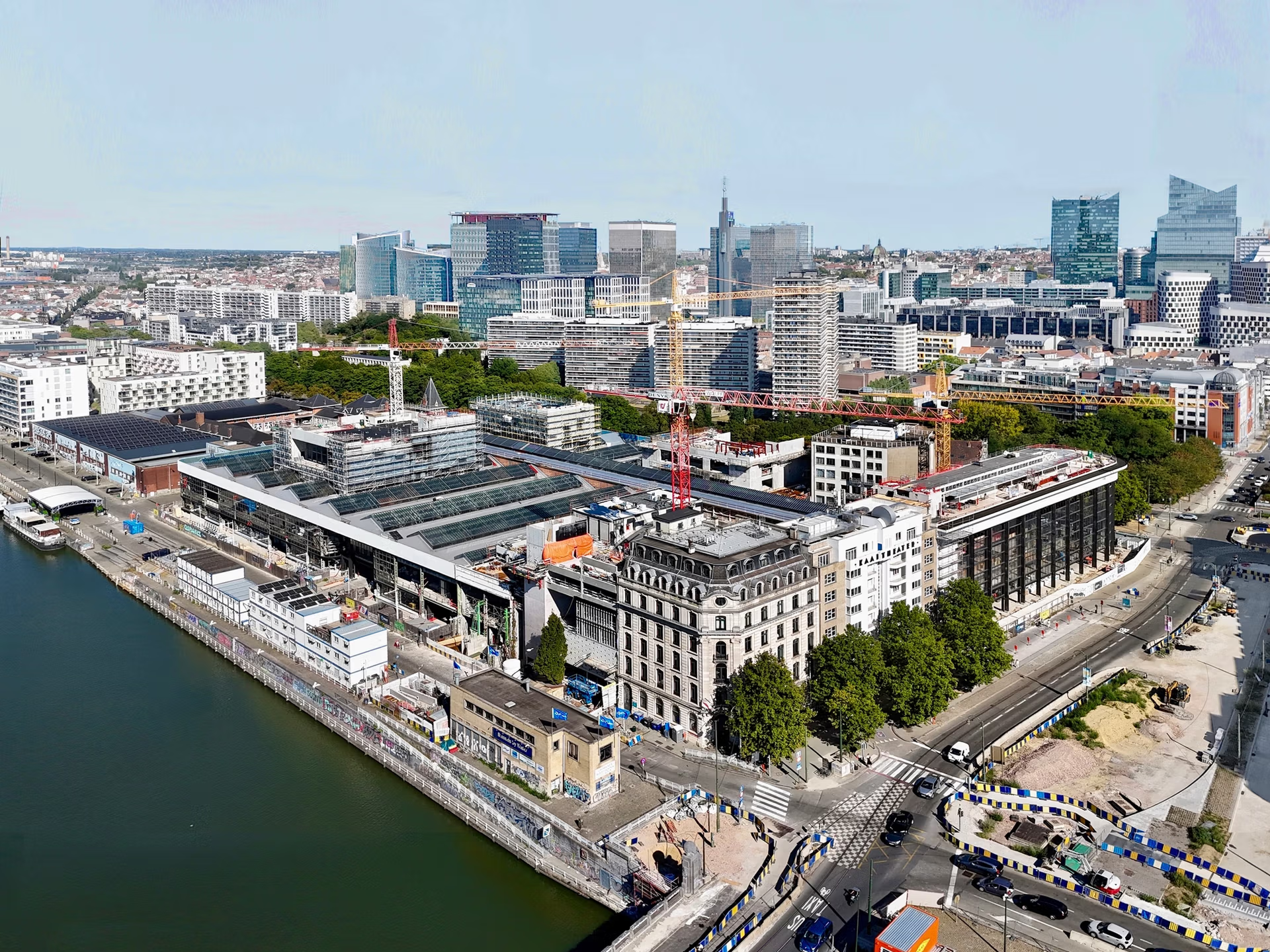
Drone image of Kanal Image: Atelier Kanal
A spokesperson for Les Engagés tells The Art Newspaper: “Brussels is an important centre for contemporary art, and Kanal plays a key role in placing the city on the international cultural map. We are therefore rethinking the [Kanal] project to ensure it becomes a museum of international standing, even within a tighter budgetary framework.”
Goldstein says: “It will be resolved. Everything is on the table. Brussels is very complex… They [Brussels-Capital Region] will decide at one minute to midnight and we will have our money to finish the building and we will have the money to finance the content.”
In a statement, he adds that the new institution is “everything and nothing at the same time… Nothing, if the public authorities do not allow the development of the creative space which should be protected against the stifling pressures of the marketplace and the breakneck tempo of the media. Everything because art is the most exceptional force of emancipation.”
Goldstein meanwhile has high hopes that Kanal will boost the Belgian capital, putting it on a par with other art destinations. “Brussels is incredibly central—only one hour and 20 minutes to Paris, 50 minutes from Rotterdam. The arts ecosystem here is huge. And Kanal is a win, win, win, win, win project,” he says.


