







Global interest in the health benefits of the arts is gaining momentum with more governments recognising that creativity should be embedded across national health systems. Wales, a devolved nation of the UK with its own parliament, the Senedd, and Greece, are the latest countries exploring in depth how the arts can boost health and wellbeing.
Heledd Fychan, Wales’s new culture and sports minister, appointed following Plaid Cymru’s victory in the Senedd elections in May, told the BBC TV programme Politics Wales that she wanted to ensure that arts and health programmes, funded by the Arts Council of Wales, would be embedded in the National Health Service (NHS). Asked to confirm this plan, a Welsh government spokesperson told The Art Newspaper that culture, arts and sport were previously considered separate to the challenges facing the NHS. However, “as part of our First 100 Days plan, we will commission a review of opportunities for investment in culture, the arts and sport, to inform a progressive increase in arts, culture and sport spending, tied to a wider shift to preventative health and wellbeing activity across government,” she said. Reform, the right-wing party forming the main opposition in Wales, did not respond to a request for comment regarding the proposal.
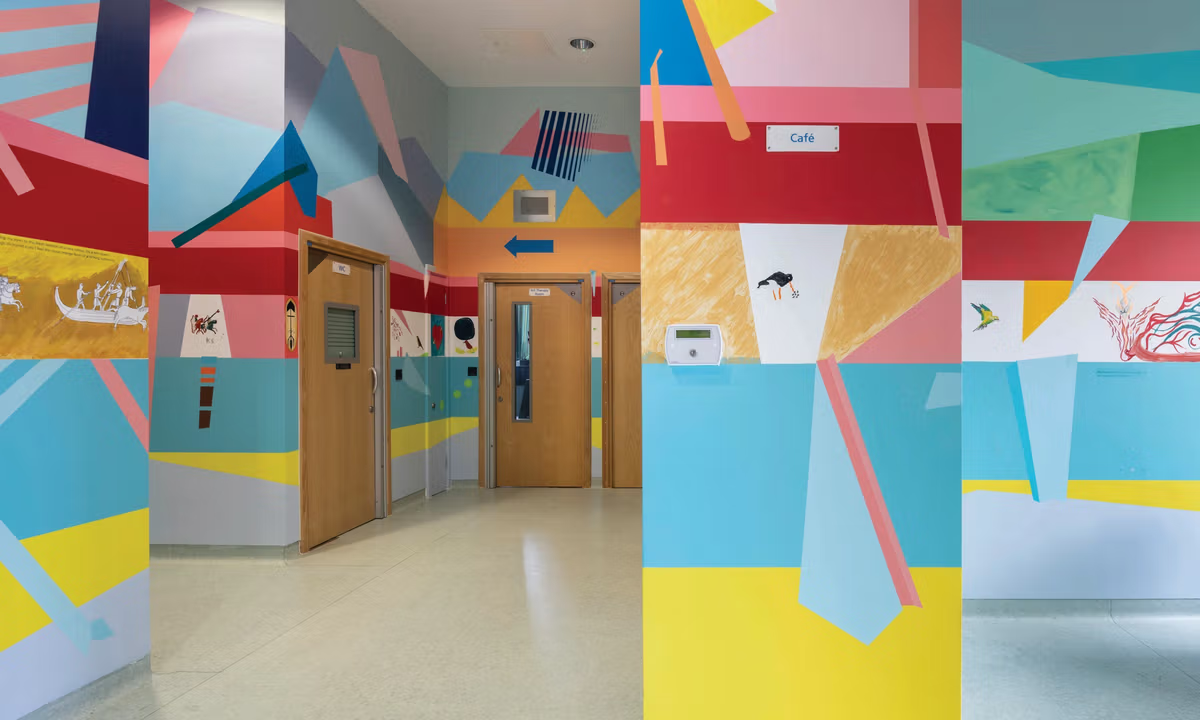
Lakwena Maciver’s HA HA HAPPY (2026), created for basketball courts at Happy Mount Park, Morecambe © Lakwena Maciver
Wales has been forward thinking in this field, with the Arts Council of Wales, the public arm’s-length arts funding body, and the Welsh NHS Confederation teaming up in 2017 to sign an ongoing memorandum of understanding aimed at disseminating research and informing government policy around the benefits that the arts can bring to people’s health and wellbeing.
“Since 2022-23 we have invested £6.8m in grants in the arts and health space. We are currently working together to establish recommendations for the new government,” an Arts Council of Wales spokesperson adds.
Assimilated into healthcare
Greece, meanwhile, has gone further: its “cultural prescription” scheme has been assimilated into the national healthcare infrastructure, becoming statutory policy. The programme, embedded within Greece 2.0, the national recovery and resilience strategy, enables health professionals to recommend participation in arts-based activities as part of a holistic approach to mental-health support. Participants living with conditions such as depression or anxiety attend sessions in venues such as galleries, theatres and community arts spaces.
“With UK healthcare embracing a shift from treatment to prevention and hospital to community as part of the NHS’s ten-year plan, the arts are primed to play an important role in health system transformation across the four [UK] nations,” says Stephen Stapleton, the co-director of the Jameel Arts & Health Lab, an affiliate to the World Health Organization (WHO), which has been at the forefront of integrating the arts in clinical and public health globally.
In June, Jameel Arts & Health Lab launched the second iteration of Healing Arts Scotland, a biennial event with conferences and workshops, and the first citywide Healing Arts campaign in England, co-organising events across Birmingham that engaged with “the city’s creative health sector” at venues such as Birmingham Symphony Hall and Ikon Gallery. Healing Arts Birmingham also saw the formal launch of a national policy brief, UK Arts & Health: The Time is Now, which was formulated following a parliamentary roundtable held in April at the House of Commons in London. The event brought together policymakers, healthcare leaders, researchers, clinicians, cultural organisations and artists who explored the role of the arts in promoting health.
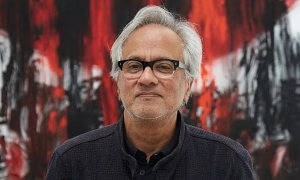
“The National Centre for Creative Health [NCCH, a UK charity] has helped define policy in this area for a decade and the UK is now uniquely positioned to lead this field,” Stapleton adds. “The UK is becoming a global reference point for policy implementation.” Nils Fietje at the WHO Regional Office for Europe concurs: “The world is looking to the UK for leadership.” The UK artist Lakwena Maciver, who participated at the roundtable, says that “artists have always intuitively understood what science is now proving—that art is a powerful tool for processing emotion, building hope and healing”.
Significant impact
The urgent next step, according to Simon Opher, the Labour MP and chair of the all-party parliamentary group on creative health, is to officially embed the arts into mainstream NHS preventative strategies and clinical treatment plans. Justin Varney-Bennett, the creative health lead at the UK Department of Health and Social Care (DHSC), says that evidence increasingly suggests that arts and cultural engagement can deliver significant impact across the NHS, and calls for “an embedded systemic shift that is resilient to change”. Stapleton says the group’s recommendations have been sent to the UK Department of Health and Social Care and the Department for Culture, Media and Sport, and “we’re hoping for a response over the summer”.

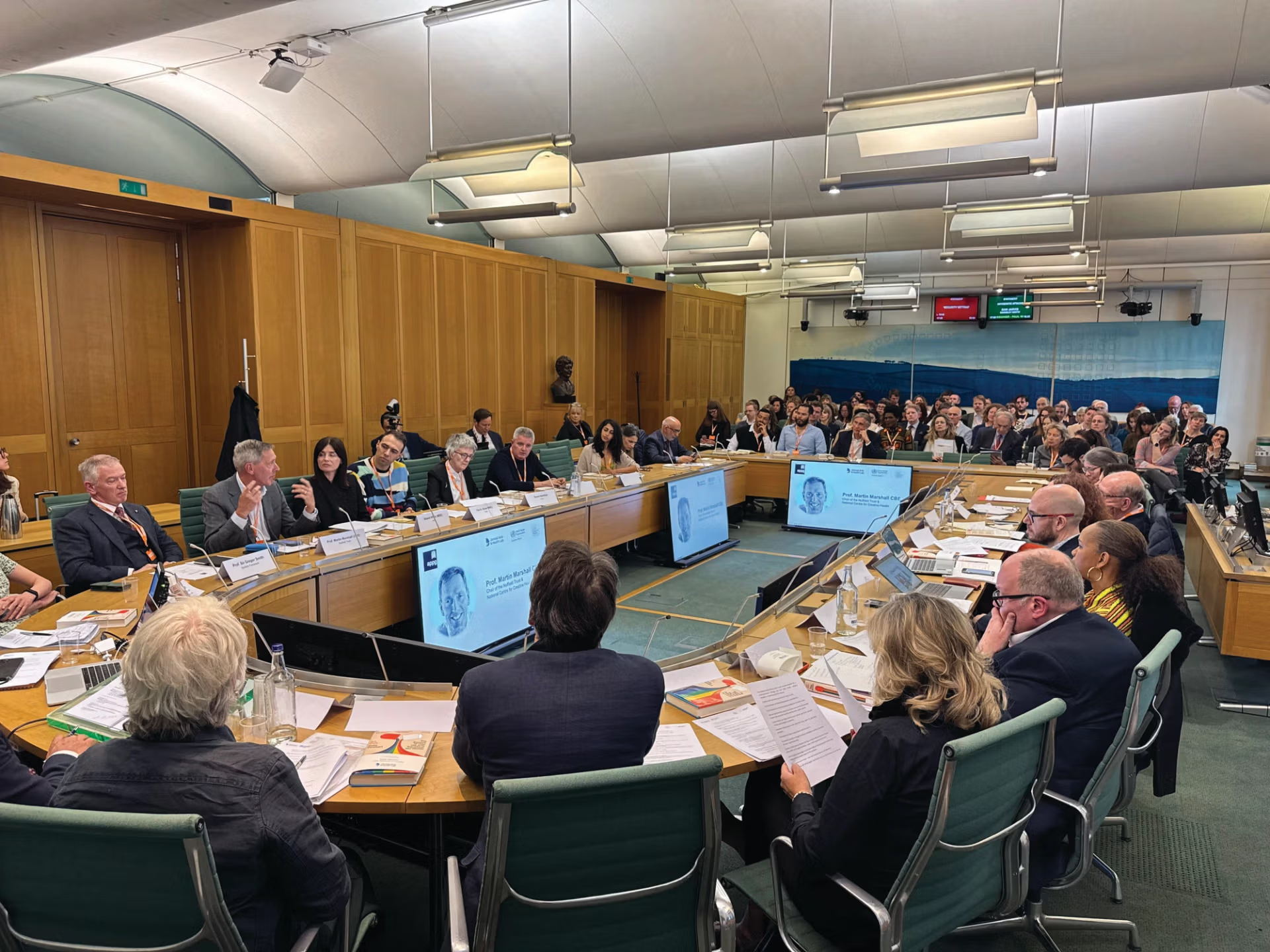
A House of Commons roundtable in April formulated a policy brief on the arts and health Courtesy of Jameel Arts & Health Lab and CULTURUNNERS
Alexandra Coulter, the director of the NCCH, points out that a recent book by Daisy Fancourt, titled Art Cure: The Science of how the Arts Transform our Health, has “raised public awareness to a new level and we are riding a wave of growing momentum in creative health policy, research and practice across all four nations”. Fancourt, a professor of psychobiology and epidemiology at University College London, has found in her research that arts engagement, including visiting museums, reduces symptoms of depression and anxiety. “If the arts were a pill, we would be taking it every single day,” she says.
Earlier this year, Fancourt was appointed the Unesco chair in arts and global health, a new role that involves quantifying the long-term benefits of arts and cultural engagement in communities as well as in formal education and informal lifelong learning. As director of the WHO’s Collaborating Centre on Arts and Health and in her new role, Fancourt will expand her remit globally, working on trials of “arts on prescription” in multiple Global South and North countries, Unesco adds.


