






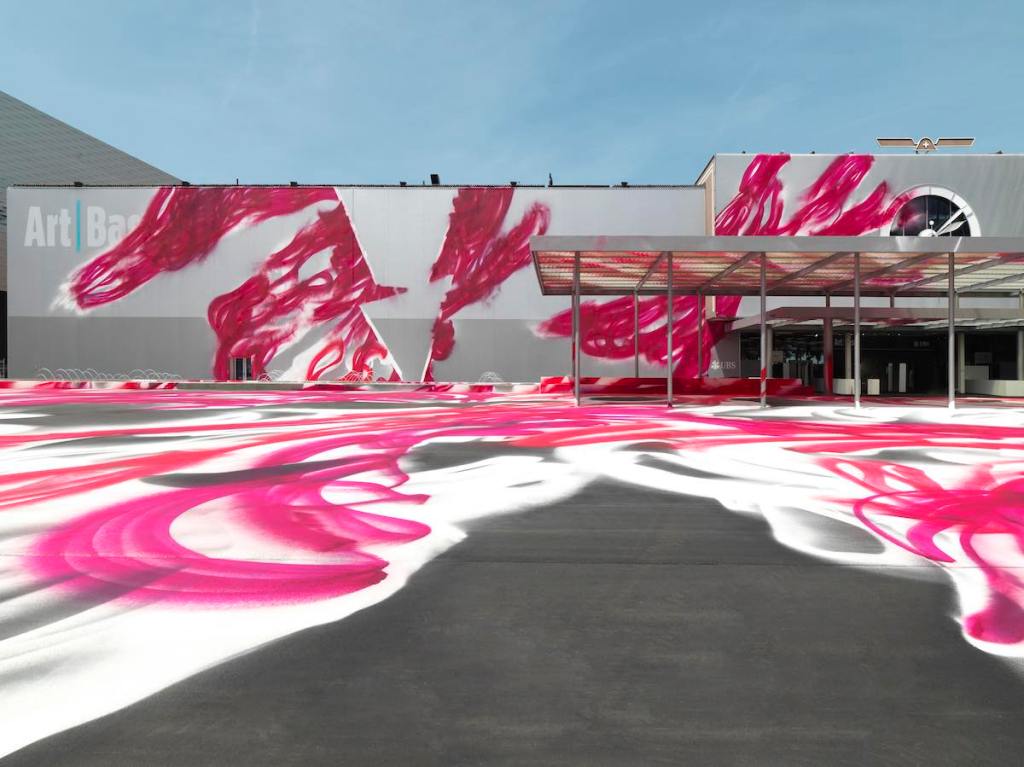
James and Kathryn Murdoch are working with MCH Group, the parent company of Art Basel, on a new festival meant to rival the World Economic Forum in Davos, the Aspen Ideas Festival, and other “ideas”-driven gatherings that convene the world’s wealthy and powerful.
While details remain scarce and no formal announcement has been made, Vanity Fair’s Nate Freeman reported that he confirmed the in-the-works event with multiple sources. According to Freeman, the project is a joint venture between Lupa Systems, James Murdoch’s investment firm, which holds a controlling stake in MCH, and Futurific, an organization cofounded by Kathyrn Murdoch that produced PBS’s six-part docuseries A Brief History of the Future, which spotlights people working to solve society’s most pressing problems. Futurific’s central focus, based on available materials, appears to be the promotion of “protopia,” a term coined by Wired cofounder Kevin Kelly to describe a vision of incremental societal progress.
The venture, set to debut in 2028, has been dubbed the Futurific Institute and will be led by CEO Rachel Goslins, the former executive director of the Milken Institute’s Center for the American Dream. It is expected to take place in Basel, Switzerland, in the summer.
In a 2024 interview with NPR tied to the premiere of the PBS series, Kathryn Murdoch said the idea for Futurific—and its emphasis on protopias—grew out of a conversation with her daughter, who noted that popular culture overwhelmingly depicts dystopias rather than hopeful visions of the future.
“The whole concept started, actually, when my daughter told me she didn’t think there was any hope for the future,” she said. “And I was really upset by that, because I had been working on democracy and climate change issues for such a long time.”
A longtime environmental activist, Murdoch said the goal of both the series and the broader protopia framework is to counter the kind of paralysis that dire climate warnings—such as those dramatized in the 2021 film Don’t Look Up—can produce.
“We’ve done a less good job of showing what the world would be like if we do act,” Murdoch said.
As for what the Futurific Institute will actually look like, Freeman’s sources were less definitive, though they offered a wide range of comparisons, from the Venice Biennale and the St. Louis World’s Fair to Burning Man and TED Talks. The general idea seems to be to bridge art, culture, tech, and future problem-solving into a single event.
“It’s like a contemporary riff on the world’s fair,” one source told Vanity Fair.


