





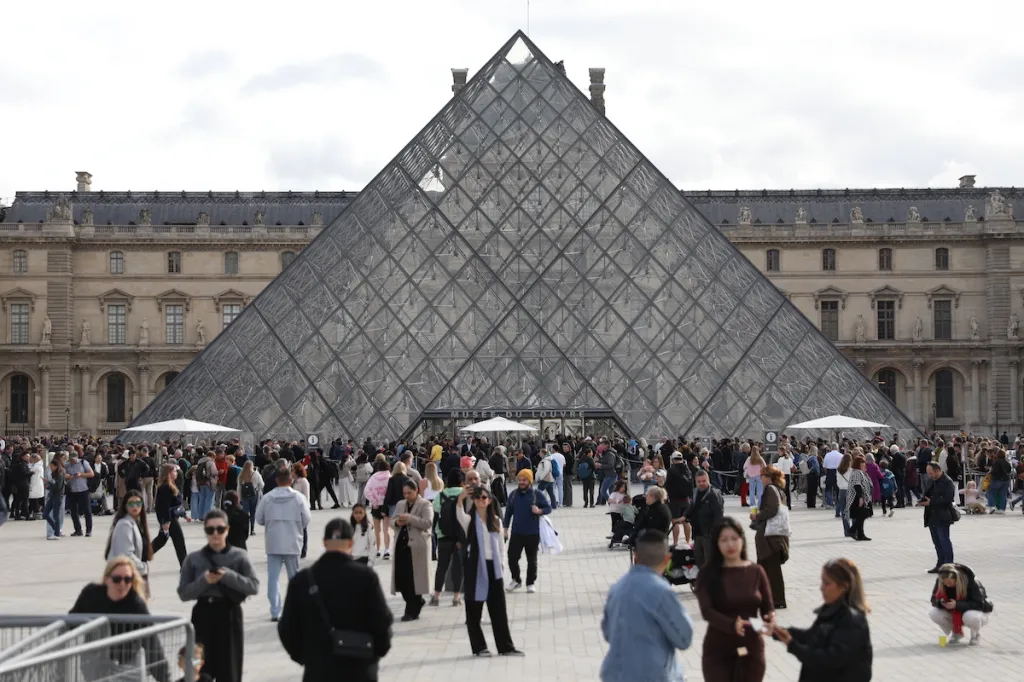
A sweeping fraud scheme targeting ticket sales at the Louvre was uncovered earlier this week, leaving the scandal-plagued museum facing losses estimated at more than €10 million. The Palace of Versailles was also implicated in the scheme, which involved the sale of counterfeit tickets and the overbooking of guided tours, the Paris prosecutor’s office confirmed on Thursday.
French authorities shared that nine people have been arrested, including two museum employees, several tour guides, and one individual suspected of organizing the scheme. The Paris prosecutor’s office confirmed that more than €957,000 in cash—plus €67,000 in foreign currency—was seized, in addition to €486,000 in separate bank accounts. According to Le Parisien, three vehicles and multiple safe deposit boxes were also confiscated.
The Louvre told the publication that it is “facing a resurgence and diversification of ticket fraud”, prompting the museum to “put in place a structured plan to combat fraud”, notably through “preventive and curative actions (…) and monitoring of their results”.
The institution added that the ongoing police operation “was carried out following a report from the Louvre Museum as part of its anti-fraud policy and the ongoing interactions between the museum’s teams and the police regarding fraudulent practices.”
The investigation reportedly began in December 2024 after the Louvre alerted police to “the frequent presence of a couple of Chinese guides at the museum, who were bringing in groups of Chinese tourists by defrauding the ticket office, the guides reusing the same tickets several times for different people. Other guides were subsequently suspected of the same practices.
Surveillance and wiretaps confirmed that tickets were being reused by the offenders, and that the fraudulent tour guides were conspiring with employees of the Louvre to pocket the proceeds from ticket sales. The Paris prosecutor’s office opened a judicial investigation last June 2 on suspicions of “organized fraud, organized money laundering, active and passive public corruption, aiding and abetting illegal entry and residence in an organized group, and use of forged administrative documents”.
The investigation also uncovered that the scheme spanned a decade, during which the suspects smuggled in sometimes to 20 groups per day, costing the Louvre more than ten million euros.
The prosecutor added that those implicated are suspected of having invested some of the proceeds in real estate, both in France and in Dubai.
ARTnews has contacted the museum for comment.