






A major corporate sponsor of the Sydney Biennale, Australia’s biggest art exhibition, has withdrawn following allegations of antisemitism involving a DJ in its program.
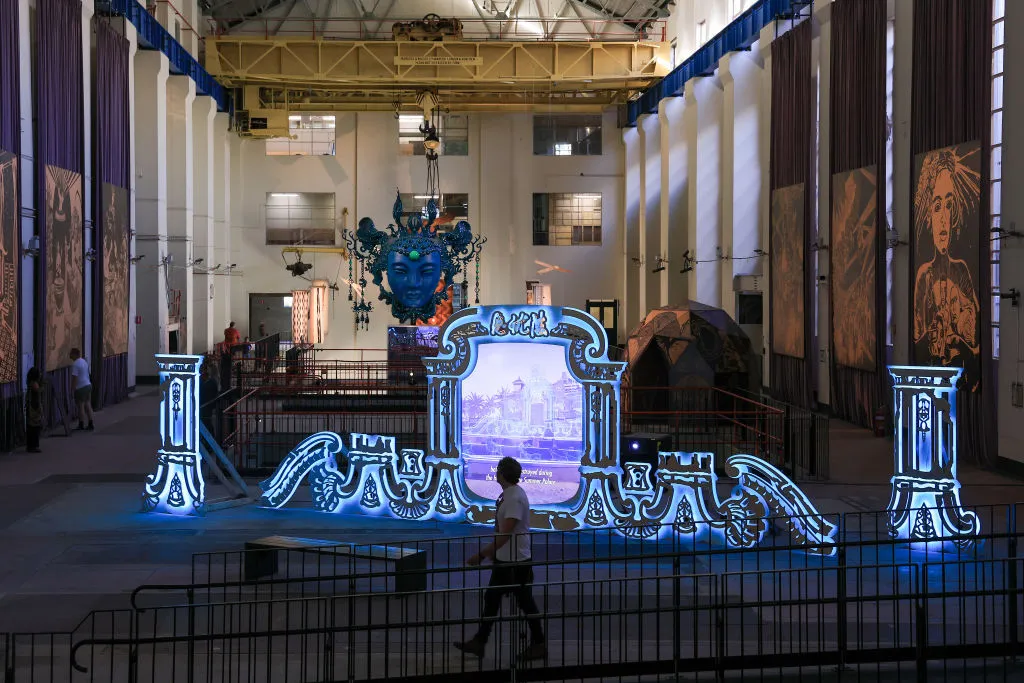
On Tuesday, the NSW Jewish Board of Deputies filed a police complaint over comments allegedly made by US electronic music producer Zubeyda Muzeyyen, who performs as DJ Haram, during a set at the Biennale’s opening night party last week at White Bay Power Station, the Sydney Morning Herald reported. Muzeyyen is accused of having referred to a “Zio-Australian-Epstein empire,” making a tribute to “martyrs” and using the phrase “long live the resistance”—which the complaint says is “commonly understood” as a call for “acts of political violence.”
Then, on Tuesday, the management consultant firm PwC, which had been listed as a “strategic partner” for the Biennale’s 25th edition, said that it was withdrawing from participation. In a statement, the company said that the decision was driven by a belief that the Biennale was no longer “welcoming and inclusive for everyone.”
A Biennale spokesperson responded to PwC’s decision in a statement, first reported by local media, saying “We are disappointed by this outcome, as the Biennale is committed to being a unifying force and providing an inclusive, welcoming environment for all audiences.”
Tensions had been mounting between the event’s organizers and segments of Sydney’s Jewish community in the weeks leading up to the opening. One week before the opening, the Jewish Board of Deputies declined to attend a preview of the exhibition, citing “objectionable” social media posts by “certain participating artists” and what it described as a lack of Jewish representation in the program.
The complaint filed Tuesday was authored by Jewish Board of Deputies president David Ossip, who wrote that the reference to a “Zio-Australian-Epstein empire” was “capable of inciting hatred, serious contempt or severe ridicule toward Jews or Jewish Australians on the grounds of race,” as defined by the NSW Crimes Act, the list of offences and corresponding punishments that forms much of Australia’s criminal law.
NSW Police Commissioner Mal Lanyon told ABC Radio that his officers would review the allegations “It’s important to remember that hate crimes and hate speech have a high legal threshold, and there is a reason for that,” he said. “Obviously, free speech is something we value in this country. We need to ensure an offence has been committed; if so, we’ll take action.”
A festival spokesperson said the event would fully cooperate with the police investigation: “If any organization or member of the public believes that specific comments have breached the law, the appropriate course of action is to refer the matter to the relevant authorities.”
The incident in Sydney unfolds amid a fraught debate over freedom of expression in the art world, particularly over whether criticisms of Israel cross into antisemitism. This question has provoked incendiary debates at international exhibitions in recent years, most notably at the 15th edition of the European quinquennial Documenta. There, the inclusion of an artwork featuring an antisemitic caricature sparked a scandal that led the show to adopt the International Holocaust Remembrance Alliance (IHRA) definition of antisemitism, which controversially links criticism of Israel or Zionism with prejudice.
Documenta’s newly instated Code of Conduct has already sparked protest. Last December, an exhibition of work by Marisa Merz, originally scheduled to open at the Fridericianum museum in Kassel, Germany, was canceled by the Italian artist’s daughter, who said at the time, ‘I am convinced that art should not be restricted by borders and, above all, must be free of prejudice.”
Amid Israel’s ongoing military assault on Palestinian territories and the wider US–Israel–Iran conflict igniting across the region, controversy has touched the upcoming Venice Biennale as well. Earlier this week, the activist group Art Not Genocide Alliance released an open letter demanding that the Venice Biennale block Israel from participating in this year’s exhibition, which opens in May. The letter has been signed by nearly 200 artists, curators, and arts workers associated with this year’s edition of the Biennale.
“We do this in support of our fellow artists and cultural workers in Palestine, in solidarity with Palestine, and in profound hope of an end to Zionist genocide and ongoing apartheid, and the rebirth of a free Palestine,” the letter reads.
Venice Biennale organizers have also been urged to prevent Russia from participating in the exhibition, given its ongoing invasion of Ukraine, which as of early 2026 has resulted in the death of more than 15,000 Ukrainian civilians.
In a statement released on Tuesday, the organizers said that the Russia pavilion will continue as planned, citing its compliance it has with all sanctions imposed on Moscow following its invasion of Ukraine in 2022.
Mikhail Shvydkoy, Russia’s delegate for international cultural exchanges and the country’s former culture minister, told ARTnews that, “Various sanctions may be devised, and official Western institutions may be prohibited from working with us, but no one can deprive Russia of the right to artistic self-expression.”


