




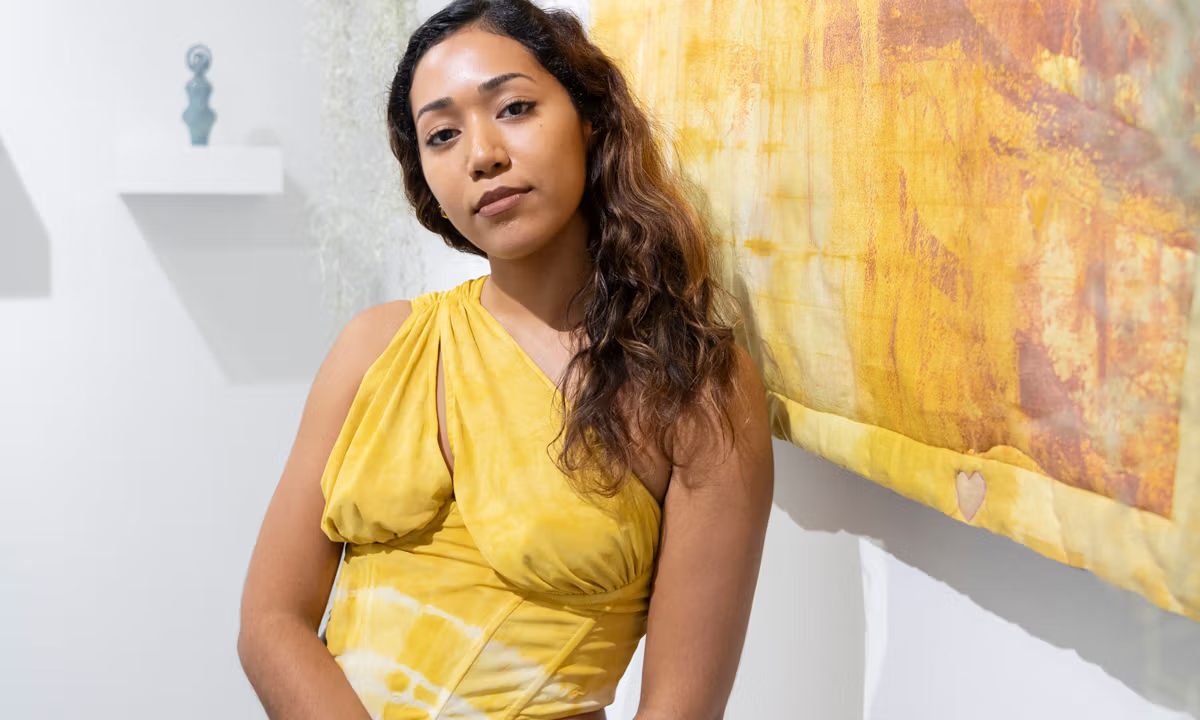
Diana Eusebio’s first solo museum exhibition, Field of Dreams at the Museum of Contemporary Art North Miami, is a homecoming in many ways. The award-
winning Peruvian Dominican artist grew up in the city, and her work is steeped in the local community and its natural environment. The exhibition features more than 30 works rooted in Eusebio’s unique practice of combining textiles hand-coloured with natural dyes—drawing on her African and Indigenous heritage—with digital prints. Fusing contemporary art with ancestral traditions, Eusebio’s work explores the layered questions of identity, migration and the meaning of home.
Dyeing fabrics with materials like avocados, cochineal, Spanish moss, indigo and marigolds, Eusebio overlays digital portraits, family photos and landscapes onto fabrics, creating richly textured works that speak to the personal and communal experience of remaking home. While evoking ancestral memory and tradition, Field of Dreams references the unravelling edges of the American dream, baseball—a popular sport in the Dominican Republic and a way of attaining the elusive dream for many migrants to the US—and a new generation of “dreamers” caught between two worlds.
The Art Newspaper: How does it feel to be doing your first big solo museum show in your hometown?
Diana Eusebio: It’s an honour and a pleasure. I’m from Miami, born and raised here, but I wasn’t always living here. I lived in Maryland for a few years and came back during the pandemic. But I recently moved to New York for a long-term residency at the Textile Art Center in Brooklyn, so the show was a nice culmination of my time here and a way to share all the work I’d been doing for the past five years with the community. A lot of the imagery in my pieces for the show was either shot in Miami or archival images of my family from when I was growing up here.
What is it like being an artist celebrating the immigrant experience in the US right now?
This show is a great outlet for me to speak about things that are affecting our communities. The title Field of Dreams plays on the name of the 1989 film about baseball (my brother played for the Seattle Mariners) but also the “dreamers” fighting for their rights and citizenship. I’m a first-generation American in Miami, and it’s a critical time to have discussions around the authentic representation of immigrants.
Diana Eusebio’s American Dream (2022), one of her works referencing the immigrant experience
Courtesy of the artist and Museum of Contemporary Art North Miami
This exhibition is a celebration of my family. I included photos from childhood, when my siblings and I were figuring out how to build home in a place very different from where our parents came from. This is channelled through my textiles. I’m practicing the Indigenous traditions of Peru, where textiles are traditionally of great value. I got into natural dyes because of this connection to my mom and where she’s from. She would tell me her childhood stories about harvesting cochineal for red dye in her backyard.
How does your work tackle the current violence against immigrants in the US and the realities of the so-called American dream?
I have US citizenship, but I have family members and friends who are at risk of deportation, so there is this heightened fear and feeling of disillusionment with the American dream right now. The work that artists do isn’t happening in a vacuum, and there needs to be some type of acknowledgement of the suffering in the world. But in my practice, I feel there is a healing quality to working with materials that come from the earth, that come from Latin America.
It’s interesting how the materials are so easily imported, but the people are not welcome. I have a connection to home by working with these materials—a direct line to the earth. If I’m working with indigo, cochineal or logwood that I sourced in the Dominican Republic, these materials are alive in my work. I respect them in my practice, and I hope that through my work, other people can have an appreciation for these traditions—and also for the people who have kept those traditions alive.


Adapting Across Borders (Red) (2025), is characteristic of Eusebio’s work, colourfully combining digital images with textiles hand-dyed using traditional techniques and plants from Latin America
Courtesy of the artist and Museum of Contemporary Art North Miami
What are a couple of key works in your exhibition?
There’s a piece called Alligator Alcatraz (2025). I digitally printed an image I took of an alligator on cotton while I was an artist-in-residence in the Everglades in 2023, then I dyed the fabric with Spanish moss harvested in Miami. During slavery, the Everglades was a channel to freedom—they called it the Saltwater Railroad—but during the Jim Crow era, alligators were portrayed as aggressive animals that ate people to instil fear in Black families. I’m creating a more graceful portrayal of the alligator, because it has been used as propaganda, currently against Brown and immigrant communities. The idea of “Alligator Alcatraz” was to instil fear in immigrants trying to escape from the detention centres in the middle of the Everglades.

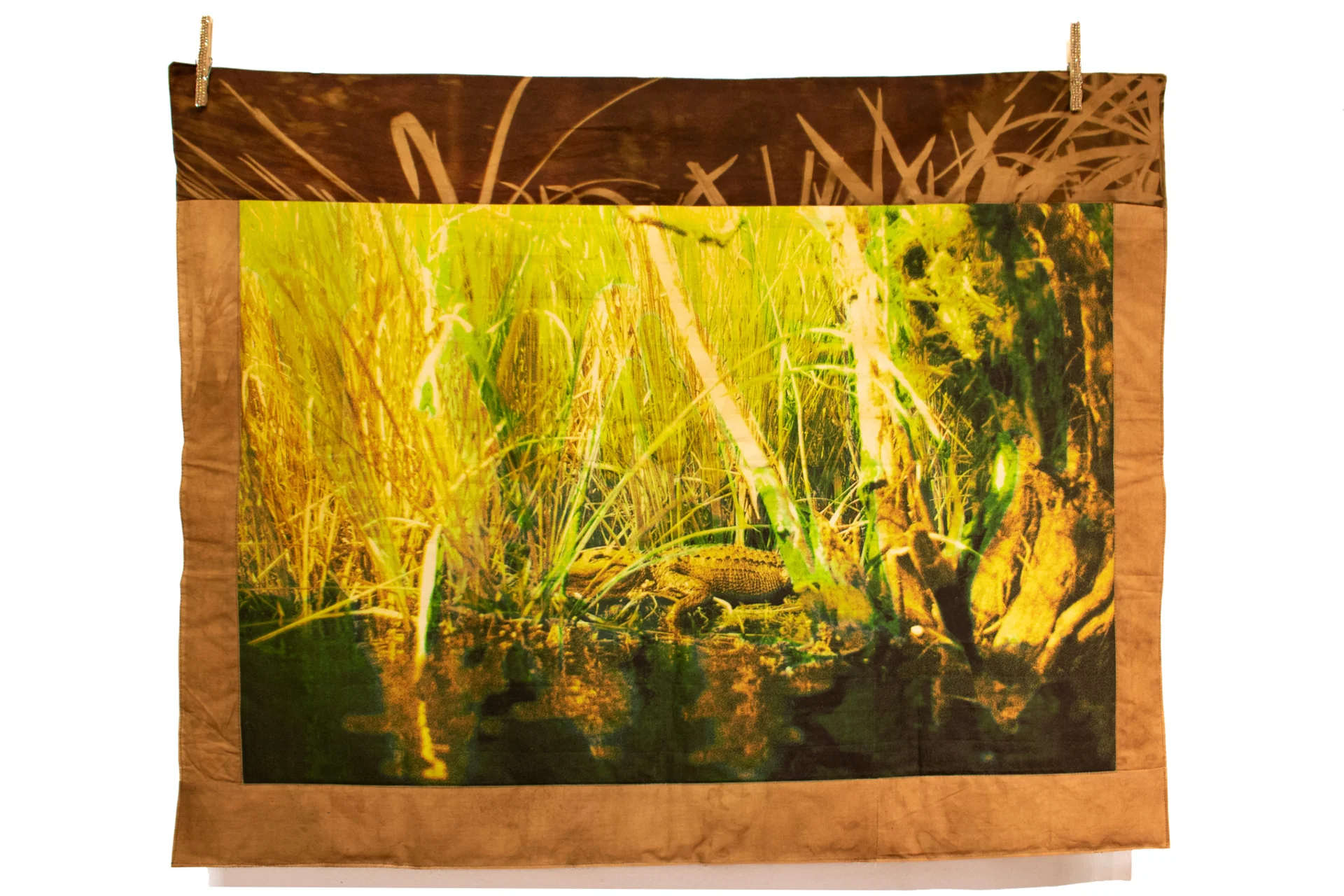
With Alligator Alcatraz (2025), Eusebio aims to frame the fearsome reptile in a new way
Courtesy of the artist and Museum of Contemporary Art North Miami
Another important work is an 18ft-by-10ft image shot from underneath the canopy of a cypress tree in the Everglades, looking up through the branches with the sun shining down. It’s about the peace you feel when you’re in nature. It’s called Home Safe, playing on the idea of a baseball game. There’s the running of the bases, but the goal is always to come back home. That’s the ritual of immigration—you’re leaving home but always trying to re-create it.
- Diana Eusebio: Field of Dreams, Museum of Contemporary Art North Miami, until 16 March 2026