







More than 200 scholars and cultural professionals from across the world have condemned what they describe as “irreversible damage” to Iran’s heritage by the United States and Israel, warning that it could constitute violations of international law.
Signatories of a joint statement provided to the Society of Iranian Archaeology for publication—who span leading academics, researchers and cultural heritage professionals at universities and institutions across the US, Europe and beyond—also criticise states and international institutions for what they call an inadequate response.
“We, the undersigned, warn that the conduct of the United States and Israel has inflicted irreversible damage on humanity’s cultural heritage and, in light of the 1954 Hague Convention for the Protection of Cultural Property in the Event of Armed Conflict, may give rise to violations of international law,” the statement says. It later continues: “The responsibility does not lie only with the state that violates the law. Under the responsibility to protect doctrine, this responsibility also lies with those states that fail to condemn, restrain, and hold that violator accountable.”
The statement builds on a separate legal letter signed by more than 100 US-based international law experts, which argued that the attacks on Iran violated the United Nations Charter and warned that the war and statements by US officials “raises serious concerns about violations of international humanitarian law, including potential war crimes”. The letter, which focuses on the actions of the US but also expresses concerns about the Iranian government’s treatment of its own citizens and neighbouring countries, later states: “The laws of armed conflict constrain the conduct of hostilities of all parties to the ongoing conflict. We are concerned that these fundamental rules may have been violated, including in the context of reported strikes on civilians and civilian objects.”
Since the start of the US-Israeli strikes on 28 February—currently halted as part of a ceasefire—more than 3,000 people were killed in Iran, according to the country’s forensic chief.
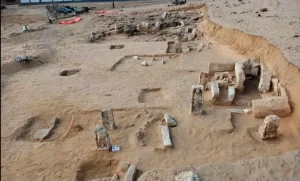
Meanwhile, according to today’s statement from scholars, more than 130 registered Unesco and national monuments and museums have been damaged in this time, with further destruction across historic urban areas and archaeological sites. Citing the 1954 Hague Convention, the authors argue that “the Convention rests on two basic duties of states: respect and safeguarding. The United States and Israel have failed on both counts”. The statement points to both direct strikes—including on Tehran’s Senate Palace—and the damage caused to heritage sites by bombardment in historic areas.
The signatories also draw attention to political rhetoric surrounding the conflict. A statement by the US defence secretary, Pete Hegseth, declaring that US forces would not be constrained by “stupid rules of engagement”, is described as “deeply alarming”.
A representative of the group behind the statement, Mehrnoush Soroush, an assistant professor of Landscape Archaeology at the University of Chicago, tells The Art Newspaper that the statement reflects mounting frustration among experts at the lack of decisive action by states and institutions such as Unesco, after weeks of documented damage to cultural heritage sites.
“We are witnessing a moment where the violator is a powerful actor, and international institutions appear reluctant to do their job,” says Soroush. “That has created a ground-up movement, where individuals feel they have to step in and be the voice that is missing,” she adds.
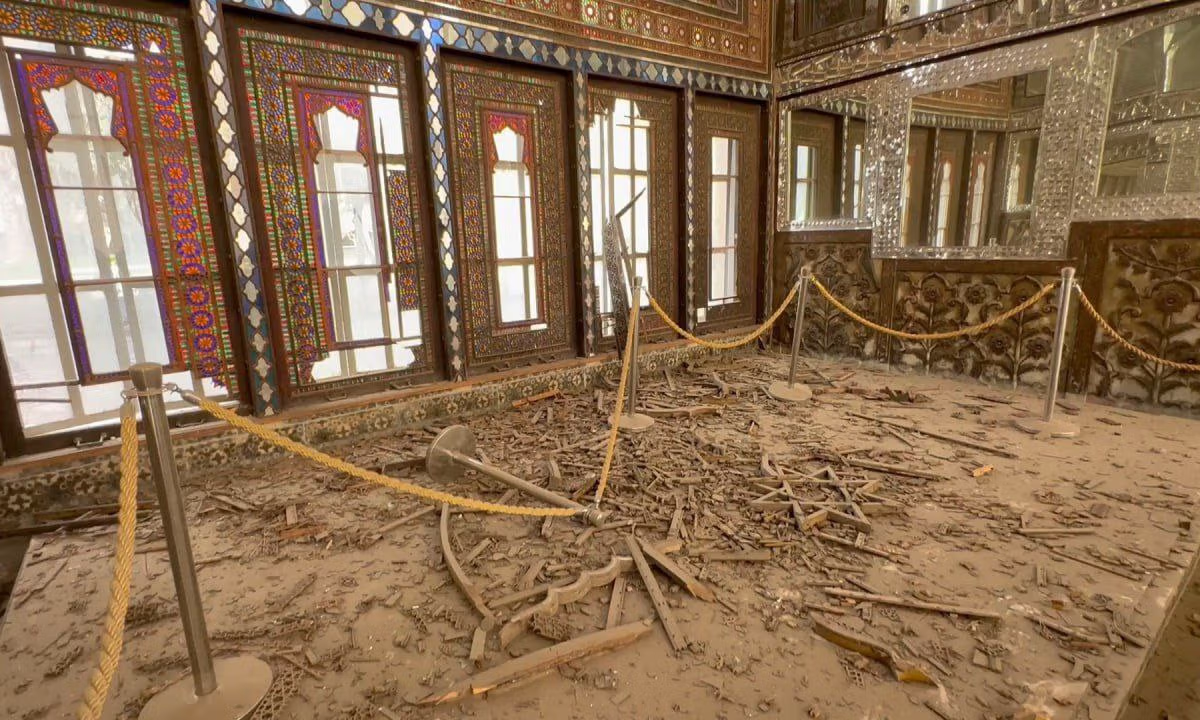
Unesco has acknowledged damage to several World Heritage Sites in Iran—including Golestan Palace in Tehran, the Chehel Sotoun building of the Persian Garden in Isfahan, the Jame Mosque of Isfahan, and sites near the Prehistoric Sites of the Khorramabad Valley. Unlike in relation to other conflicts, however, it has not explicitly condemned the attacks on heritage, instead expressing “deep concern” over the protection of cultural sites, in a statement posted in March. In that release, the organisation confirms it has shared site geographical coordinates with all parties involved, and has reiterated calls for compliance with international conventions protecting cultural heritage.
Responding to a request for comment about the statement, and about its lack of condemnation of the attacks on Iran’s heritage sites, Unesco pointed to its previous statements, saying those reflect its official position.
Damage to a carved fretwork panjereh window at the Chehel Sotoun Palace
Soroush says existing legal frameworks risk becoming hollow without enforcement. “What this [crisis] exposes is a fundamental problem: there are effectively no enforcement mechanisms. Decades of lawmaking risk becoming meaningless if there is no political will to act,” she says.
The joint statement comes as a fragile ceasefire between the US and Iran enters its second week. On 7 April, Donald Trump announced that the two sides had reached a two-week agreement. Talks in Pakistan between the two sides on Saturday (11 April) ended without a deal, though further negotiations are expected, with Trump signalling on Tuesday that another round could take place this week.
Despite the ceasefire, Touraj Daryaee, director of the Centre for Persian Studies at the University of California, Irvine, and a signatory of the statement, tells The Art Newspaper the issue remains urgently relevant. “It’s a ceasefire. So at any time the war can go on and more monuments can be destroyed,” he says. He adds that raising awareness now could influence future conduct and also show Iranians that their cultural heritage matters and is recognised internationally.
The statement calls for states and international organisations to take a number of actions, preparing “to aid Iran as well as Lebanon and other inflicted countries with post war heritage assessment and restoration, professionally, legally, and financially”.
Catherine Kearns, an associate professor of classics at the University of Chicago and another signatory, tells The Art Newspaper the statement serves as part of a broader strategy that includes calls for stopping the war in Iran and Lebanon. “I hope that it marks an entry into new phases of recording and bearing witness, as we are seeing with recent modes of heritage monitoring, and of disseminating this research to strengthen international policies and legal protections of cultural heritage at risk.”
The restoration of Golestan Palace
Meanwhile, Iran’s ministry of cultural heritage, tourism and handicrafts says emergency restoration work is already under way at several sites damaged by the war, including Golestan Palace—Tehran’s only Unesco World Heritage property. While Unesco has previously confirmed damage to the site, it did not comment specifically on the restoration efforts in its response to The Art Newspaper.
Iranian media also reports that 300 experts have been dispatched to evaluate damage to sites and at least eight damage assessment reports have been submitted to international organisations.
Unesco confirmed that it is in close contact with the local authorities and has received information regarding damage to World Heritage properties and other cultural sites, which it says ”is currently being assessed”


