







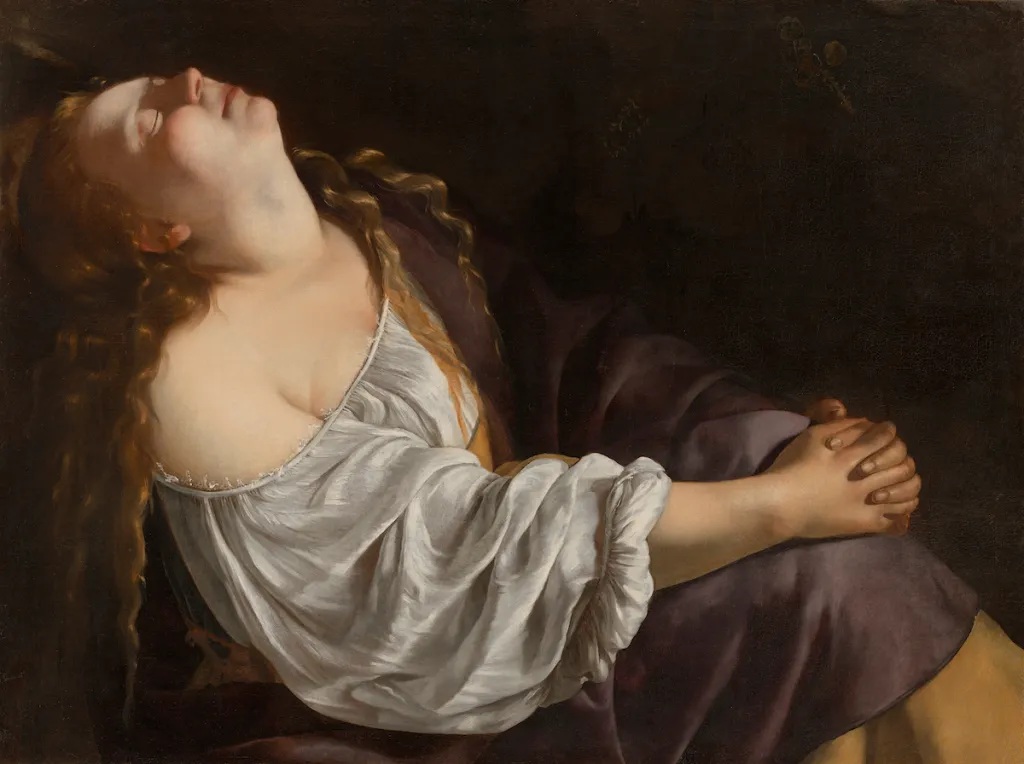
An Artemisia Gentileschi painting entered the collection of the National Gallery of Art in Washington, D.C., marking the first work by the artist to join the museum’s holdings.
The painting, titled Mary Magdalene in Ecstasy (ca. 1625), was thought to be lost until it resurfaced in 2011 in a French private collection. In 2014, it headed to auction at Sotheby’s, where it sold for $1.1 million, at the time notching a new auction record for Gentileschi.
In the 12-year-long interval between that Sotheby’s auction and the present, Gentileschi has achieved mainstream recognition—especially following the #MeToo movement of the late 2010s, when her paintings of sexual violence wrought upon women by men appeared particularly poignant. A 2021 retrospective at London’s National Gallery only raised her profile further.
Gentileschi was a relatively obscure figure of the Baroque period until the late ’80s, when feminist art historians such as Mary Garrard brought new attention to her art. A number of her works were also misattributed to her father, Orazio Gentileschi, for centuries.
Gentileschi did paint biblical subject matter that was also depicted by her male contemporaries, but her works notably shined a light on gendered power imbalances and the psychology of the women she represented. Mary Magdalene in Ecstasy fittingly zeroes in on the inner workings of its subject, notably removing the crosses and other religious symbols that typically accompany images of Mary Magdalene during her conversion.
Just a handful of other US museums own significant paintings by Gentileschi, with the National Gallery of Art joining institutions such as the Metropolitan Museum of Art in New York, the Getty Museum in Los Angeles, and the Detroit Institute of Arts.
The National Gallery of Art’s announcement did not state who had owned its newly acquired Gentileschi between 2014 and the present. The painting will go on view in the museum’s permanent collection galleries starting in late February. The museum’s collection comprises some 160,000 objects, spanning from the Middle Ages to today.
Kaywin Feldman, director of the National Gallery of Art, said in a statement, “It is a momentous occasion to bring Mary Magdalene in Ecstasy into the National Gallery’s collection as our first notable example of Artemisia Gentileschi’s remarkable work. This acquisition marks a major addition to our historical holdings, reflecting our continued commitment to deepening our collection, and in turn, expanding public access to great works of art. We look forward to sharing this seminal painting with visitors to the National Gallery for years to come as it enters a public collection for the first time.”


