







Native Americans were using dice for gaming long before Bronze Age societies in the Old World, according to a new Colorado State University study. Research published in the journal American Antiquity by Robert J. Madden, a PhD student at CSU, presents evidence that dice were made by hunter-gatherers on the western Great Plains more than 12,000 years ago.
Games of chance are considered humanity’s earliest structured engagement with the idea of randomness, the intellectual precursor to probabilistic thinking. Until now, they were thought to have originated in the complex societies of Mesopotamia and the Indus Valley beginning around 5,500 years ago.
Aware that Native Americans have a long history of dice games, Madden created a checklist of specific attributes of historical Native American dice to reclassify older artifacts. “We had a body of literature that carried [the use of dice] all the way back to about 2,000 years before the present,” Madden told CSU’s The Audit podcast, “but it broke down at that point. That got me interested in seeing what I could do to trace this back. How old is this actually?”
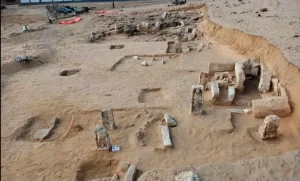
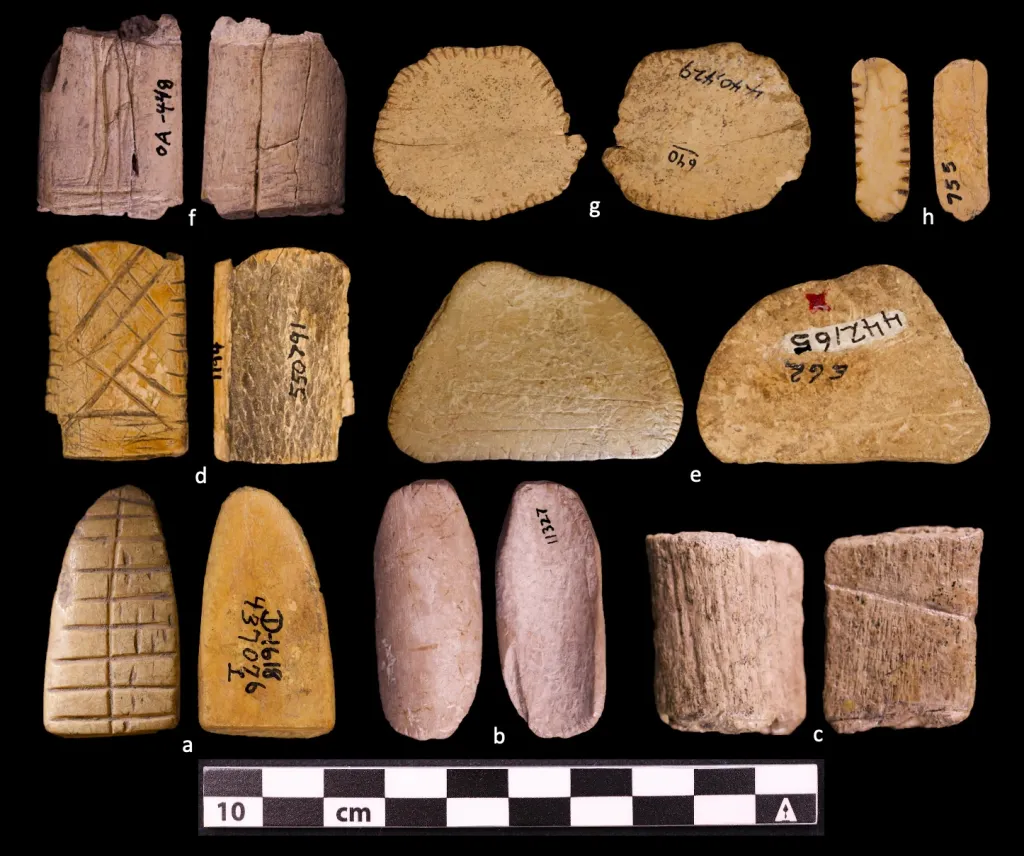
The earliest examples identified in the Madden’s study come from archaeological sites in Wyoming, Colorado, and New Mexico dating to roughly 12,800–12,200 years ago. Unlike modern six-sided dice, ancient Native American dice were made of bone or wood and two-sided, with each face distinguished from the other by markings or coloration. When thrown, they would reliably land on one side or another, producing a binary result.
Madden notes that these dice games have persisted, saying “That’s one of the remarkable things about this. Usually, if you see a practice from a few thousand years ago, it’s exceedingly rare to see it continue. With dice, we’re talking about a practice that we now know goes back to the late Pleistocene, 12,000 years ago. These games are continuing. You can go on YouTube right now and find videos of groups getting together and playing these games.”


