






Nearly 200 artists, curators and art workers involved in this year’s Venice Biennale (9 May–22 November) have signed a letter calling for Israel’s exclusion from the event. The Art Not Genocide Alliance (ANGA) group, which is leading the campaign, says the letter was delivered to the Biennale’s president and board today.
The signatories write that “we, the undersigned, stand together as artists, curators and art workers in a collective refusal to allow you to platform the Israeli state as it commits genocide”. They add that they are acting “in support of our fellow artists and cultural workers in Palestine, in solidarity with Palestine, and in profound hope of an end to Zionist genocide and ongoing apartheid, and the rebirth of a free Palestine”.
The letter argues that Israeli actions have devastated Palestinian cultural life, writing that “Israeli violence also targets the art and culture supposedly held sacrosanct by the Biennale”. The signatories add that “the Venice Biennale’s complicity with the attempted destruction of Palestinian life must end” and that “no artist or cultural worker should be asked to share a platform with this genocidal state”.
Among the signatories are internationally recognised artists including Alfredo Jaar, Yto Barrada, Rosana Paulino, Meriem Bennani and Cauleen Smith, along with curators such as Binna Choi and Carles Guerra.
Since Hamas’s attack on 7 October 2023, which killed more than 1,200 Israelis and in which more than 250 people were taken hostage, more than 72,000 Palestinians are estimated to have been killed in Gaza in total, according to the Palestinian Ministry of Health. The Palestinian health ministry reports that more than 550 of those people have been killed since the declaration of a ceasefire in October 2025.
The letter follows an earlier appeal sent by ANGA to the Biennale’s organisers on 2 October 2025 calling for Israel’s exclusion from the 2026 exhibition, which the group says went unanswered. The alliance describes itself as an international group of artists, curators, writers, and cultural workers who have come together to call for the exclusion of Israel at the Venice Biennale.
The group’s October letter to the Venice Biennale warned that failure to exclude Israel could lead to a broader boycott of the exhibition by artists and cultural workers. “If the Biennale fails to meet this basic demand, ANGA will initiate a campaign to bring a full artist and audience boycott of the 61st Venice Biennale,” it says. The letter also says, “if the Israeli pavilion is not excluded, ANGA will leverage the movement to ensure maximum reputational and economic consequences for the Biennale”.
A source close to ANGA tells The Art Newspaper that, in collaboration with major trade unions, industrial action could also be organised across Italy around the opening of the Biennale.
A similar call launched by ANGA in 2024 gathered tens of thousands of supporters. Although the Biennale did not exclude Israel from that edition, the Israeli pavilion never opened after its artist, Ruth Patir, said she would keep it closed until a ceasefire and hostage release agreement had been reached.
This year, the Israeli government has reportedly added a contractual clause requiring the artist to ensure the exhibition remains open regardless of protests.
Israel will be represented this year by the Romanian-born sculptor Belu-Simion Fainaru, who is based in Haifa. In an interview with ARTnews in January, he said he disagreed with ANGA’s approach and with boycotts in general. Fainaru was contacted for comment.
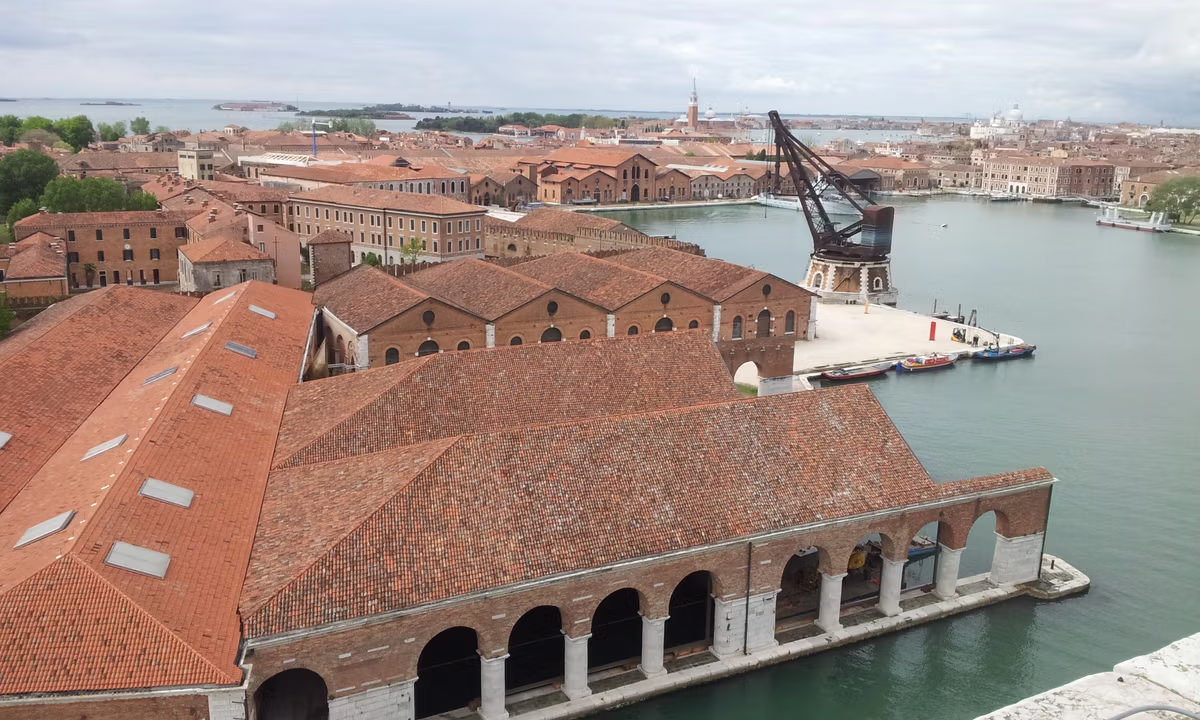
Another issue that has angered activists is the location of the Israeli pavilion this year. Rather than occupying its permanent site in the Giardini—which remains closed for renovation—Israel will instead exhibit in the Arsenale. “We also object to the fact that Biennale management explicitly offered ‘to host’ Israel this year in the Arsenale,“ an ANGA spokesperson tells The Art Newspaper. ”These temporary spaces in the Arsenale are managed directly by the Biennale and there’s no excuse for offering that arrangement… they could have told Israel to hire a space on the private market, which would have been a more typical arrangement.”
ANGA’s letter comes as the Venice Biennale is already facing pressure over its decision to allow Russia to reopen its pavilion for the first time since the country’s invasion of Ukraine in 2022. The European Union has threatened to withdraw funding from the Biennale, while on 12 March Italy’s culture minister, Alessandro Giuli, called for the ministry’s representative on the Biennale’s board, Tamara Gregoretti, to step down over the issue.
In 2024, the then culture minister Gennaro Sangiuliano rejected ANGA’s calls to exclude Israel, calling the demand “unacceptable” and “shameful”. He added that the Biennale “will always be a space of freedom, of meetings and dialogue, and not a space of censorship and intolerance”.
An ANGA spokesperson says that if Russia is excluded while Israel remains at the Biennale, it would demonstrate a “clear double standard” approach towards Israel.
In a statement published on its website, the Biennale says that “in response to the communications and requests for participation from Countries, La Biennale di Venezia rejects any form of exclusion or censorship of culture and art”. The statement continues: “La Biennale, like the city of Venice, continues to be a place of dialogue, openness, and artistic freedom, encouraging connections between peoples and cultures, with enduring hope for the cessation of conflicts and suffering.” The Venice Biennale organisers were contacted for further comment.
South Africa’s pavilion has also been impacted by the issue of Palestine this year. The country cancelled its participation after the artist Gabrielle Goliath refused to alter her planned project that referenced violence against women in Gaza.
A total of 99 nations are participating in the 2026 Venice Biennale. The organisers have previously said they do not have the authority to exclude any country recognised by Italy. Palestine, which Italy does not recognise as a state, has never had an official national pavilion.


