





Abstract works created by the Russian artist Oleg Prokofiev in defiance of Soviet censorship in the 1950s—and presumed lost for decades—are to go on public display for the first time in London. The paintings, banned under the Soviet Union’s strict cultural controls, will be unveiled in Bending Time, the inaugural exhibition at Prokofiev Studio in Hackney. The new space has been founded by Prokofiev’s children, including the composer Gabriel Prokofiev, in collaboration with the curator Anzhela Popova.
For Gabriel Prokofiev, the moment marks a personal and artistic milestone. “It’s such a good feeling to have his works back in public, living and breathing on the walls, and being enjoyed by all who see them,” he tells The Art Newspaper. “The response from everyone who’s seen the work in the studio so far has been so positive; it feels like we’re bringing his creative spirit back to life.”
Oleg Prokofiev’s archive, now housed at Prokofiev Studio in Hackney, London Courtesy of Prokofiev Studio
Oleg Prokofiev was the son of Sergei Prokofiev, the renowned 20th-century Russian composer best known for the composition Peter and the Wolf and the ballet Romeo and Juliet. But Oleg’s work developed in opposition to the rigid doctrine of socialist realism imposed by Joseph Stalin’s regime from 1932, which dictated that art be “socialist in content, and realist in form”.
His romantic relationship with the British art historian Camilla Gray further shaped his artistic trajectory. For over a decade, Oleg hid his abstract work so the state would allow the couple to get married. The pair were eventually granted permission to marry in 1969, but Gray died two years later, aged 35.
After her death, Prokofiev moved to the UK, believing the paintings he had left behind in Moscow were lost. However, when he returned to his former home in 1994, he discovered that every painting had been perfectly kept by the house’s new artist owner, alongside a treasure trove of lost sketches.

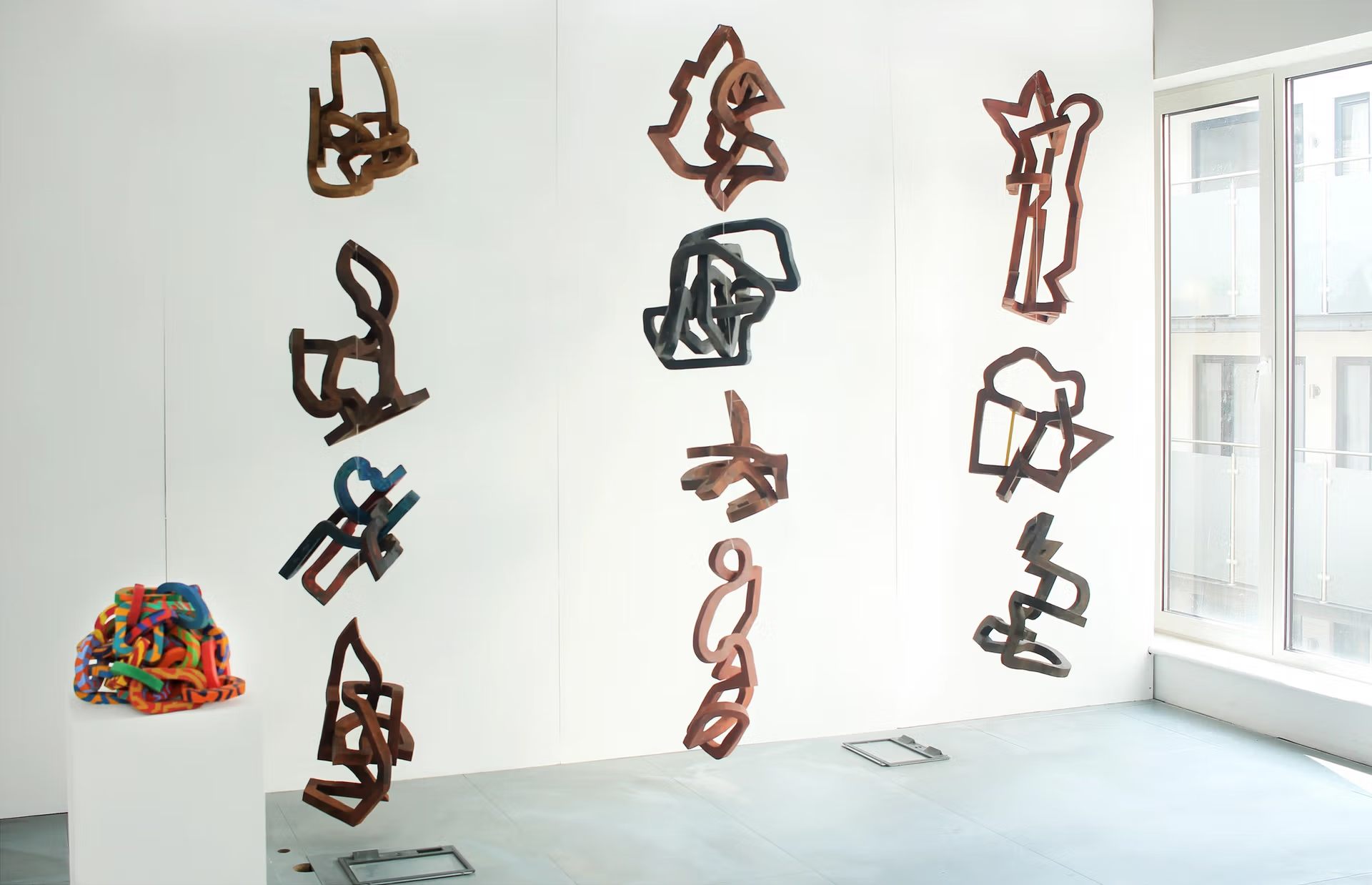
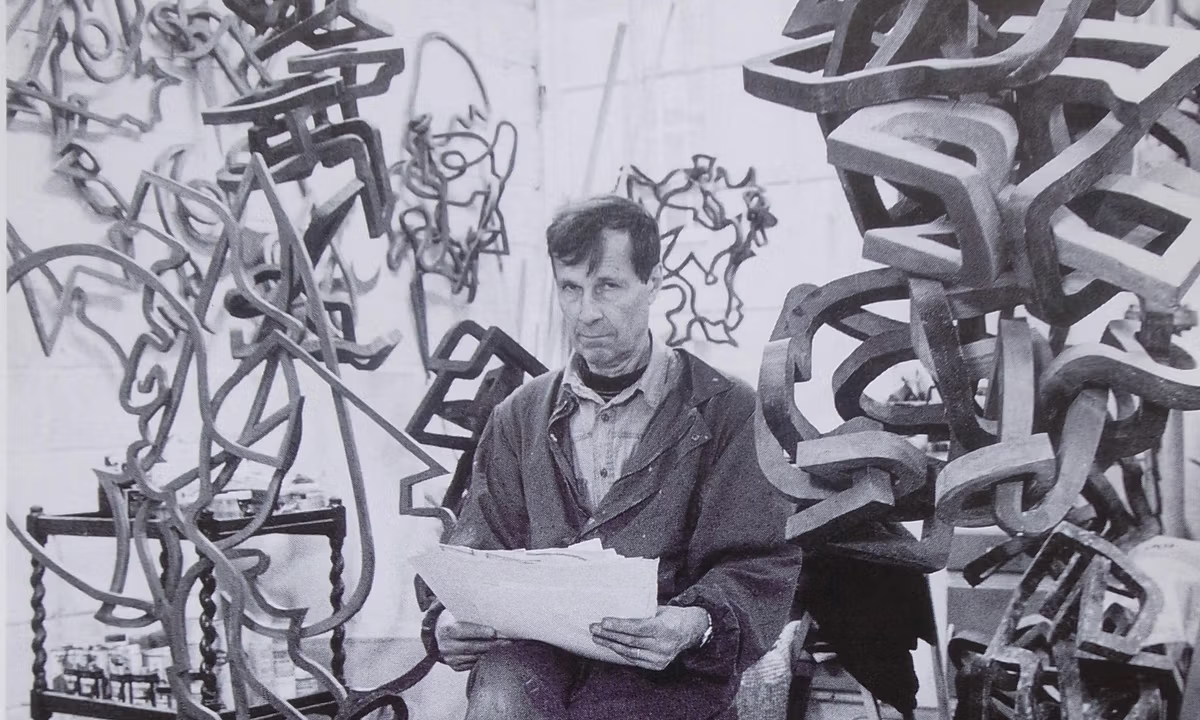
Oleg Prokofiev’s sculptures hung at Prokofiev Studio in London Courtesy of Prokofiev Studio
The archive—featuring abstract artworks from the 1950s alongside letters, postcards, sketchbooks, sculptures and other lost paintings—will now be housed at Prokofiev Studio, which aims not only to preserve his legacy but to create a new interdisciplinary arts space. “First and foremost we are making Oleg Prokofiev’s artwork available for the public to see in the flesh and enjoy, and with that we hope to reintroduce his work to the art world and have his unique artistic approach recognised,” Gabriel says.
He added that the family also hopes to revive a broader culture of collaboration. “My father and grandfather lived in eras when there was much more communication between different art forms; poets, composers, artists, filmmakers met up, shared ideas, inspired each other. We’d love the new studio to be a meeting place for that kind of community.”

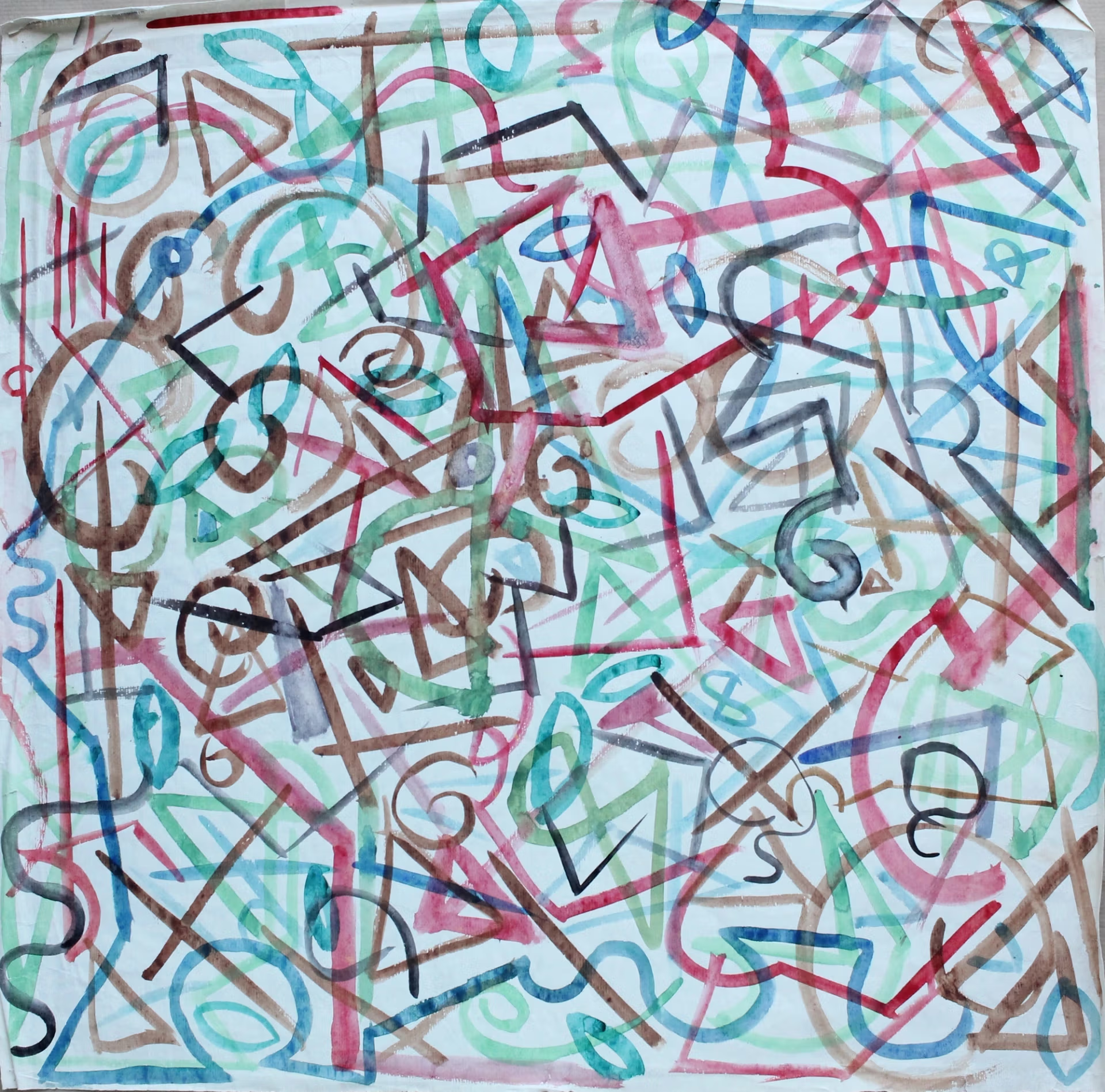
Oleg Prokofev’s Color abstraction (1957-58) Courtesy of Prokofiev Studio
The opening exhibition will include an immersive reconstruction of Prokofiev’s 1990s studio in Hackney Wick. Explaining the timing of the project, Gabriel says: “We’ve been wanting to bring the works out of storage for many years, but it took a while to find the right place. When I came across this studio in Dalston I got very excited; it has really great light and a very open and positive feel to it.”
Looking ahead, he added: “We’re also excited to show other artists’ work alongside Oleg’s. I think he’d like the spirit of us bringing together many local artists—giving people a platform for their work.”
• Bending Time, Prokofiev Studio, London, 1-29 May


