







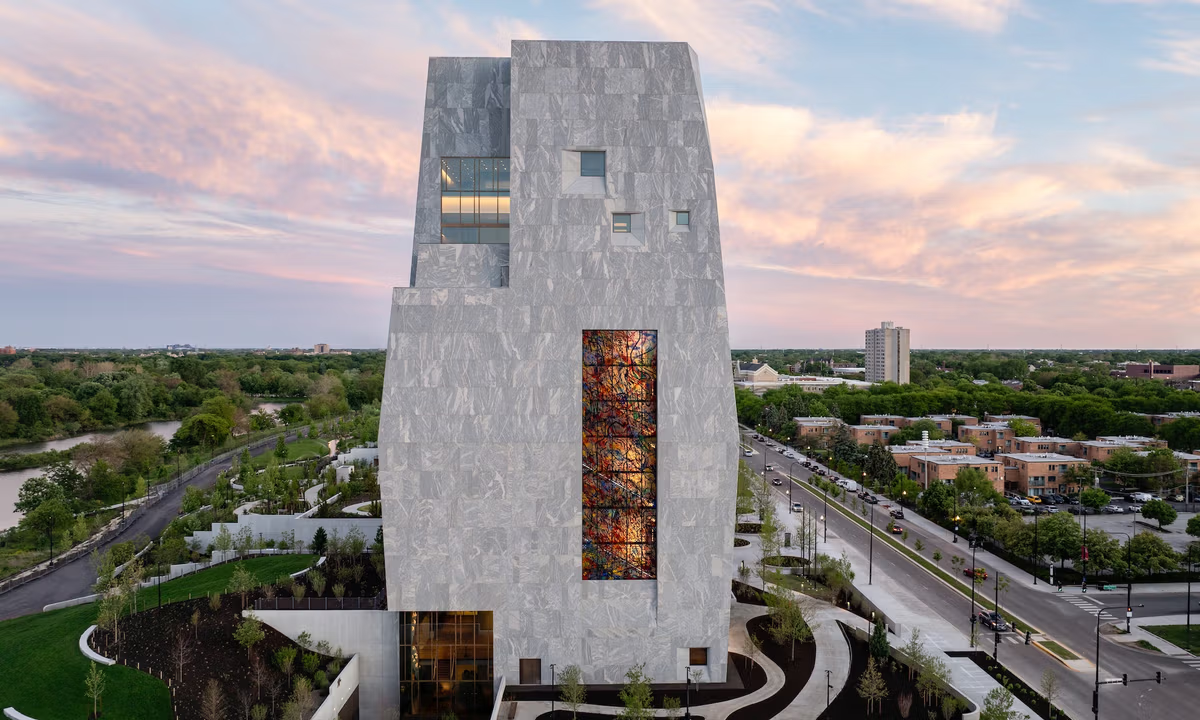
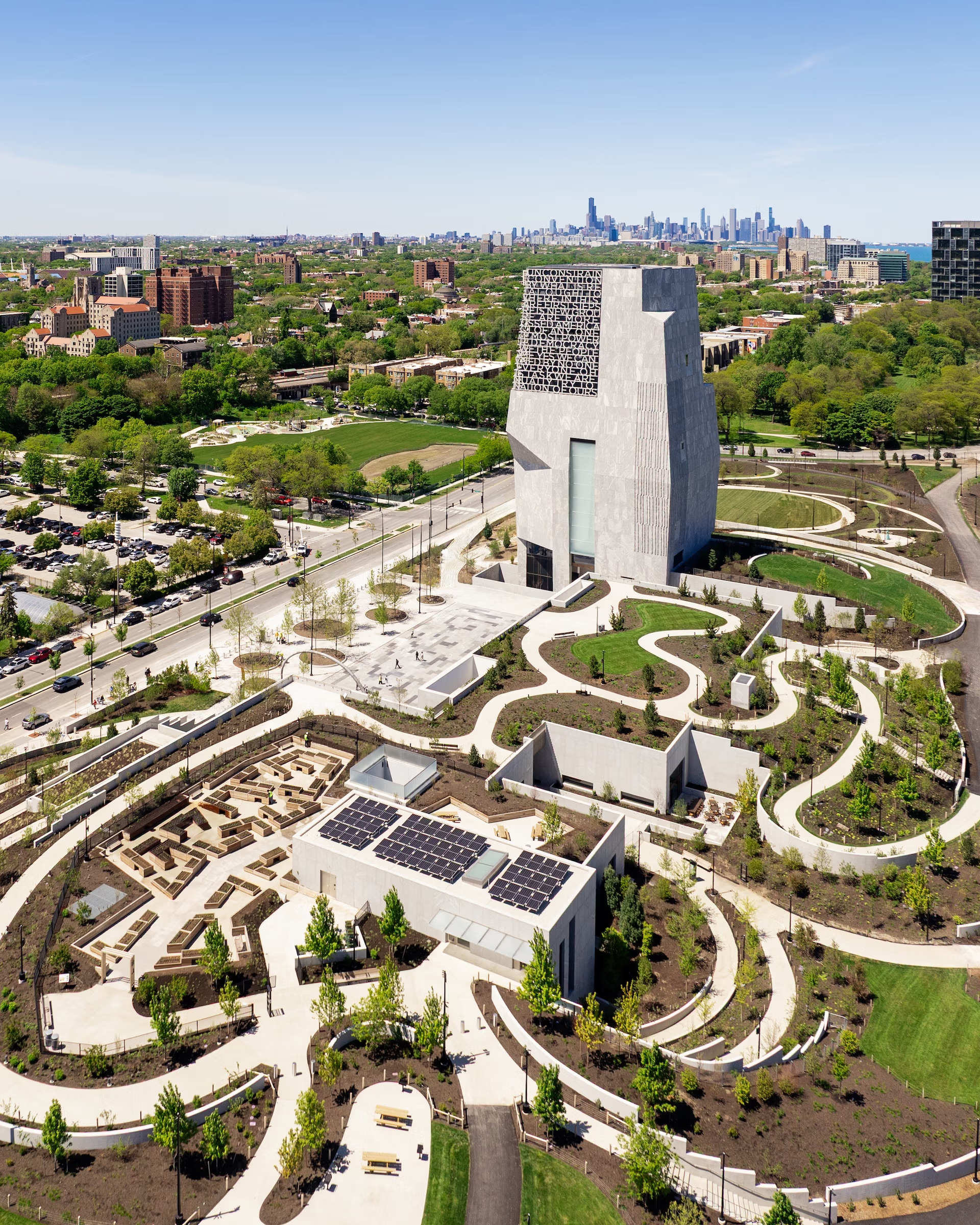
The centrepiece of the Obama Presidential Center (OPC), located in the Hyde Park neighbourhood eight miles south of Chicago’s downtown, is a towering, granite-clad museum designed by Tod Williams Billie Tsien Architects. The $850m complex opens to the public today, on Juneteenth, a strategic and symbolic decision as 19 June is now a US federal holiday commemorating the emancipation of enslaved African Americans.
Over the past several years, the OPC slowly revealed the names of 30 artists commissioned to create 28 site-specific works for the campus, beginning with the late Chicago sculptor Richard Hunt, whose bronze Book Bird now stands in the courtyard of the new public library branch that is part of the 19.3-acre campus. Maya Lin, who received a Presidential Medal of Freedom from President Barack Obama in 2016, was another early commission. Obama has long admired Lin’s sculpture and landscape art, and her stone-and-water piece, Seeing Through the Universe, is installed in a small outdoor terrace named in honour of the former president’s mother, Ann Dunham.
Njideka Akunyili Crosby, The Obamas: Springing Forth, 2026 © Njideka Akunyili Crosby. Courtesy of the artist, Victoria Miro, and David Zwirner. Commissioned by The Obama Foundation. Photo: Marten Elder. Courtesy of The Obama Foundation
One of the most recent commissions to be revealed, just this week, is The Obamas: Springing Forth, a dual portrait of Michelle and Barack Obama by Njideka Akunyili Crosby incorporating imagery from archives, ephemera, family photo albums and more that refers to their respective journeys.
When the Obama Foundation hired Louise Bernard as museum director in 2017, the process of selecting artists to commission for projects was already under way. Bernard worked closely with Virginia Shore, the curator of commissions for the foundation and principal of the Washington, DC-based Shore Art Advisory—whose understanding of materials, scale and budgets for large projects was honed during her tenure as the chief curator of the Art in Embassies Program at the US Department of State.

The Obama Presidential Center Museum in Chicago Courtesy The Obama Foundation. Photo by Angie McMonigal
Having art embedded throughout the campus was always part of the plan. Bernard says that besides the natural desire to enliven the spaces, the Obamas wanted to present a range of voices and visions that reflected the American experience. “Art was a good way to do this,” she says.
History lesson meets motivational seminar
The museum charts the journeys of Barack and Michelle Obama, the US’s first Black president and first lady, whose lives together began in Chicago. It also lays out important events, social movements and initiatives enacted during the eight years of the Obama administration, replete with projections, audio and interactive displays.

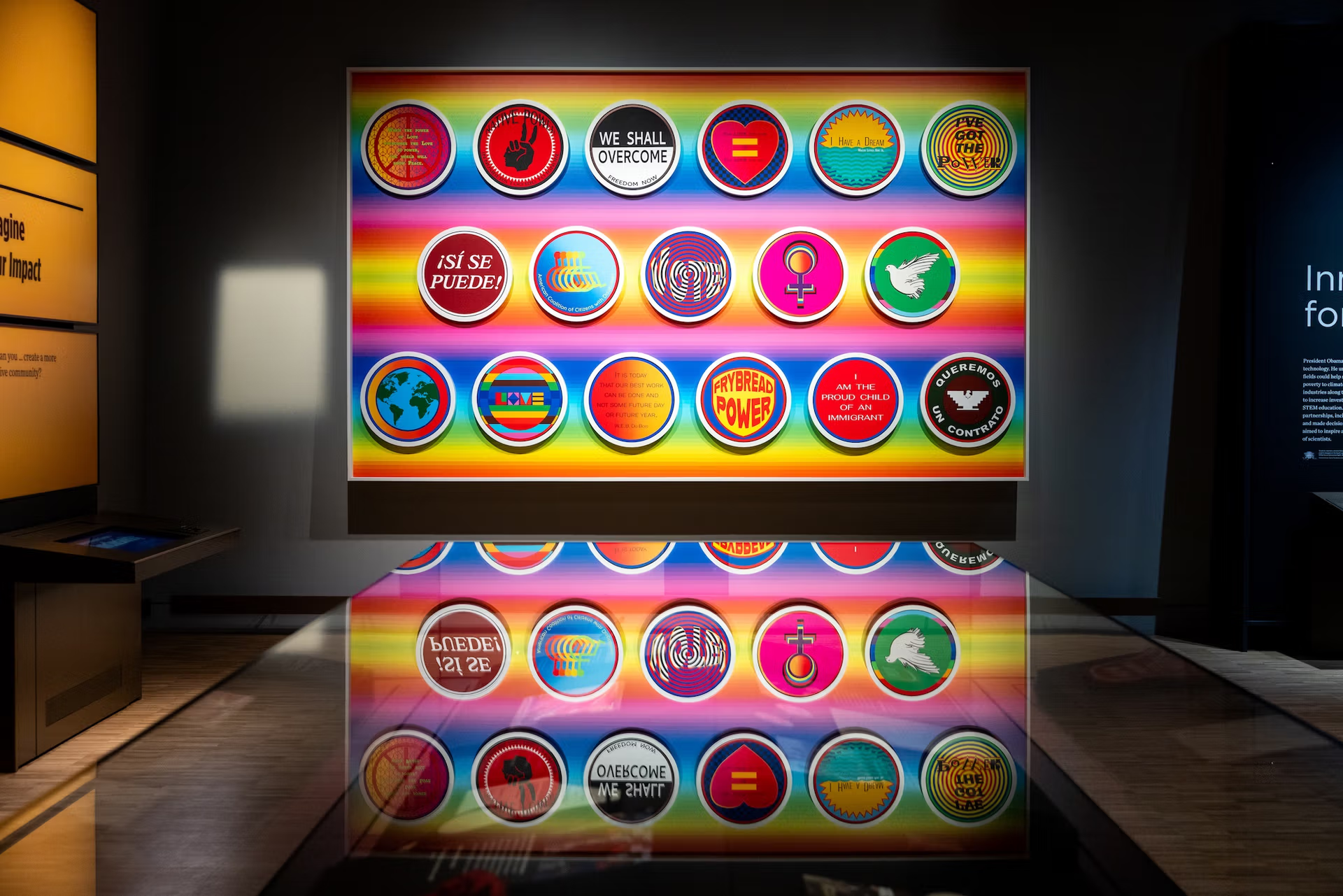
Yet With a Steady Beat by Jeffrey Gibson at the Obama Presidential Center Museum in Chicago Courtesy The Obama Foundation. Photo by Taylor Glascock
Bernard, who had worked in exhibitions for the New York Public Library before joining the OPC, also once worked for Ralph Appelbaum Associates, the museum design firm hired by the foundation. Appelbaum tapped the Chicago-based firm Civic Projects as the local partner and Electrosonic for audiovisual design in putting together narrative environments. Together, they have created a visitor experience that offers a history lesson mixed with a motivational seminar and supercharged with exceptional production values.
The exhibition begins on level two and culminates in the Sky Room at the top of the eight-storey museum building, a light-filled open space as commanding as its name implies. The view from there is through a screen of enormous cast-concrete letters that wrap around the southwest corner of the tower as part of its façade. The words are from Barack Obama’s 2015 speech in Selma, Alabama on the occasion of the 50th anniversary of the historic civil rights marches from there to Montgomery.
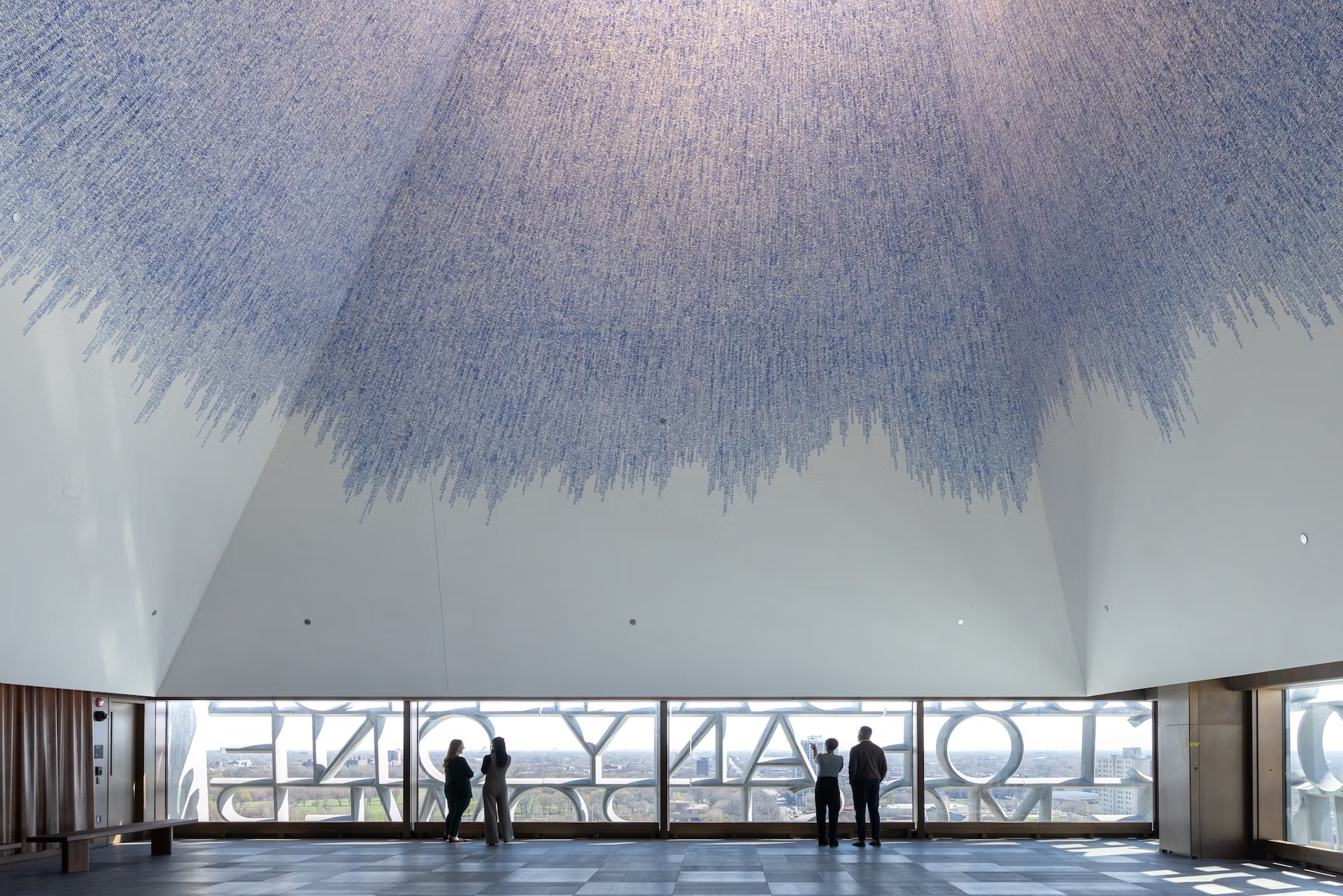
Idris Khan’s Sky of Hope in the Sky Room at the Obama Presidential Center Museum in Chicago Courtesy The Obama Foundation. Photo by Taylor Glascock
The British artist Idris Khan transformed that great room’s ceiling into Sky of Hope, a site-specific installation that consists of thousands of hand-stamped overlapping words in blue radiating from the apex of the white ceiling, also referencing the Selma speech. Benches along the back wall invite visitors to sit and contemplate. Outside of that Sky Room are a photography installation by Carrie Mae Weems titled The Cool Blue Wind and Freedom Riders, a text-based painting by Jenny Holzer, who used declassified FBI files as her source material.

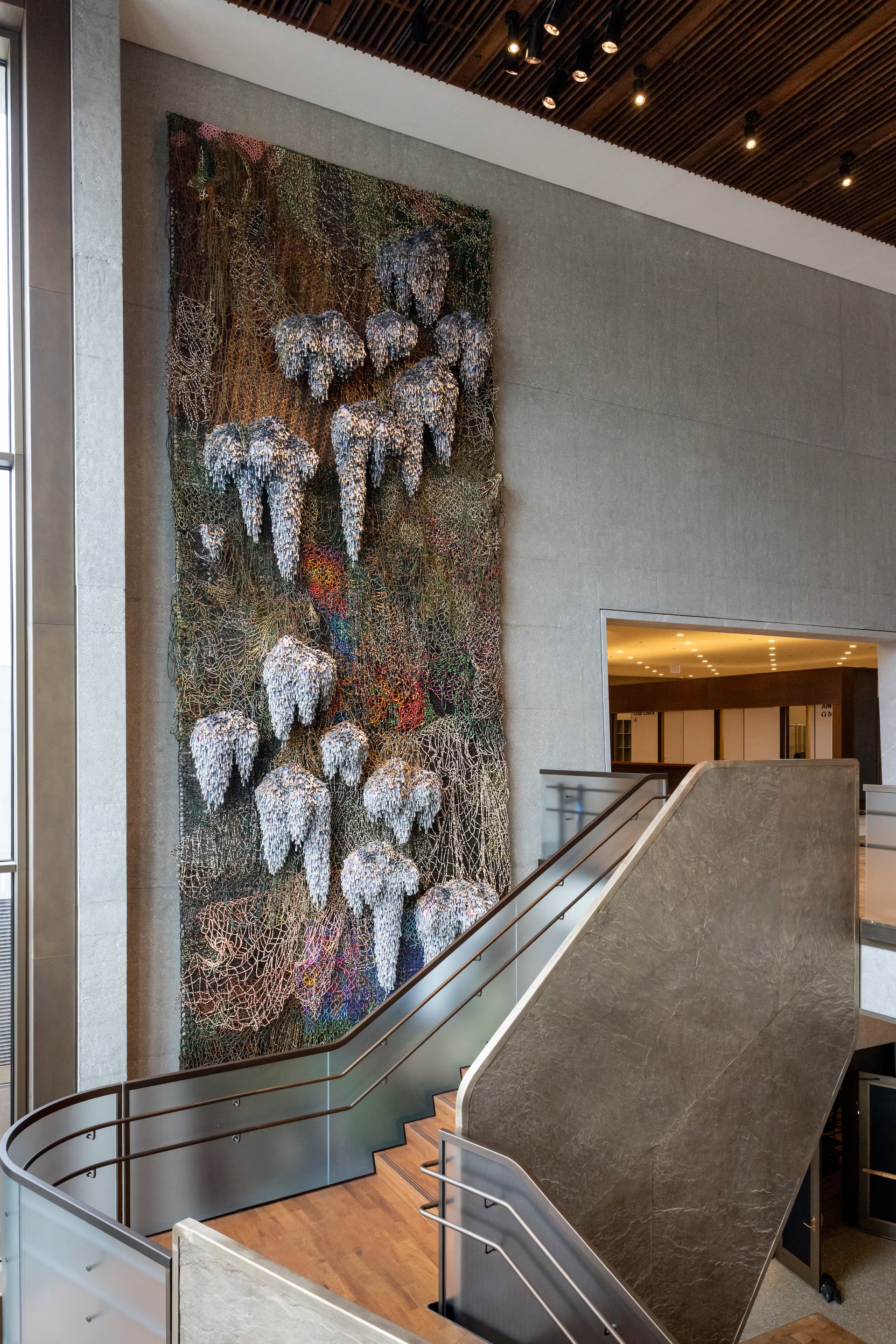
This Land, Shared Sky by Marie Watt in collaboration with Nick Cave in the Obama Presidential Center Museum in Chicago Courtesy The Obama Foundation. Photo by Taylor Glascock
There is a fee to enter the museum floors (full adult admission is $30, $26 for Illinois residents), but the gardens and plazas, library, athletic facility, café and interior lower floors of the tower that connect to the auditorium building are free and open to the public. There is plenty of art to see outside of the ticketed spaces, including Mark Bradford’s 38ft-tall textured map painting, City of the Big Shoulders, in the museum building’s atrium, and a massive wall relief by Nick Cave and Marie Watt, This Land, Shared Sky. The latter is an inspired collaboration that mixes the nets and beads that Cave has worked with in making his Soundsuits wearable sculptures, along with clusters of tin jingles—made from rolled-tin tobacco lids and used in ceremonial regalia—that Watt, an enrolled member of the Seneca Nation of Indians, often uses in her work.
Inspirational names
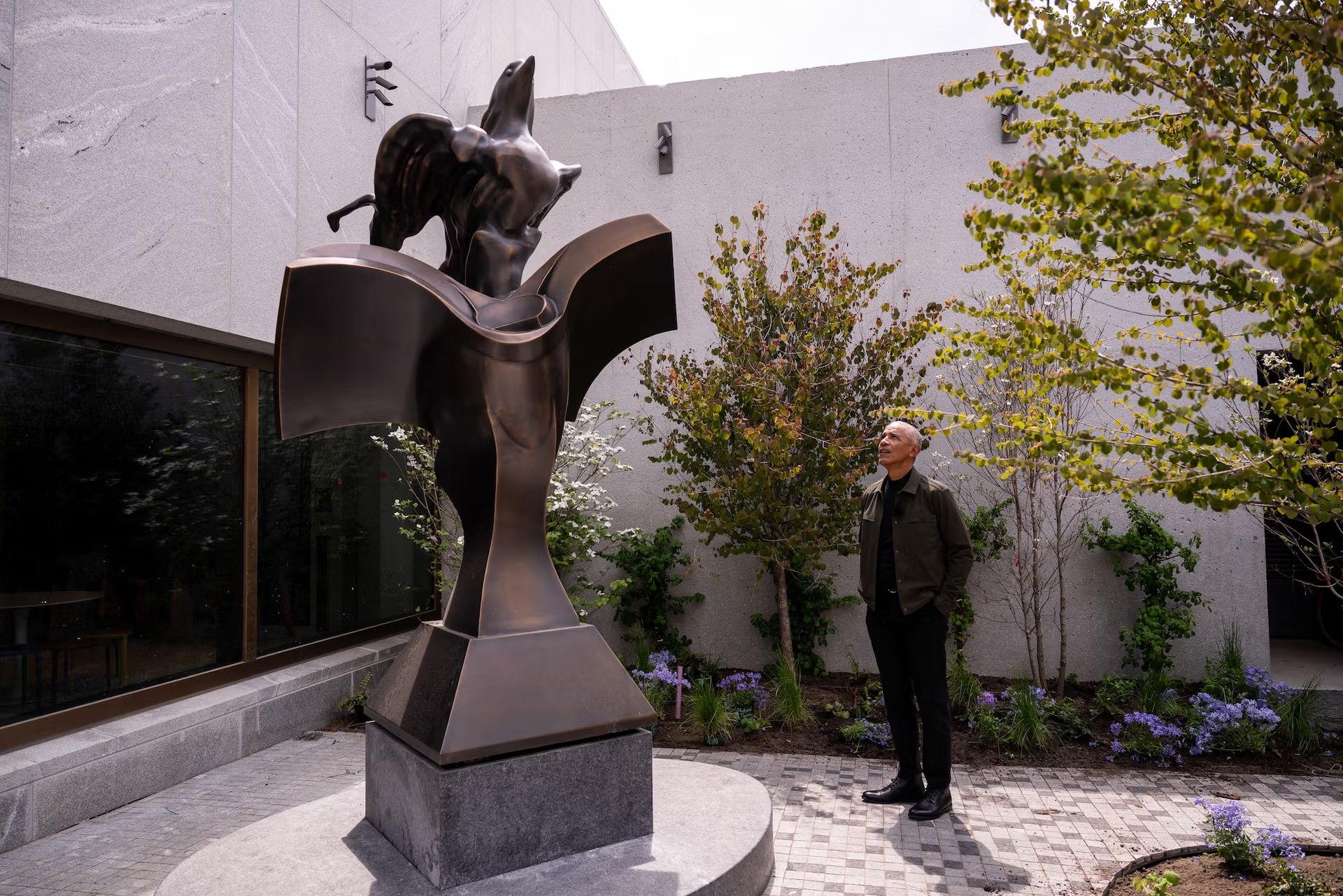
Book Bird by Richard Hunt in the library and reading garden at the Obama Presidential Center in Chicago Courtesy The Obama Foundation
Every corridor, nook and landing across the campus is seemingly named after an inspirational figure, like the voting rights activist Fannie Lou Hamer, the marine biologist and writer Rachel Carson, the writer and Holocaust survivor Elie Wiesel and the publisher John H. Johnson, to name a few. The main plaza is dedicated to John Lewis, one of President Obama’s heroes. Lewis, who represented Georgia in Congress from 1987 until his death in 2020, was on the frontlines in the 1965 march from Selma to Montgomery and was brutally beaten by state troopers.
The Obamas set out to create a public space that resonates with hope, celebrates the rewards and challenges of public service, and chronicles the work of preserving democracy—and they have largely succeeded. Yes, there is a gift shop where the word “Hope” can be found on all manner of merchandise, but the OPC is generally a place free of gold-plated fripperies. It is defined by the cool elegance and inspirational grandeur of tall interiors filled with big ideas.
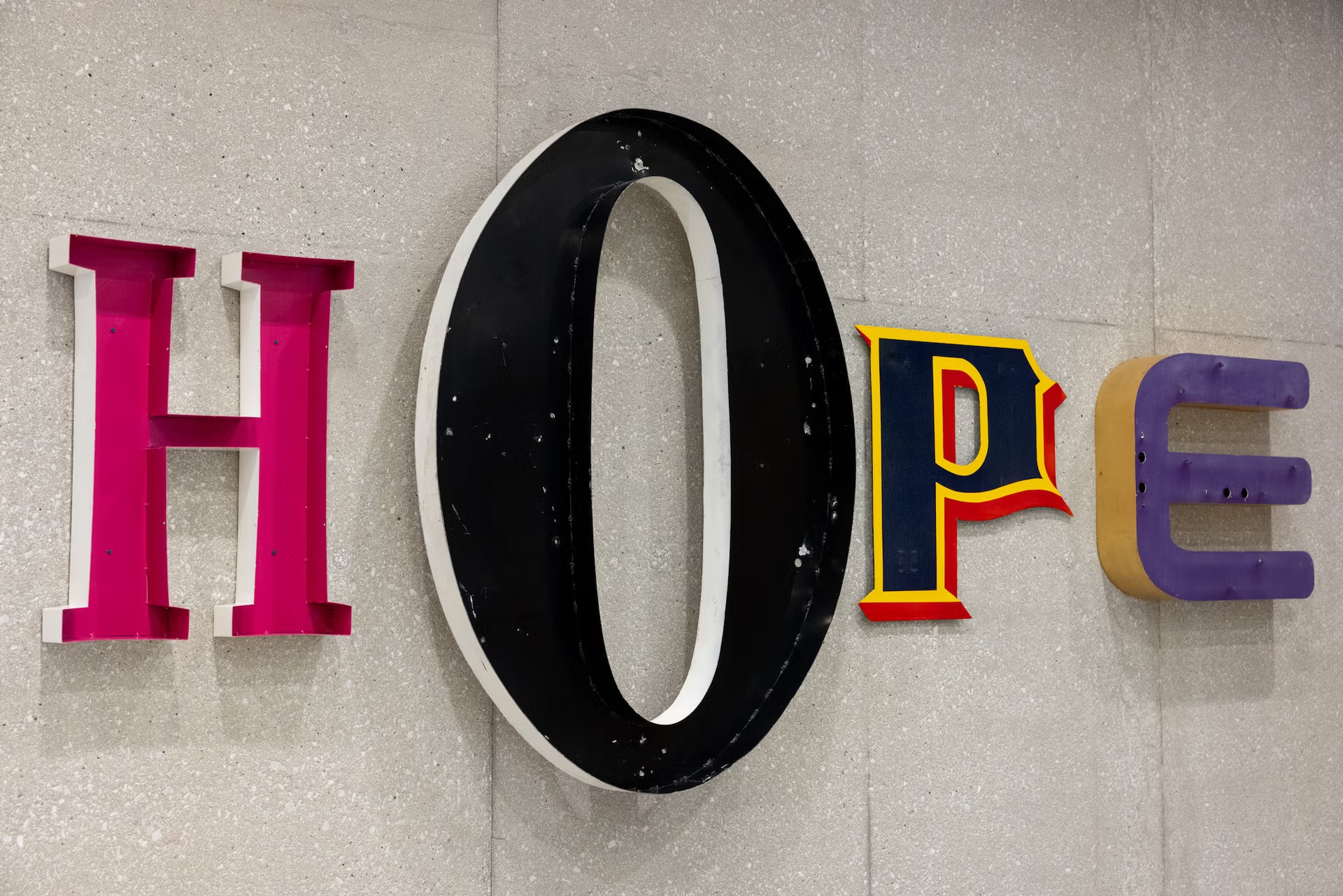
HOPE by Jack Pierson in the entryway pavilion at the Obama Presidential Center Museum in Chicago Courtesy The Obama Foundation. Photo by Taylor Glascock
Staff have said that, during the centre’s soft opening, they witnessed many visitors who were visibly moved after touring the exhibitions. There is undoubtedly something moving about the experience, perhaps related to how far this country has come, and how much it has lost. This dual awareness evokes another of Obama’s speeches: the one about unity that launched him into the political stratosphere at the 2004 Democratic National Convention. Is it possible that Obama was wrong and there really are two Americas? This is the thought that comes to mind 22 years later, walking out of the OPC and passing under Martin Puryear’s elegant commission, Bending the Arc, hand carved from a 34ft-long wood beam, as a patriotic fighting cage was being erected on the White House lawn.


