






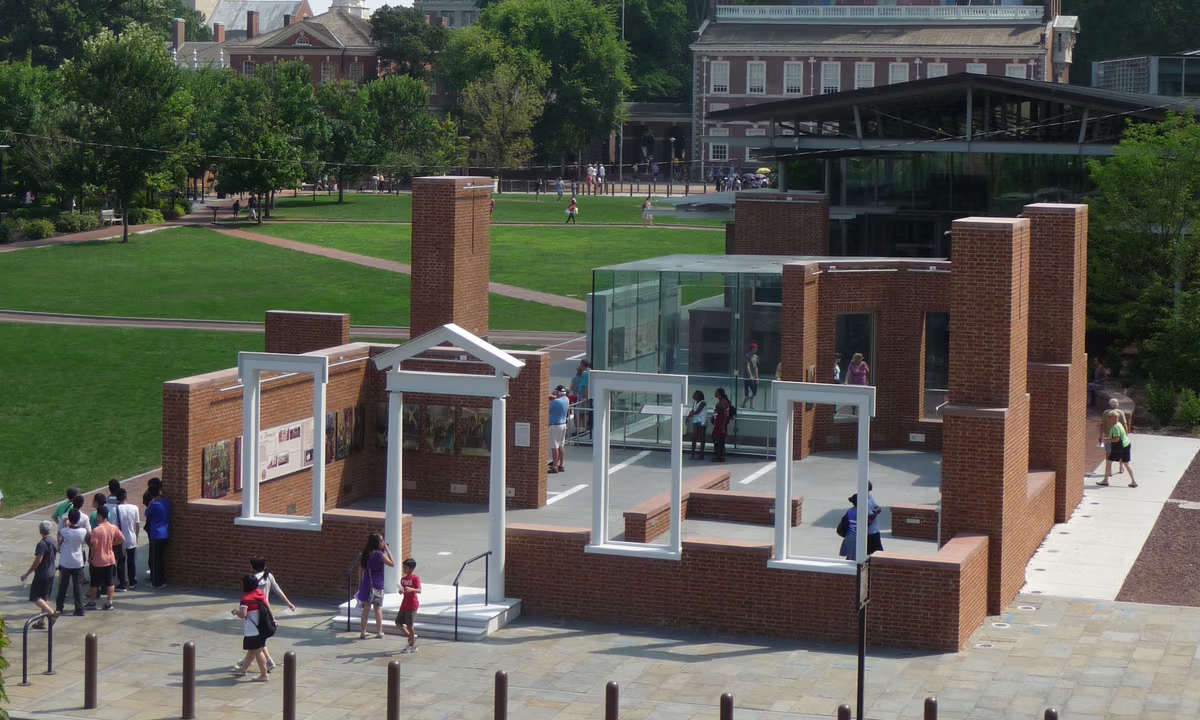
Following the removal of a slavery exhibit at the former presidential homes of George Washington and John Adams in Philadelphia earlier this month, the municipal government is suing the US Department of the Interior and the National Park Service (NPS), claiming that the NPS acted outside of its authority.
The exhibits memorialised the nine individuals Washington enslaved during his tenure in Philadelphia as the nation was being founded. The Trump administration had targeted this display as part of its broader review of national park materials that might “innappropriately disparage” the United States. According to Courthouse News, the removal of the exhibit, entitled “The President’s House: Freedom and Slavery in the Making of a New Nation”, was originally supposed to take place four months earlier, on 17 September 2025.
The informational didactics and video content did not come down until around 22 January. The exhibit was originally designed as part of an agreement between the city of Philadelphia and the NPS in 2006. The agreement designated that the NPS and the city had equal rights to final design approval; the city alleges that while the federal agency was granted full property rights to the project in 2015, that transfer of power did not include any rights to alterations.
“The city’s right to approve the exhibit’s final design, including the interpretive displays, would be meaningless if the NPS could at any time later change or remove the displays without the city’s approval,” the city’s complaint, filed on 22 January in the US District Court for the Eastern District of Pennsylvania, reads in part. “Moreover, the city’s transference of its copyrights in President’s House to the NPS did not include the authority to materially alter or destroy altogether the exhibit underlying the copyright.”
In addition to the Department of the Interior and NPS, the lawsuit names secretary of the interior Doug Burgum and acting director of the NPS Jessica Bowron as defendants.
The city claims that the Interior Department did not seek approval from Philadelphia officials before removing the exhibits, arguing that the NPS used the Administrative Procedure Act to enact a vengeful and underhanded task.
“Defendants have provided no explanation at all for their removal of the historical, education displays at the President’s House site, let alone a reasoned one”, the city’s complaint alleges.
In a statement to Courthouse News, an Interior Department spokesperson cited Trump’s March 2025 executive order, “Restoring Truth and Sanity to American History”, and added: “We encourage the city of Philadelphia to focus on getting their jobless rates down and ending their reckless cashless bail policy instead of filing frivolous lawsuits in the hopes of demeaning our brave founding fathers who set the brilliant road map for the greatest country in the world—the United States of America.”
The Interior Department’s particular umbrage with the “The President’s House: Freedom and Slavery in the Making of a New Nation” exhibit mirrors a broader effort to strike down diversity, equity and inclusion initiatives across the country. The exhibit told “the story of the paradox of liberty and enslavement in one home—and in a nation”, according to its online description, highlighting the lived experiences of the nine enslaved Africans who lived in Washington’s home.
“Donald Trump will take any opportunity to rewrite and whitewash our history — but he picked the wrong city and the wrong Commonwealth,” Josh Shapiro, the Democratic governor of Pennsylvania (and a possible presidential candidate in 2028), said in a statement accompanying an amicus brief filed in support of Philadelphia’s lawsuit. “In Pennsylvania, we learn from our history, even when it’s painful. We don’t erase it or pretend it didn’t happen. Because when we know where we’ve been, we can chart a better course for the future. Those displays aren’t just signs—they represent our shared history, and if we want to move forward as a nation, we have to be willing to tell the full story of where we came from.”


