








The Phoenix Art Museum has acquired 185 works of modern and contemporary Native American art from the collector William P. Healey, the largest gift of Native American art in the institution’s history. The collection, assembled over the past decade with the guidance of the Diné artist Tony Abeyta, will anchor a new show, The Way We Came: A Century of Indigenous Art, opening at the museum on 26 August.
The show will be co-curated by Abeyta, whose own work is included in the gift, and JoAnna Reyes, the museum’s adjunct and non-Native curator of the Americas. Other artists featured in the gift include Jaune-Quick-to-See Smith (Confederated Salish and Kootenai), Fritz Scholder (Luiseño), Allan Houser (Apache), T. C. Cannon (Kiowa, Caddo), Kay WalkingStick (Cherokee) and Emmi Whitehorse (Navajo).
Of the 99 artists represented in the Healey collection gift, only one reflects the Tribes in the Phoenix area: Michael Chiago, who hails from the Tohono O’odham and Pima-Maricopa nations. The Akimel O’odham, on whose ancestral homelands Phoenix resides, appears to have no representation in the collection.
Laurie Steelink, an Akimel O’odham artist based in Los Angeles, was previously featured in the 2022 exhibition Desert Rider at the Phoenix Art Museum and considers herself, at 65, still in the process of reconnecting with her nation. Steelink was adopted before the 1978 Indian Child Welfare Act protecting Native youth from government adoption programmes operating under the “kill the Indian to save the child” mission, designed initially for 19th-century Indian boarding schools. The shortage of local Tribal artists in the gifted collection reflects “a gap between community stewardship and institutional collecting”, Steelink says.
Jaune Quick-to-See Smith, Xeriscape, 1991 William P. Healey Collection of Native American Art at Phoenix Art Museum, Gift of William P. Healey. Photo: Davin Lavikka. Courtesy of the Estate of Jaune Quick-to-See Smith and Garth Greenan Gallery, New York.
Reyes and Abeyta’s exhibition of works from Healey’s gift is framed in relation to the concept of “survivance” as defined by the scholar Gerald Vizenor (Anishinaabe): an active sense of presence and ongoing resistance that defies colonial narratives of Indigenous erasure and victimhood. The exhibition is being managed without permanent Native curatorial staff.
“Survivance does actually feel like it can encompass some of it,” says Joseph Pierce (Cherokee Nation), an associate professor at Stony Brook University and recent Ford Foundation Scholar in Residence at the Museum of Modern Art in New York, whose 2025 book Speculative Relations is about approaching art and culture through a framework of reciprocity and care rather than as objects of study. “Survivance makes sense if you’re thinking about works from the early 2000s. This isn’t an acquisition about right now, it’s an acquisition about the last 50 years.”
This acquisition by the Phoenix Art Museum is the third large gift of modern and contemporary Native American art to a major US museum in the past year, following the Art Bridges Foundation and Crystal Bridges Museum of American Art last July and the New York Historical last February. The gift expands the Phoenix Art Museum’s American art collection––comprised of around 600 objects––from approximately 25 Native works to more than 200.

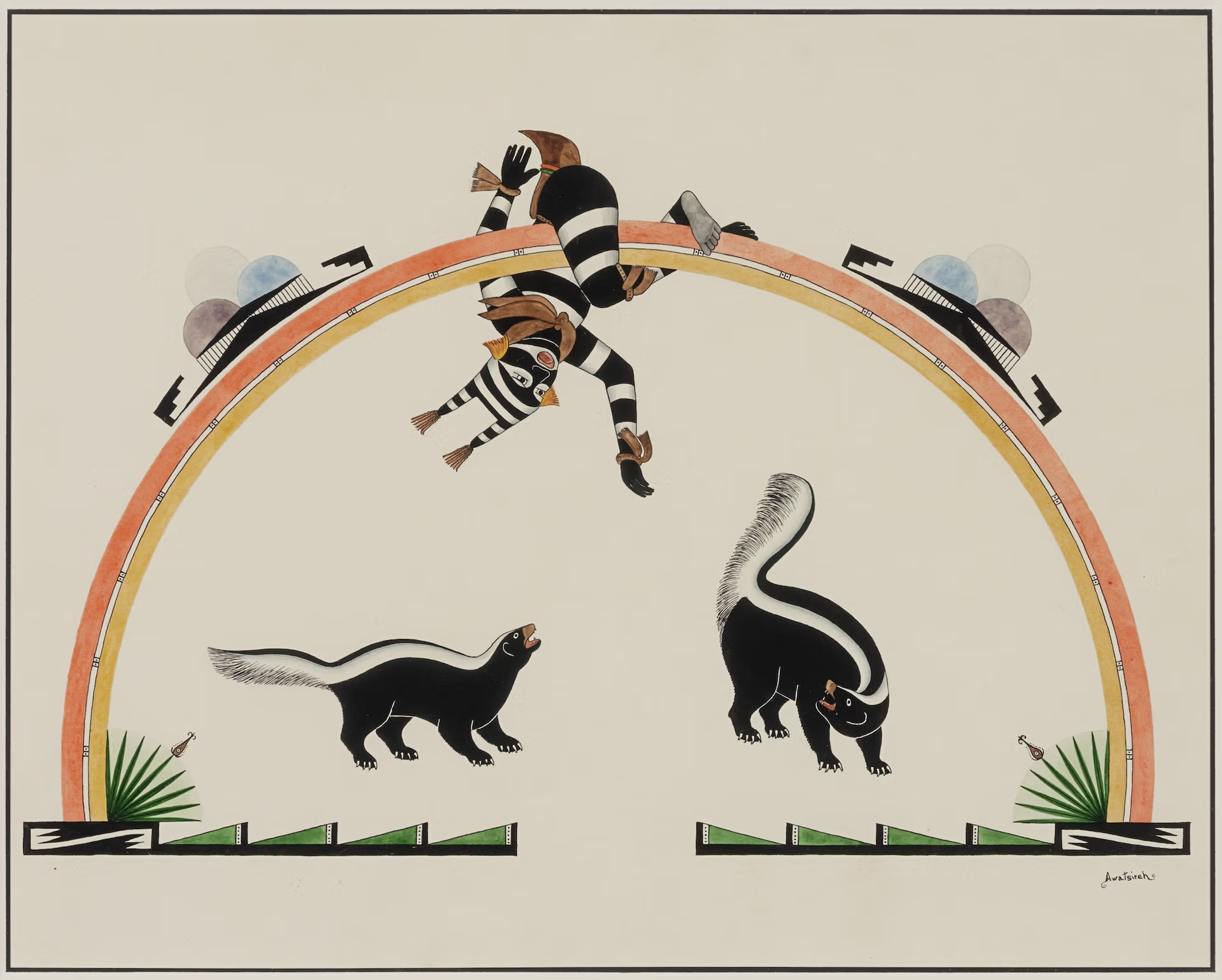
Awa Tsireh (Alfonso Roybal), Untitled, around 1930s. William P. Healey Collection of Native American Art at Phoenix Art Museum, Gift of William P. Healey. Photo: Davin Lavikka
The majority of the artists represented in all three gifted collections are deceased, meaning the receiving institutions acquire cultural capital of Indigenous artistic production without the ongoing financial and relational investment that living artists require––no studio visits, no commissions and no community engagement.
“These donations are so celebrated but they are still informed by colonial histories that art collectors are embedded into regardless of the cultural sensitivity or consultation,” says Demian DinéYazhi, a Diné transdisciplinary artist who was featured in the 2024 Whitney Biennial.
“It’s really exciting on the one hand because these artists deserve to be recognized and have they work preserved; it’s also a reminder of vast resources prioritised to recognise collectors and their legacy.” says DinéYazhi. “Imagine how these resources could impact regional Native communities and independent curators, writers and artists.”
Pierce adds: “Artists that have gallery representation, those galleries are helping take the artists to art fairs and are helping frame the visibility of those artists, which is something that the deceased artists have no need for because they’re not here anymore.”
The Phoenix Art Museum has made no concrete commitment to hire a Native curator for the stewardship of the 185 works gifted by Healey, though its director Jeremy Mikolajczak says that is “our intention, yes, absolutely”.


