




Plans to extend the Mexico-US border wall through parts of Val Verde County, Texas, are drawing concern from archaeologists and local landowners, who warn that construction could damage prehistoric rock art sites in the Lower Pecos region.
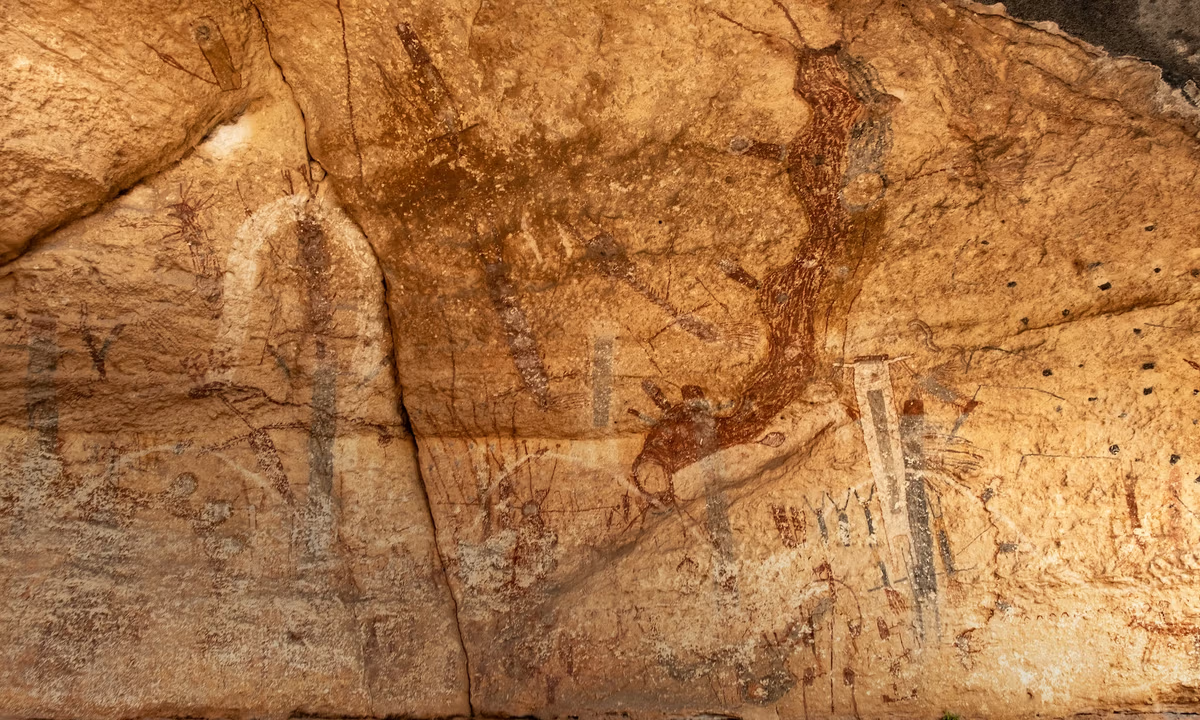
Residents near the Rio Grande, including the landowner Raymond Skiles Jr., told the local news station KSAT that they have received federal notices indicating that a wall could cut directly across private property in the rugged terrain west of Del Rio, Texas, near where the Pecos River flows into the Rio Grande. The area is home to hundreds of rock art murals in the Pecos River style, some of which were created as early as 5,700 years ago. According to Carolyn Boyd, an archaeologist at Texas State University and the founder of the Shumla Archaeological Research & Education Center, the region was designated a National Historic Landmark in 2021, underscoring its extreme importance.
“Yet, here we are today—faced with the possibility that the very government that assigned this designation (and) recognised its importance—may be responsible for its destruction through the (border) wall,” Boyd told KSAT.
The Lower Pecos River near the confluence with the Rio Grande along the Mexico-US border Photo by Chris Vreeland, via Flickr
Last year, when a study co-authored by Boyd revealed the 4,000-year range during which the murals were painted, she told Live Science: “Many of the 200-plus murals in the region are huge; some span over 100ft long and 20ft tall and contain hundreds of skillfully painted images.” She likened the canyons where the murals were created to an “ancient library containing hundreds of books authored by 175 generations of painters”.
Boyd estimates that around 80 known sites would fall south of the proposed wall, with an additional 13 within 500m of it. Skiles and others fear that construction vibrations could destabilise rock surfaces and permanently damage the art.
In a statement, a spokesperson for US Customs and Border Protection told KSAT that the agency had conducted outreach and environmental assessments for the project and aims to mitigate impacts on cultural and environmental resources. However, some residents and researchers remain sceptical; neither Boyd nor Skiles was aware of any public outreach related to the border wall construction.
The timeline for the border wall’s extension across Val Verde County remains uncertain, and negotiations over the broader Big Bend segment are ongoing. For now, the fate of the Pecos River rock art remains unresolved.