







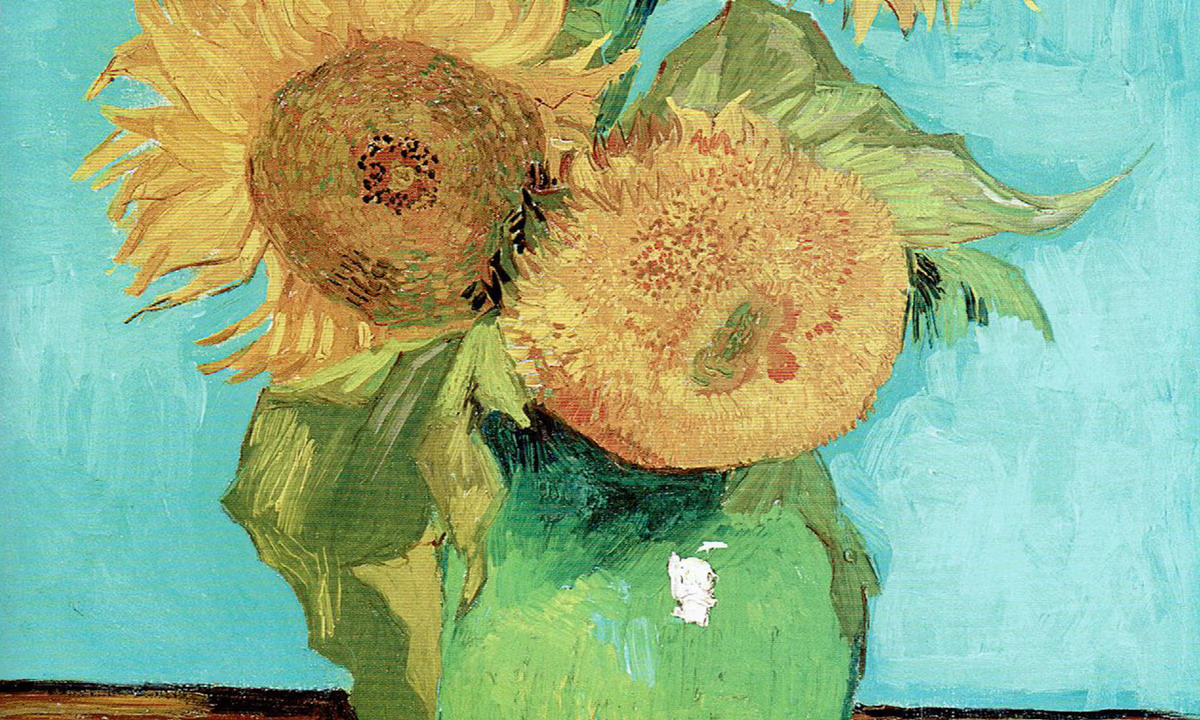
Three Sunflowers, with its exuberant colouring, was the first of the four sunflower still lifes which Van Gogh painted in Arles in August 1888. This painting has always been locked away in private collections, so it is little known. But there is a surprise: it’s framing. Sadly, the frame has disappeared, but we are now able to reconstruct what it looked like with the sunflower painting.
The Three Sunflowers frame was covered with a very dark lacquer and decorated with randomly placed gold circles. What is most unusual is that the outer edges were not straight, but they were partly set back at a slight angle. This would be a curious design for a frame for any painting, but it is even more astonishing for a Van Gogh masterpiece.
In 1912 Three Sunflowers had been acquired by the successful Paris couturier Jacques Doucet. The secret of how he displayed the Van Gogh in his Art Deco home has now emerged, with the first clue being a small corner of the painting which appears in a 1930s photograph. This shows the interior of the Paris residence of Doucet’s nephew Jean.
Revealed: part of Three Sunflowers in the upper-right corner, in the residence of Jacques Doucet’s nephew, Jean Dubrujeaud (1930s)
Maison et Jardin magazine, December 1961
Look carefully, and one can just make out part of Three Sunflowers hanging in the upper-right corner. This was spotted by Art Deco specialist Alexandra Jaffré, who is now working on a book on Doucet as a collector.
What makes this photograph particularly important is that it reveals the unusual frame which Doucet commissioned for Three Sunflowers soon after acquiring the Van Gogh. The frame can now be identified as one which was sold in 1989 by Sotheby’s. At the sale, it was suggested that it might have belonged to Doucet, but with no indication of what painting had once hung in it.

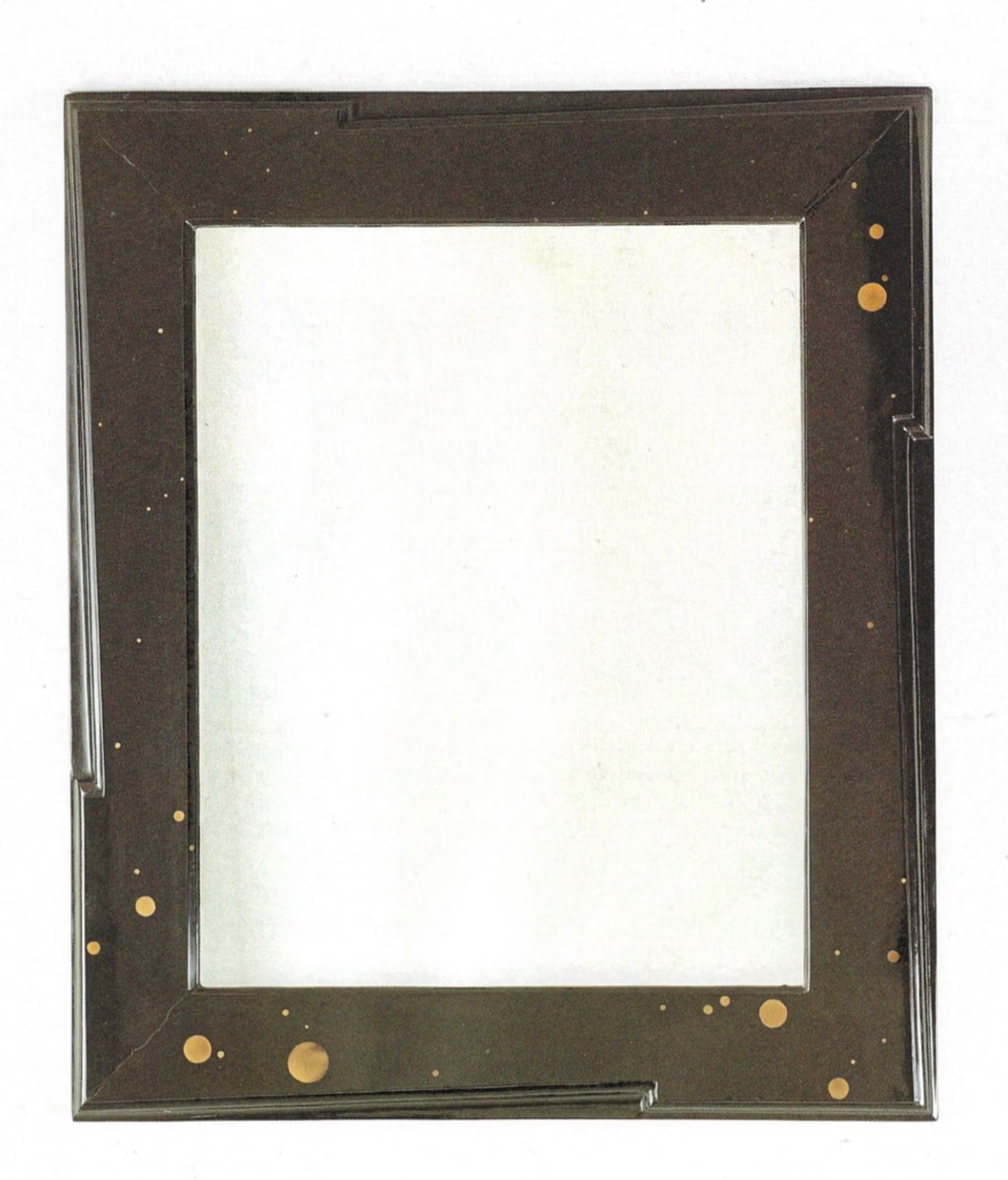
Doucet’s frame for the Three Sunflowers (around 1913-20)
Sotheby’s, New York, 6 May 1989, lot 52
After being able to link the painting and the frame, we approached the museum which houses part of Doucet’s collection, the Musée Angladon-Collection Jacques Doucet in Avignon. Its director, Lauren Laz, then unearthed a family archival photograph of Paulette Angladon-Dubrujeaud, a member of the Doucet family. Dating from 1967, she is holding Three Sunflowers in its Doucet frame.

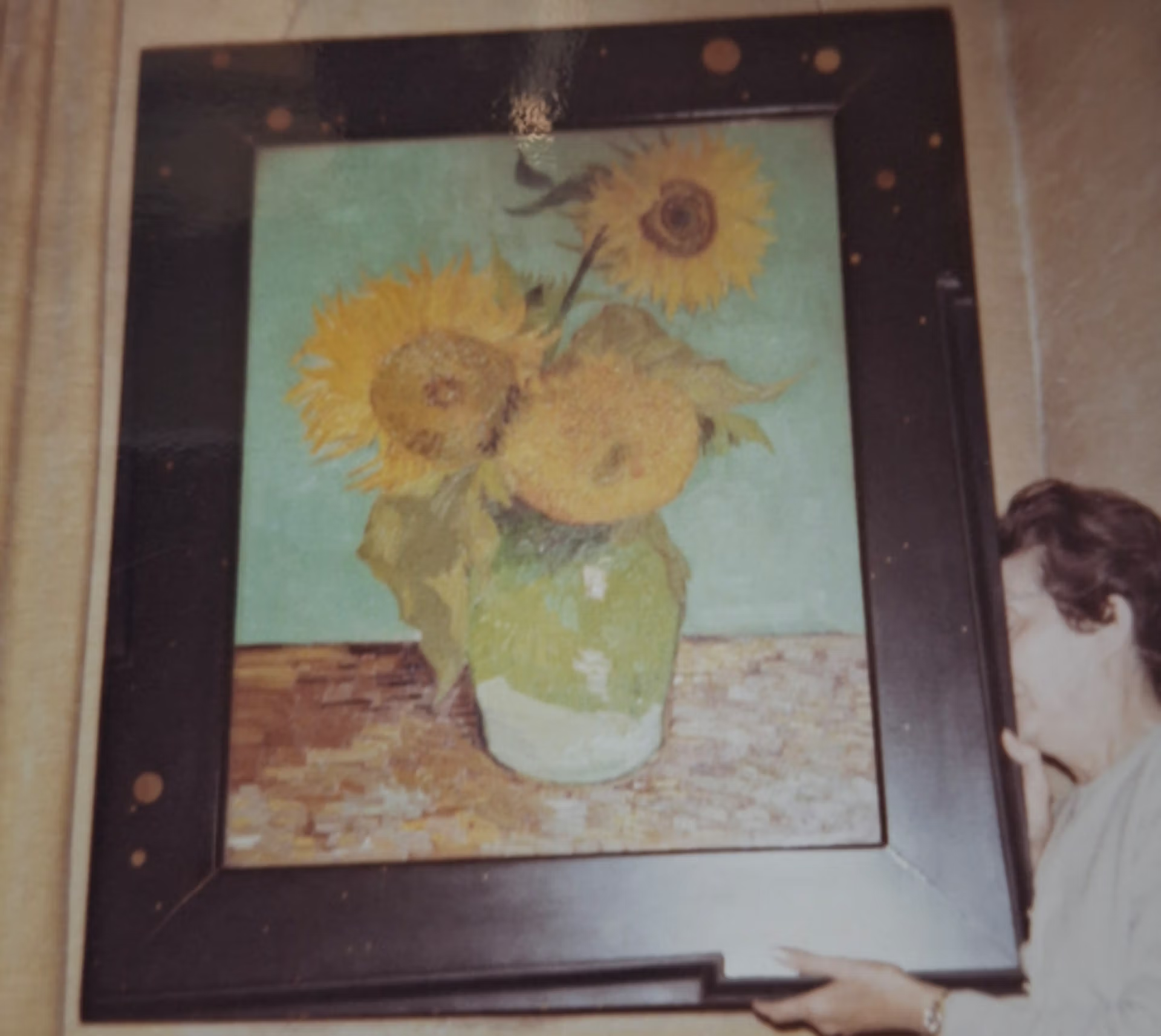
Paulette Angladon-Dubrujeaud with the framed Three Sunflowers in the residence of her father-in-law Jean Dubrujeaud in Paris (1967)
Musée Angladon-Collection Jacques Doucet, Avignon (Archives de famille © Fondation Angladon-Dubrujeaud)
Extraordinary frame

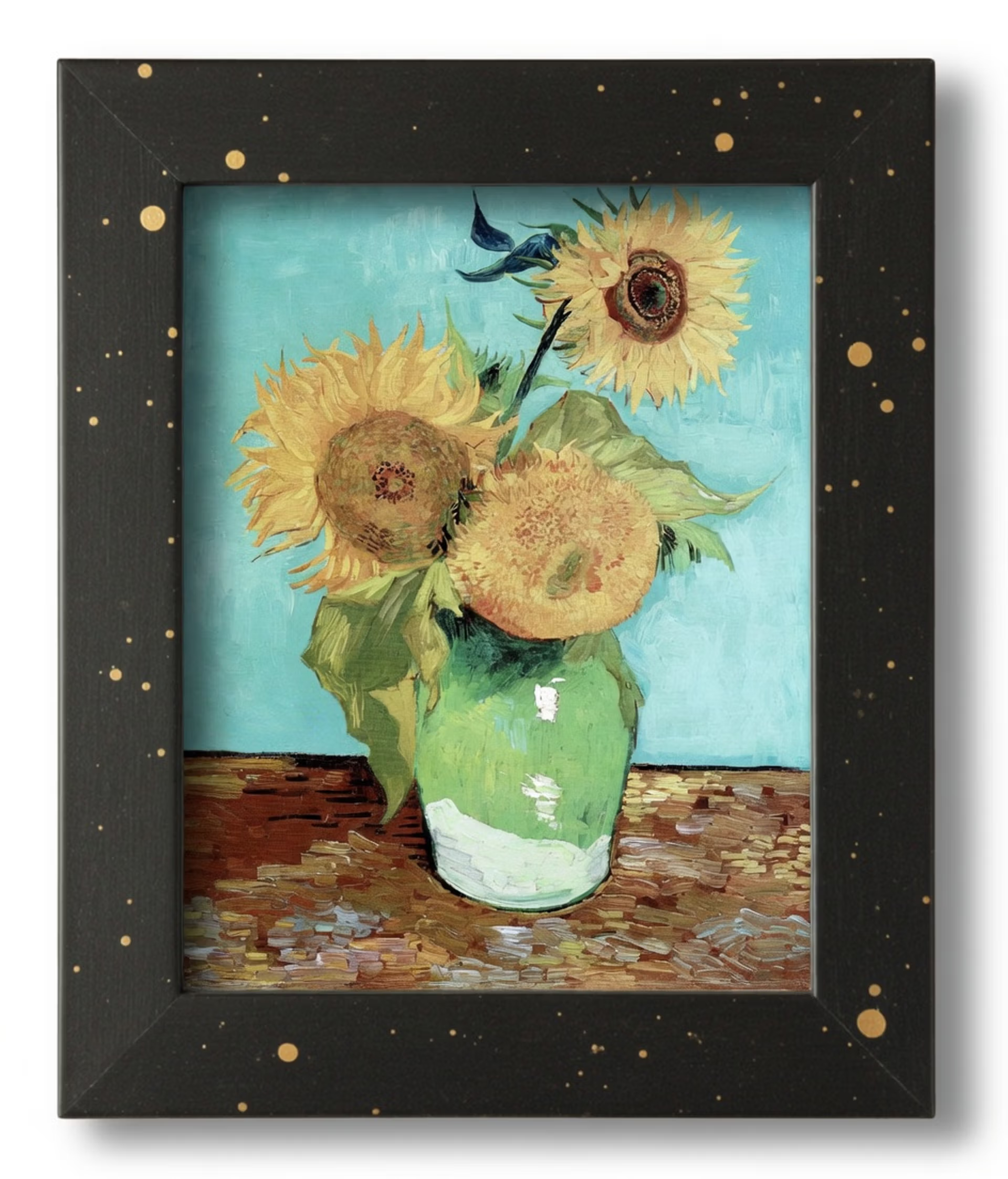
A reconstruction of Van Gogh’s Three Sunflowers in its early frame (around 1913-20)
The Art Newspaper (reconstruction)
We can now reconstruct what Three Sunflowers must have looked like in its Art Deco frame. But who was the bold designer of the framing? The Sotheby’s catalogue described it as “a Pierre Legrain lacquer frame”. Jaffré initially accepted the attribution to Legrain. He was a French designer who worked for Doucet for a decade from 1919 and is best known for his bookbindings.
But after further consideration, Jaffré now believes the frame was created by Eileen Gray, the Irish-born interior decorator. For a short period Gray specialised in lacquer and in 1913-14 she worked for Doucet.
A letter from Gray to Doucet records that she made him a frame, but the painting to go in it is unknown. This was in 1913, just under a year after he had bought Three Sunflowers. In an interview 60 years later Gray said that Doucet had “asked me to make lacquer frames for his Van Goghs”, although “this kind of work did not interest me at all” (Connaissance des Arts, August 1973). Her comment could suggest that she had not been responsible for the Three Sunflowers frame, but she might have simply needed the money and reluctantly gone ahead (or, after so many years, her memory may have been hazy).
Fate of the frame and Sunflowers
What happened to the frame? The son of Doucet’s nephew Jean Dubrujeaud (also named Jean, he had the surname Angladon-Dubrujeaud), who had inherited Three Sunflowers, sold the painting in 1970. He apparently removed the frame, separating the two items. Three years later the frame was purchased at auction by the Paris-based American Art Deco collector-dealer Robert Walker.
Several years later the Doucet frame was bought by the London-based antiquities dealer Robin Symes for his personal collection. It was he who later sold it at the 1989 Sotheby’s auction. Symes eventually become infamous for handling looted antiquities, serving seven months’ imprisonment on a related charge. He died in 2023.
The present location of the frame which graced Three Sunflowers until 1970 and was sold by Symes in 1989 remains a mystery. The chances are that the frame’s present owner may be unaware of the Van Gogh connection, which would certainly add to its financial value.
And what happened to Three Sunflowers? Angladon-Dubrujeaud had kept the painting until 1970, when it was bought by an anonymous Swiss collector, whom we can name as George Embiricos. It went for the equivalent of £600,000. In 1996 the Van Gogh was sold to a very private European collector and it has now passed to his children.
When Three Sunflowers eventually comes onto the market, it will far exceed the sum paid for the most expensive Van Gogh sold at auction: the $117m for Orchard with Cypresses (April 1888) in 2022.
Three Sunflowers was not the only Van Gogh which had been acquired by Doucet. He owned Railway Carriages at Arles (August 1888), now at the Angladon museum in Avignon. Even more importantly, he bought Irises (May 1889), which in 1990 ended up at the J. Paul Getty Museum in Los Angeles.

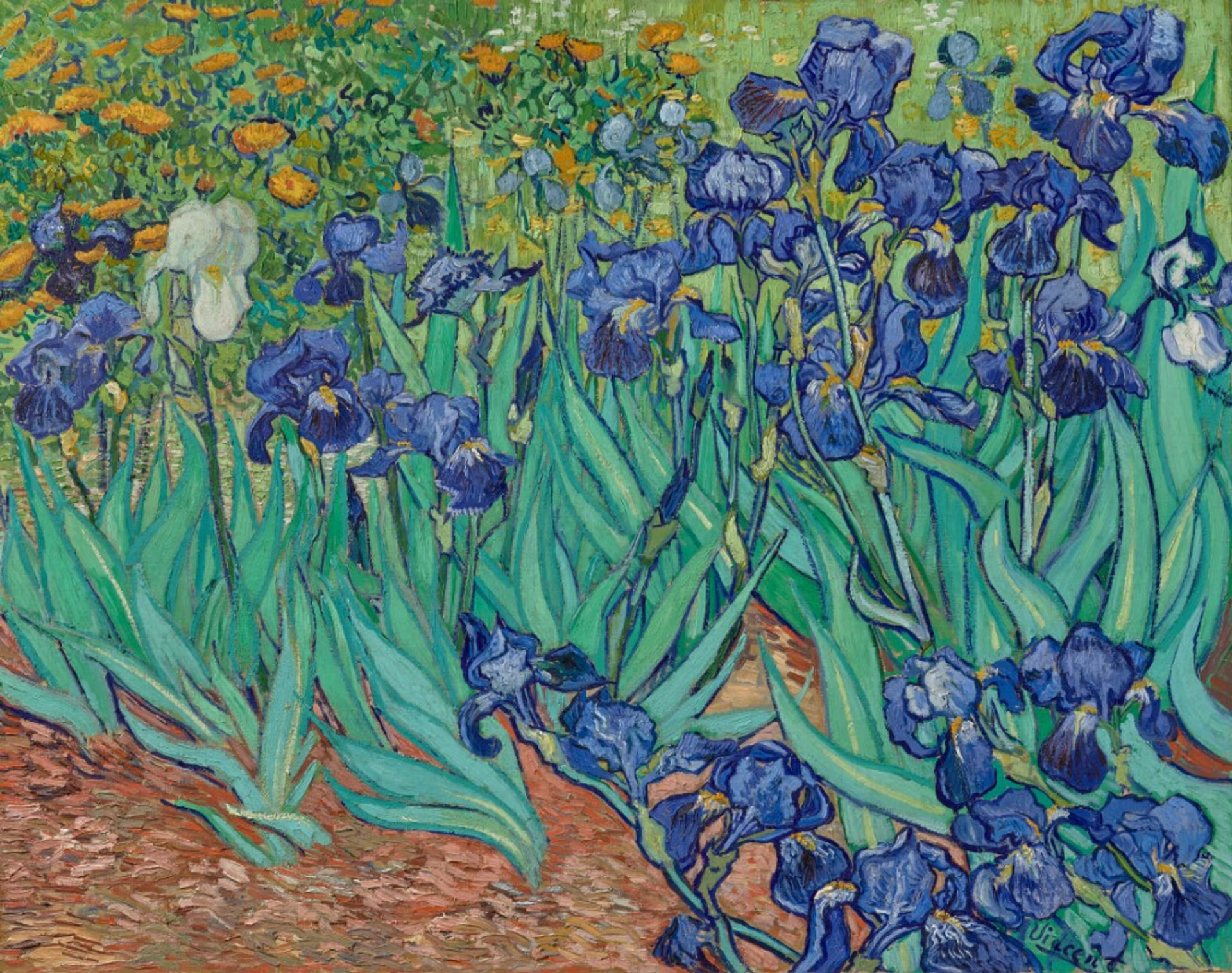
Van Gogh’s Irises (May 1889)
J. Paul Getty Museum, Los Angeles
Other Van Gogh news
We reported that a Van Gogh had been bought by the first identified Korean collector: gallery owner Hong Gyu Shin (who operates from New York). In May 2024 he paid $787,000 for Head of a Peasant (January-March 1885) at Sotheby’s. It is currently on display at the Heather James gallery, in Palm Desert, California. Shin says it is there temporarily and will return to him next week.

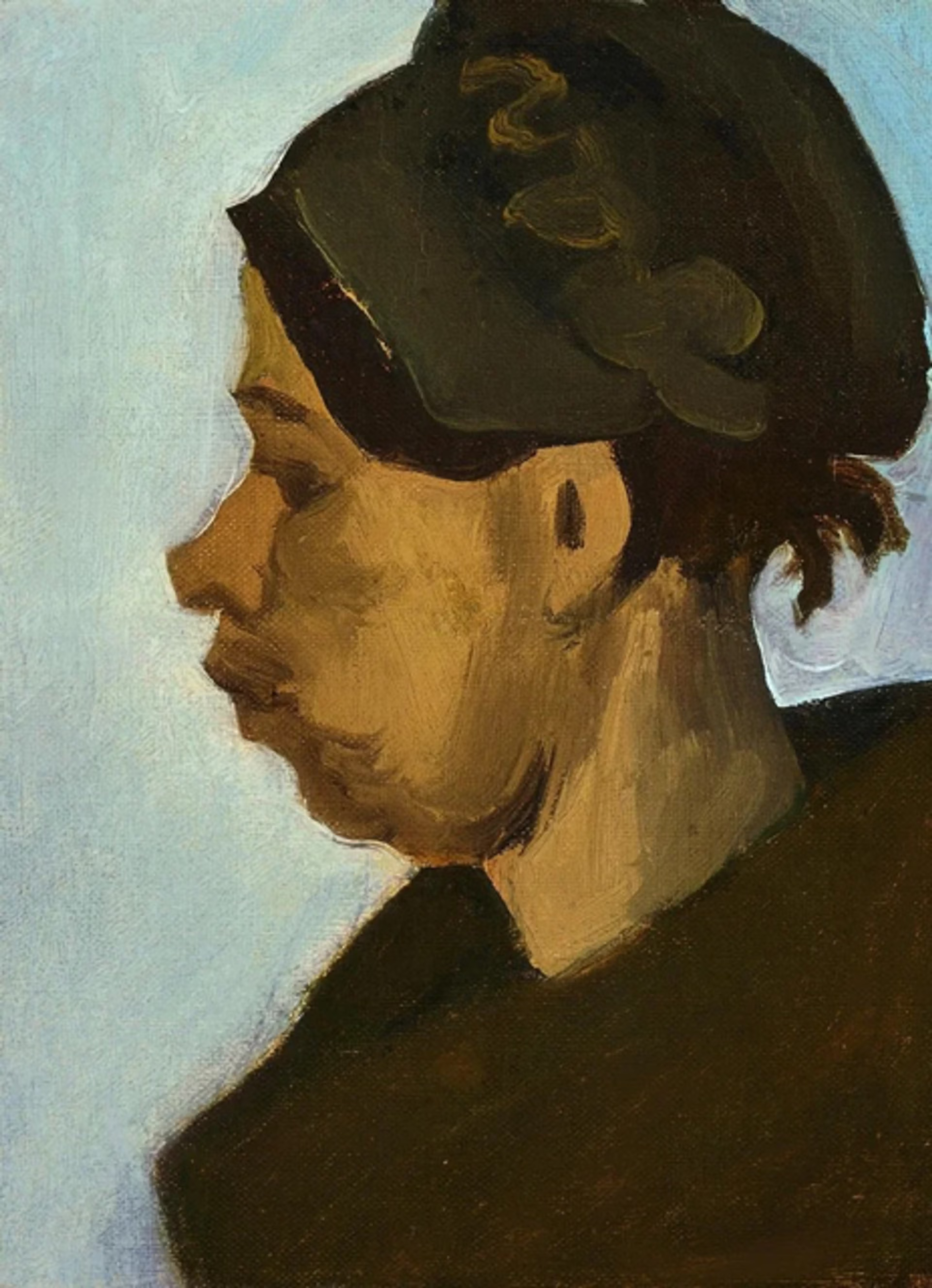
Van Gogh’s Head of a Peasant (January-March 1885)
Hong Gyu Shin and Shin Gallery
Martin Bailey is a leading Van Gogh specialist and special correspondent for The Art Newspaper. He has curated exhibitions at the Barbican Art Gallery, Compton Verney/National Gallery of Scotland and Tate Britain.

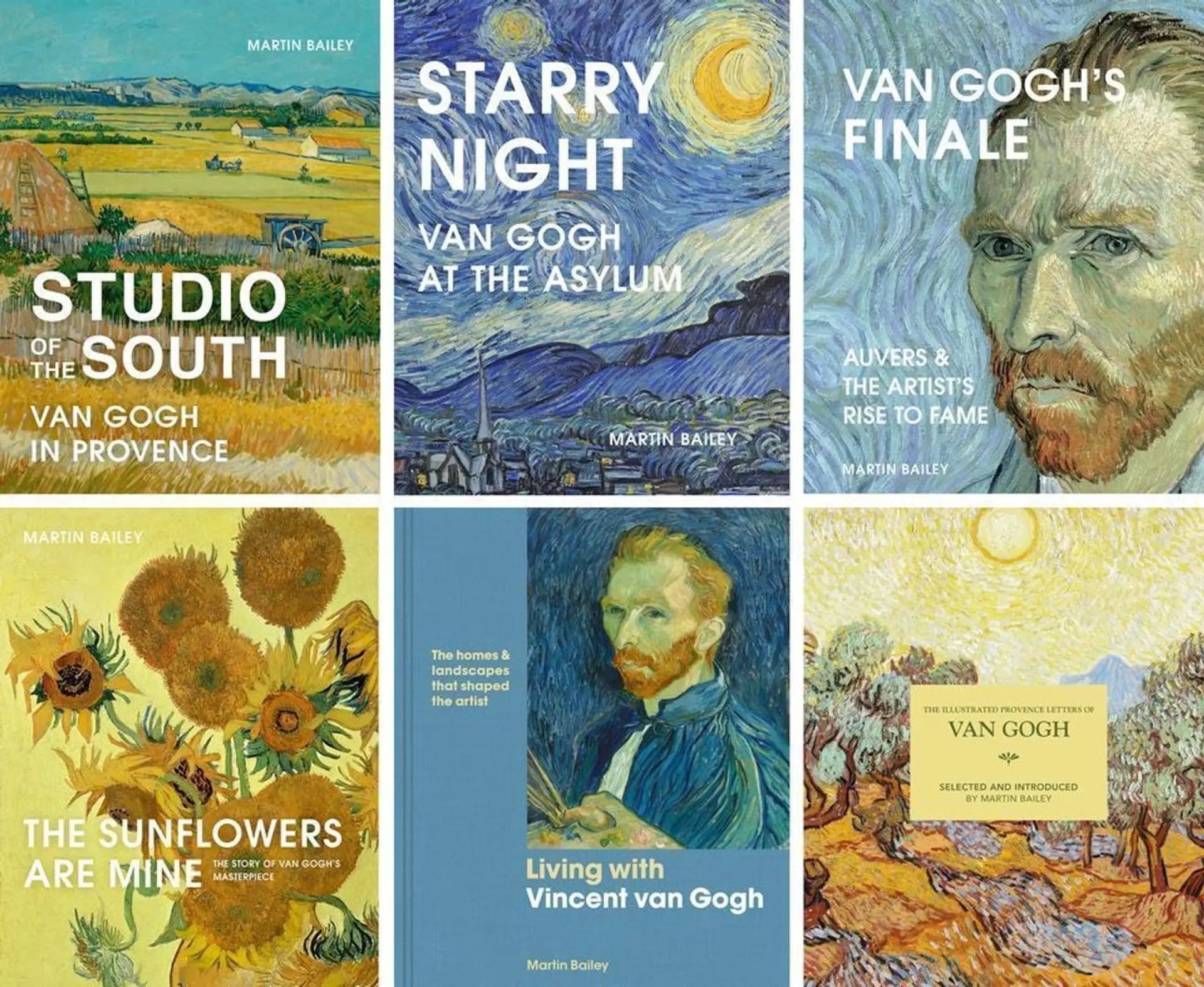
Martin Bailey’s recent Van Gogh books
Martin has written a number of bestselling books on Van Gogh’s years in France: The Sunflowers Are Mine: The Story of Van Gogh’s Masterpiece (Frances Lincoln 2013, UK and US), Studio of the South: Van Gogh in Provence (Frances Lincoln 2016, UK and US), Starry Night: Van Gogh at the Asylum (White Lion Publishing 2018, UK and US) and Van Gogh’s Finale: Auvers and the Artist’s Rise to Fame (Frances Lincoln 2021, UK and US). The Sunflowers are Mine (2024, UK and US) and Van Gogh’s Finale (2024, UK and US) are also now available in a more compact paperback format.
His other recent books include Living with Vincent van Gogh: The Homes & Landscapes that shaped the Artist (White Lion Publishing 2019, UK and US), which provides an overview of the artist’s life. The Illustrated Provence Letters of Van Gogh has been reissued (Batsford 2021, UK and US). My Friend Van Gogh/Emile Bernard provides the first English translation of Bernard’s writings on Van Gogh (David Zwirner Books 2023, UKand US).
To contact Martin Bailey, please email vangogh@theartnewspaper.com
Please note that he does not undertake authentications.
Explore all of Martin’s adventures with Van Gogh here


