








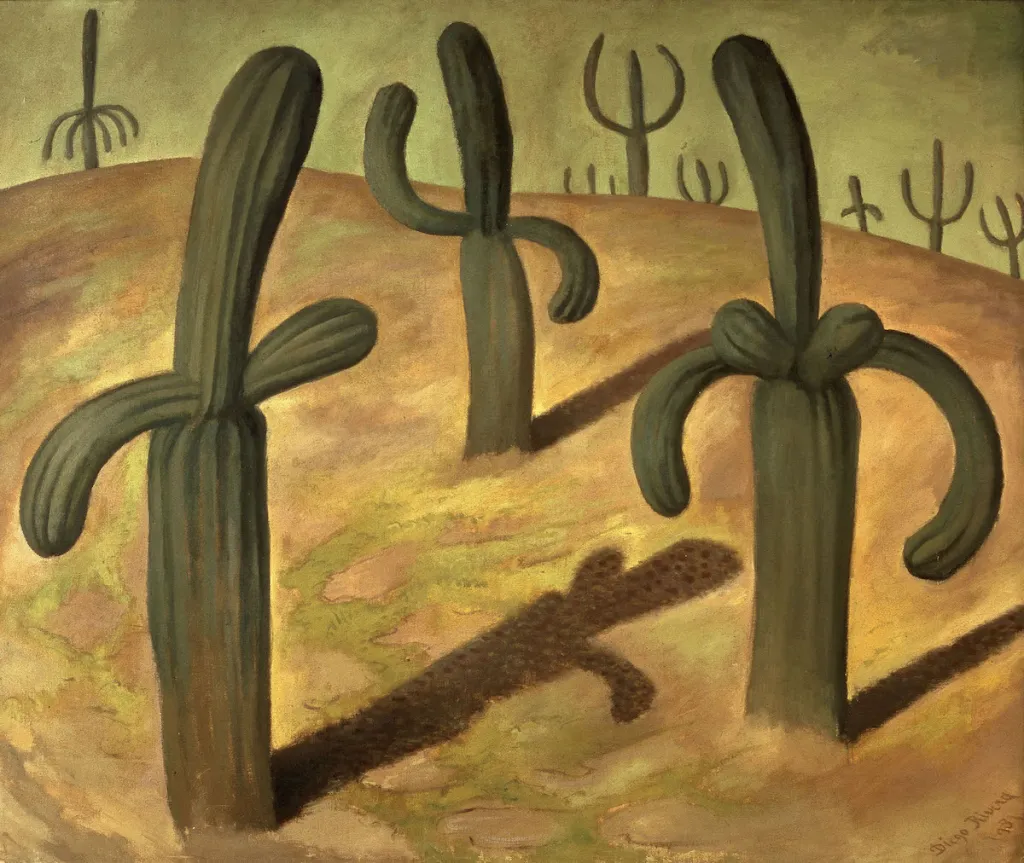
As controversy has continued to swirl around a mass of important Mexican artworks that were partially rediscovered in the holdings of Spain’s Banco Santander earlier this year, the bank spoke at length about the matter, saying it had done nothing illegal by planning to bring the trove to Spain, where it will go on view at Faro Santander in September.
Amassed by the late collectors Jacques and Natasha Gelman during the 20th century, the Gelman Collection is particularly rich in works by Frida Kahlo, with 10 paintings by her. There are also pieces by Rufino Tamayo, Diego Rivera, and other giants of Mexican modernism. These works are currently on view at the Museum of Modern Art in Mexico City.
Earlier this year, the bank said it struck a long-term agreement with the Zambrano family to manage 160 of the collection’s 300 works, about a year and a half after the Mexican government said it didn’t know where the Gelman Collection was. Santander said it planned to take the collection from Mexico to Spain, a move that many critics, curators, artists, historians, and lawyers have claimed runs in defiance of Mexican laws guiding cultural heritage.
Amid an outcry, the Mexican government said that it would bring the collection back to the nation in 2028. But the agreement with Santander also allows the government to continue traveling the collection through 2030.
Yesterday, Defense of the Gelman Collection, the group that has been most vocal in criticizing the Mexican state, said it had begun legal proceedings against Santander and the Mexican state. Claiming that the plan to travel the collection represents a merger between public and private interests, the group called the move “unconstitutional” and demanded the creation of a publicly accessible museum for the Gelman Collection.
On Thursday, Santander responded to the legal action by denying that the bank had done anything illegal with the Gelman Collection.
“We fully understand the cultural and historical significance of the Gelman Collection to Mexico,” the bank said. “As one of the most important collections of Mexican art, it represents an invaluable part of Mexico’s artistic heritage and deserves the highest standards of care, preservation and respect. Our role is focused entirely on supporting its conservation, study, exhibition and public access, in full compliance with Mexican law, and [we are] delighted that, through this collaboration, the collection has been displayed in Mexico for the first time in nearly 20 years and will be returning again in 2028.”
Potentially complicating matters is the fact that the Mexican government and Santander signed the agreement with the Zambrano family, which once included Lorenzo Zambrano, the late billionaire who ran a cement company. A Santander spokesperson told the Financial Times that the bank has a financial agreement with the Zambranos, but did not disclose the details of the arrangement.
Correction, 7/2/26, 12 p.m.: This article previously misstated details about the Faro Santander show. That exhibition opens in September; it is not on view there now.


