







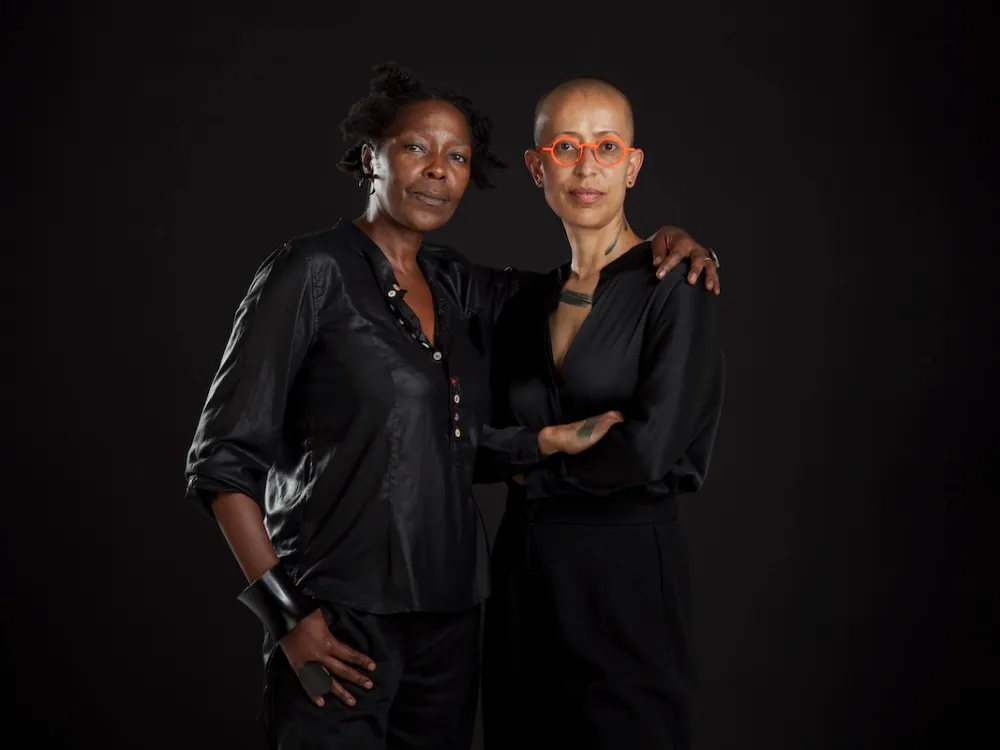
A South African high court has dismissed artist Gabrielle Goliath’s last-ditch bid to overturn the cancellation of her Venice Biennale pavilion, rejecting the application just hours before the exhibition’s submission deadline.
Goliath’s proposed pavilion, titled Elegy, was selected last month by the nonprofit Art Periodic to represent South Africa at the upcoming Venice Biennale, with Ingrid Masondo as curator. Days later, however, South African culture minister Gayton McKenzie canceled the selection, calling the work “highly divisive.” The decision came just eight days before participating nations must finalize their projects, raising fears that South Africa could be left without a pavilion at the 61st Venice Biennale, which opens in May.
In their application, Goliath and Masondo argued that McKenzie lacked the contractual authority to cancel their selection and that his decision infringed on the artist’s constitutional right to freedom of expression, as first reported by Artnet News. Judge Mamokolo Kubushi of the North Gauteng High Court rejected those arguments following a February 11 hearing on Goliath’s reinstatement as South Africa’s representative. Kubushi did not provide reasons for her ruling. Costs were awarded to the respondents, including McKenzie.
Goliath, who participated in the main exhibition of the 2024 Venice Biennale, was set to present a work from Elegy, an ongoing performance series honoring victims of atrocities in South Africa and beyond, including killings of queer people and women, as well as the German-led genocide in colonial Namibia in the early 1900s. She reportedly planned to update the piece for Venice to feature Abu Nada, a Palestinian poet killed by an Israeli airstrike in October 2023, a decision that stirred controversy.
At the hearing, McKenzie’s legal representative, advocate Zinzile Matabese SC, argued that the cancellation was motivated solely by contractual law. The South African outlet Daily Maverick reported that Matabese failed to provide contractual support for McKenzie’s claimed veto over the pavilion’s creative content. The minister’s counsel then said McKenzie had been “deceived” about the nature of Goliath’s proposal by Art Periodic and had terminated the culture ministry’s contract with the non-profit due to a “breakdown of trust.”
McKenzie reportedly first attempted to cancel Goliath’s selection in December 2025, citing in a letter that it “relates to an ongoing international conflict that is widely polarizing,” a likely reference to Israel’s war in Gaza, which the United Nations Human Rights Commission declared a genocide last September. The pavilion selection committee pushed back, calling the request a form of “censorship” in a statement published by ArtThrob and describing it as indicative of systemic issues within the pavilion’s organization.
Speaking to Daily Maverick, Goliath said: “As an artist, I am concerned with revealing and refusing conditions that make violence possible, permissible, and terrifyingly ‘ordinary.’ Whose lives are available to be displaced, raped, killed, disavowed?”
She added: “I have said it many times: my work is not about violence, but rather foregrounds practices of mourning, survival, and repair, within and despite this normative disregard. At a moment in which sustaining hope is a political imperative, I think it is all the more crucial to emphasise my work as life-work rather than death-work, and as rooted in a decolonial Black feminist project of care and radical love.”


