






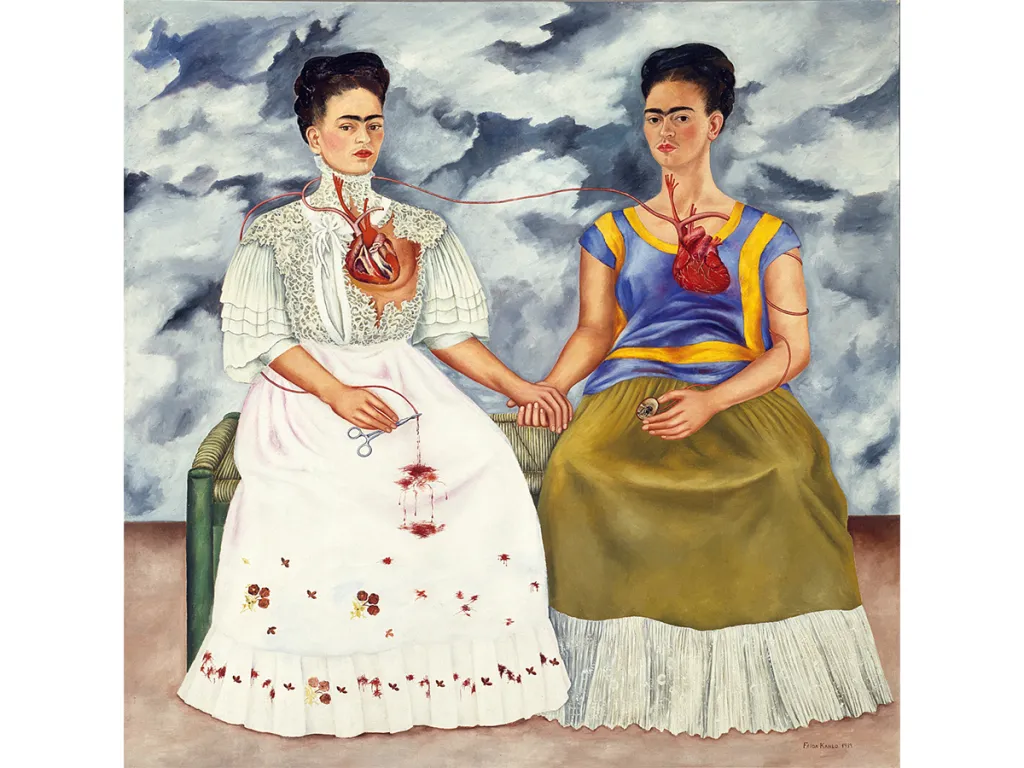
Curators at Tate Modern are finding that Frida Kahlo’s global popularity now comes with a practical drawback: it has become harder to borrow her paintings.
The museum’s forthcoming exhibition, Frida: The Making of an Icon, opening in June, will include 36 works by the Mexican artist, fewer than the more than the 50 shown during Tate Modern’s last major Kahlo exhibition in 2005, according to reporting by the Times of London. (The show premieres at the Museum of Fine Arts Houston this month, before it travels to London.)
The reduced number reflects the growing scarcity, value, and institutional demand surrounding Kahlo’s work.
That pressure intensified last fall, when Kahlo’s 1940 painting El sueño (La cama) sold at Sotheby’s New York for $54.7 million, setting a new auction record for a work by a woman artist.
The result eclipsed Kahlo’s own previous high of $34.9 million, achieved in 2021, and underscored how tightly held her most important works have become.
Several high-profile loans have since proved elusive. Tate is still attempting to secure El sueño (La cama) for the exhibition, though curator Tobias Ostrander said the chances were slim.
“In general the [36] works were very specifically chosen to address certain themes but you know, there are ones we have tried for that people won’t loan,” Ostrander told the Times. “Madonna is someone who did loan in 2005 but won’t loan now, for example.
Rather than attempting a traditional retrospective, the exhibition will place Kahlo’s work within a broader cultural frame. More than 80 artists influenced by Kahlo will be included, alongside a section examining “Fridamania” and the mass merchandising of her image, from fashion to consumer goods.
Once a marginal figure during her lifetime, Kahlo has become a central figure in 20th-century art history. That transformation, curators suggest, is precisely what the exhibition aims to examine, even as it complicates the task of assembling it.


