








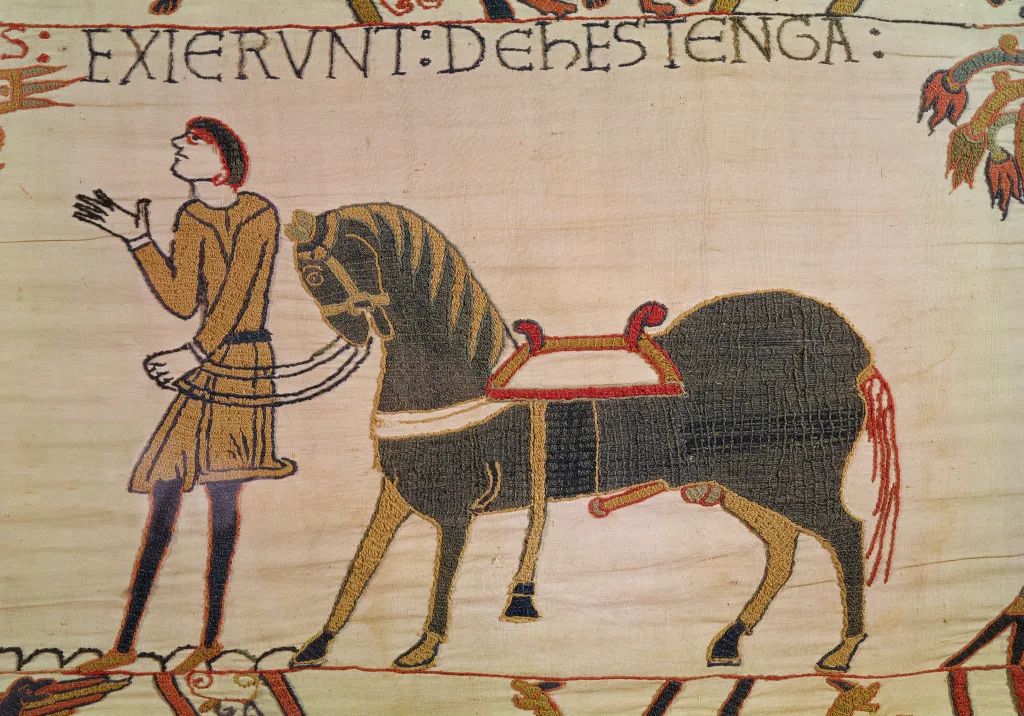
Tickets to see the Bayeux Tapestry when it goes on view at the British Museum this fall sold out in just over 24 hours this week, reports the Telegraph. The museum said it was the biggest day of ticket sales in its history.
Depicting the Norman conquest of England 1066 and made there in the 1070s, the Bayeux Tapestry (technically an embroidery) is an astonishing 230 feet long and, according to the British Museum, features 58 detailed scenes, each rendered in colored wool on flax. On loan from the Bayeux Museum in Normandy, it will be displayed at the British Museum from September 10, 2026, to July 11, 2027, the first time in its nearly 1000-year history the work has been publicly exhibited on British soil.
Tickets for period September to December went on sale to the public on Wednesday, July 1, at 10:00am BST; by mid-afternoon, 80,000 people had joined an online queue that at one point had a wait time of up to nine hours long. By the following day, 40,000 more hopefuls were on the queue, but were told the tickets had sold out. Members of the public unsuccessful in procuring tickets from the first tranche will have two further opportunities when more tickets go on sale in October and January.
Adult tickets to see the tapestry at the British Museum are priced at £33 for peak times and £27 for off-peak times. These prices are almost three times what it costs to see the work in Normandy, but the museum’s director Dr Nicholas Cullinan rationalized the increase to BBC Radio 4’s “Today” program on Wednesday that the show was “a really expensive exhibition for us to put on as a charity, and so we do need to recoup those finds.” Children under 16 can still enter free.
Since the announcement of the loan last year, French heritage groups have expressed concern about possible damage to the delicate tapestry during its journey to the UK. But the Telegraph has reported that two test runs have been performed to assess the level of vibration the embroidery will be exposed to, and these have both been a success.
The artwork will be moved by road to the Eurotunnel, where it will occupy a train emptied of everyone except conservators and guards, before being taken on the final leg to London. A police escort will be provided on both sides of the Channel.


