






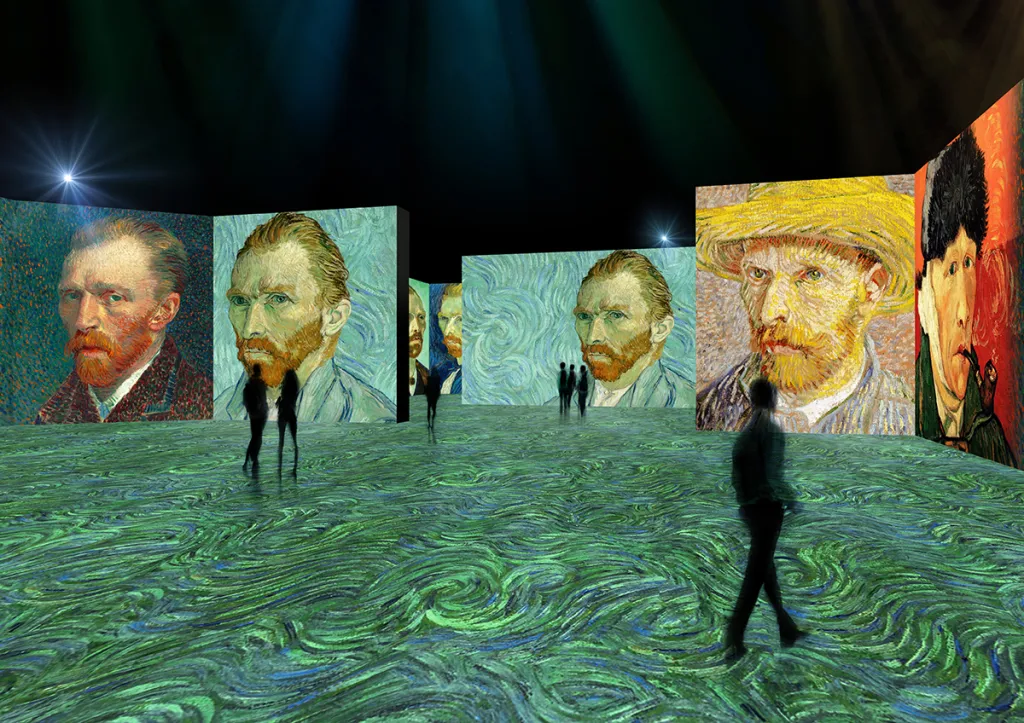
In 2021, the Indianapolis Museum of Art at Newfields turned the museum’s fourth floor contemporary art galleries into an exhibition space for high-tech digital art called the Lume. Over the past five years, the controversial initiative featured immersive, crowd-pleasing exhibitions like “Van Gogh Alive” (2021), “Monet & Friends Alive” (2022-23), and “Dalí Alive” (2024-25).
However, at the end of February the museum announced that the Lume’s current show, “Connection: Land, Water, Sky — Art & Music from Indigenous Australians,” which closed on Feb. 28, was its last.
The museum said in a statement to the Indianapolis Business Journal that the closure will make way for “a new monumental exhibition that will further advance the Indianapolis Museum of Art’s contemporary art vision and expand how audiences experience art at Newfields,” though didn’t elaborate on what this new endeavor entails.
The Lume space was created by the Australian company Grande Experiences, which specializes in immersive experience across art and science. The Lume outpost in Melbourne, housed at the city’s convention and exhibition center, opened in 2021, and closed last summer. Grande Experiences also operates the Museo Leonardo da Vinci—“more than a museum, an experience!”—in a 15th-century church in Rome.
The launch of the Lume in the summer of 2021 coincided with several staffing controversies at the museum. Earlier that year, Newfields’s president Charles Venable resigned following public outcry regarding a job posting that sought a director who would maintain the museum’s “traditional, core, white art audience.” Colette Pierce Burnette, who was hired a year later to replace Venable, resigned after just 15 months on the job. Belinda Tate, who was eventually hired in 2023 to fill the director role whose posting sparked this firestorm, is still with the museum.
Current exhibitions at Newfields include “Luminous Horizons: Celebrating the Legacy of J.M.W. Turner” (through Aug. 2), a show of newly acquired contemporary artworks, and a show of work by three queer artists who were inspired by the Rococo (through Mar. 29).


