







Anyone who has spent any time on TikTok Shop—the commercial side of the popular social media app—will know that it’s more Temu than Artsy. The homepage on the app is a marketplace for everything from fashion and beauty to food and drink and is full of flashy discount codes and slashed prices. Nonetheless, last month TikTok Shop launched a “fine art” category, which sits within collectibles, art and cultural items.
“TikTok Shop is built on discovery commerce—where community, creativity and purchase come together seamlessly. The launch of our fine art category expands the platform into high-value, collectable goods, demonstrating how discovery commerce can support premium products and build trust with both creators and audiences,” says Marco Spaducci, the head of home and living at TikTok Shop UK. The category is now open for artists to start selling products via shoppable videos, photographs and livestreams, he adds.
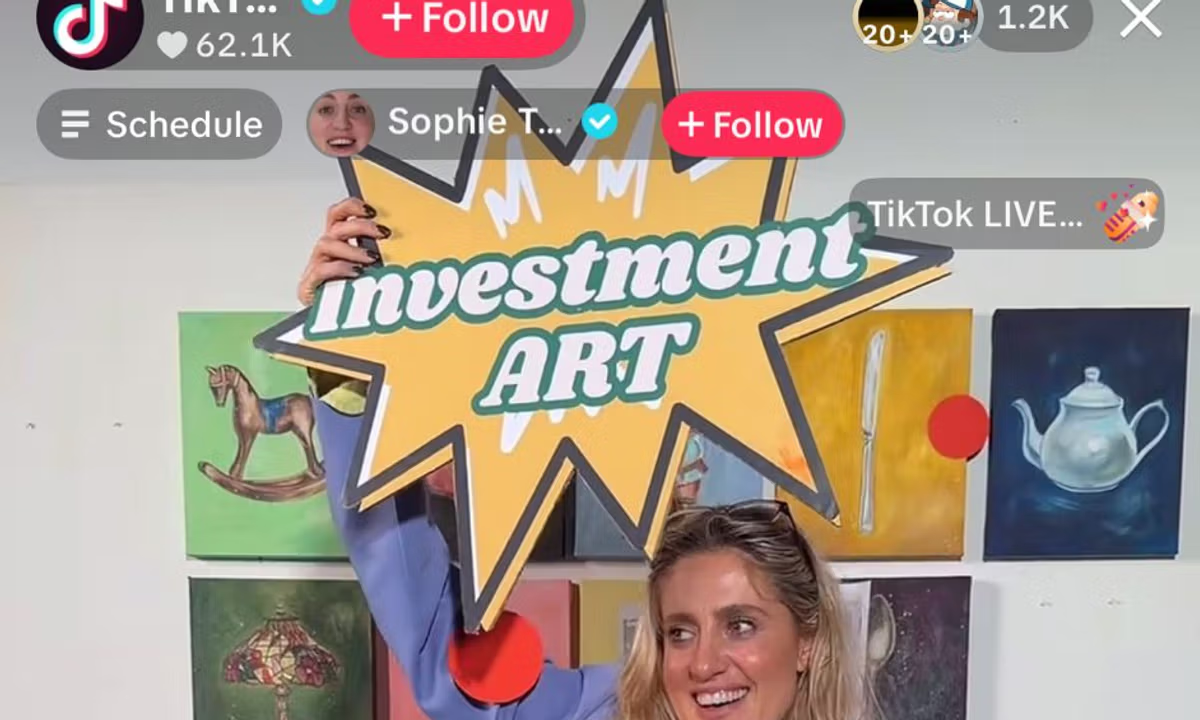
The new category was launched with a TikTok live fine art sale by Sophie Tea, an artist with a huge social media following (1.3 million on TikTok, 1 million on Instagram). Tea, who is best known for her expressive female nudes, created a series of 20 original oil paintings titled Bric-a-Brac. The paintings depicting singular objects such as a teapot, a spoon and a wine glass, are inspired by her viral “Charity Shop Friday” videos, where Tea buys an object from a charity shop, paints on it, and then returns it to the shop where fans can buy it.
Tea, who regularly sells work through Instagram direct messages (DMs), initiated discussions with TikTok Shop about creating a fine art category after noticing it was missing on the app. “The move reflects Sophie Tea’s ongoing mission to remove the barriers that have historically made the art world feel exclusive, opaque and inaccessible,” according to a press statement. “By selling directly through TikTok Shop, Tea bypasses galleries and intermediaries, allowing audiences to discover, engage with and purchase original art within the same space where creativity and community already thrive.”
After some convincing, TikTok Shop agreed to the collaboration but there were several complications in bringing fine art to the platform. First, there was an upper limit on the amount you could sell a single item for (which according to Tea depends on your region, sector and follower count, among other things); there are unavoidable in-built discounts (if you’re a first time Tiktok shop buyer, you automatically get 20% discount, for example), which Tea didn’t want to use; TikTok said the works had to have a descriptive title (so Tea’s Quack was renamed Oil Painting of a Duck); and there are policies on shipping where things have to be posted within two days (Tea’s works still needed to be framed so she had to send everyone a holding letter instead).
Tea was commissioned to paint for the Oscars British Film Reception in Los Angeles in March Courtesy of the artist
The actual TikTok live sale of Tea’s work took place over three hours on 11 March. Styled like a QVC television shopping experience, Tea’s sale was akin to a performance art piece in itself. Wearing an oversized purple suit hired from a fancy dress store, Tea live-painted some of the works for sale and invited viewers to feedback on what colours she should use, as well as explaining the story behind pieces and answering questions from the thousands of viewers online. Tea had large Pop art-style signs that read “Investment art” and “Buy one get one” and placed giant red dots on each of the works—priced at £2,800—as they sold.
An unexpected glitch in the live sale was that if a work was added to someone’s basket it was immediately marked as sold before the transaction was completed. This led to lots of works being declared sold when they weren’t. With online baskets taking over an hour to update, some works became available again, much to the disgruntlement of potential buyers. “It was an absolute shit show, but it just presented loads of holes that we can now fix,” Tea says of the sale, describing the TikTok Shop team who attended the sale in-person as scrambling to fix the technical problems in real time.
Ultimately, all of the works sold, although only around six through TikTok Shop and the rest through DMs after the sale. TikTok took 9% commission on works sold through the app. Around half sold to existing clients and all were based in the UK, due to the selling parameters of TikTok Shop.
Tea, a self-taught artist, began selling works on social media after being rejected by galleries and has gone on to build a substantial online following. “I used to be a bit embarrassed that I’ve had to self promote because no one will accept me,” Tea says. “But now I’m leaning into it because this is just a new way. Doesn’t being an artist mean connecting with as many people as possible? And if the medium that I’m doing that with is video, then so be it. Like, I’m becoming a bit more accepting of the fact that I’m just a ‘social media artist’ now, and I’m hoping that over time I’m just deemed an ‘artist’.”
She argues that social media gives power back to artists, both in terms of the way their work is presented and keeping the profits of their sales as well as having direct contact with their audience. “I believe that the future of shopping is back to live shopping. I think that consumers now want more accountability and transparency from the people that they’re buying from, and they want to see a real human behind that shopping experience,” she says. “Like with Sotheby’s and Christie’s and other auction houses and fine art galleries, what I’m seeing within my consumers is wanting more information, wanting more access, and wanting the smoke and mirrors to leave.”
As far as TikTok Shop’s potential to be an art market disruptor goes, it seems like there is a lot of work to do before it becomes a viable platform for selling fine art. “We’re going to continue our work with Tiktok, because it does not work at present for an artist,” Tea says.
“We are proud to have hosted our first-ever live fine art sale with Sophie Tea, whose direct-to-community approach reflects the evolving creator economy and how artists can engage audiences in new ways,” Spaducci says. “[We] look forward to opening our doors to more artists on TikTok Shop.”


